Electricity here isn't cheap
Texas homes paid 14.94 cents per kilowatthour in 2024. An AC system that runs inefficiently turns that rate into a bigger number every single month.
Takes about a minute. No obligation.
Texas homes paid 14.94 cents per kilowatthour in 2024. An AC system that runs inefficiently turns that rate into a bigger number every single month.
The SEER2 rating of the unit going into your home determines how many kilowatthours it draws to do the same cooling job. That's worth asking about before the contractor settles on a system, not after.
NOAA nClimDiv, 1991–2020 normals
April is the month before cooling starts in Taylor County.
Install before May and the new system is ready for its first real month of work, not fighting for one in the middle of it.




Abilene sits in a warm zone with a long stretch of cooling and only a short mild winter, which puts Taylor County under the Southeast's efficiency rules instead of the national baseline. A split-system air conditioner going into a home here has to hit 14.3 SEER2, not the 13.4 that's enough in cooler parts of the country. Larger systems carry their own floor, a bit lower than that but still above the national number. Any system a contractor installs has to clear that bar before it goes in. That's not a label on the box, it's what the system has to do in your home.
Electricity heats 55.5% of homes in Taylor County, and gas heats most of the rest. A new AC system here almost always ties into electric service already in the house, since that's what runs the cooling either way. Matching what the home already has keeps the install straightforward.
Find a contractor
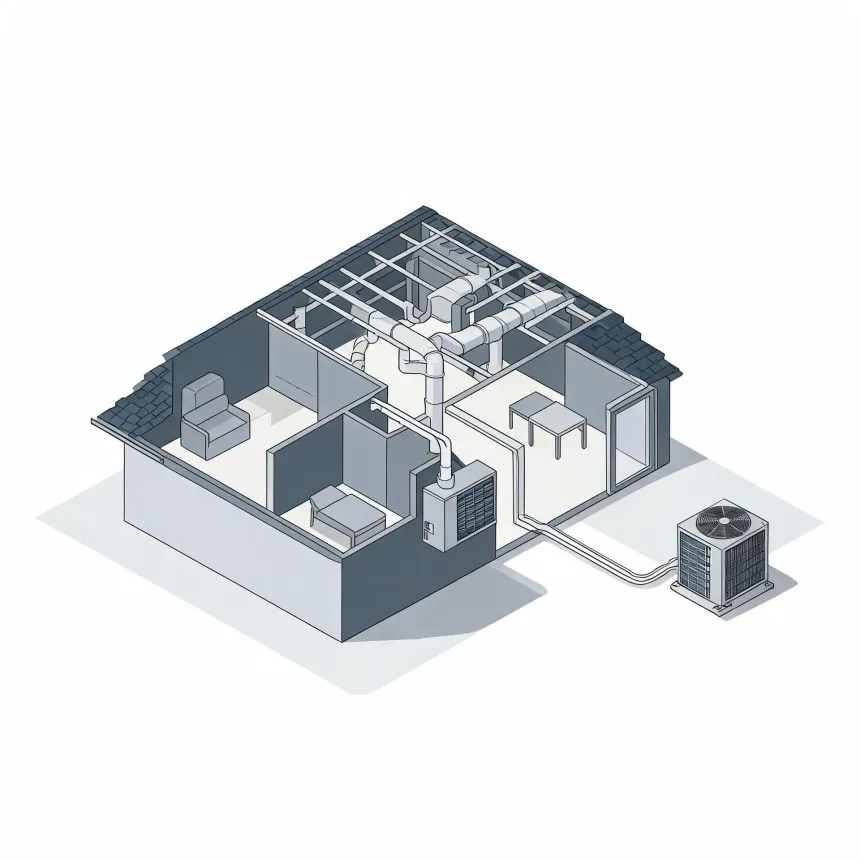
Whoever installs the new system still has to deal with the one coming out. An old condenser gets disconnected, the refrigerant recovered rather than vented, since it's against the law to release it into the air. The old line set usually comes out too if it doesn't match what the new system needs. Copper and the old unit's components typically get hauled off for recycling rather than landfill, since there's scrap value in them. If the furnace or air handler is staying, the contractor checks that the new coil actually matches it before anything gets hooked back up. None of this is optional cleanup work, it's part of the same job.
An oversized air conditioner cools the room fast and shuts off before it pulls the moisture out of the air. The house feels cold and clammy at once. It also cycles on and off more, and every start wears the compressor a little more than a full, steady run would.
A contractor works out the cooling load from the square footage, the windows, the insulation and the orientation of the house, room by room, not a single number for the whole place. That calculation is what points to the system size, not the size of the unit being replaced.
Estimates for a typical Taylor County home, from EIA household energy data, Texas fuel prices and NOAA climate normals. Your home will differ.
Install day starts with the refrigerant lines and electrical disconnected from the old unit, then the condenser comes out and the new one goes on the pad. Inside, the coil gets matched to the line set and the air handler or furnace it's pairing with. Once everything's connected, the system gets charged with refrigerant to the exact weight the manufacturer specifies, not just topped off by feel. A gauge set checks the charge and the airflow across the coil, because too little refrigerant and too much both wear the compressor down early. The last step is running the system through a full cycle, checking the temperature split between the air going in and the air coming out, and confirming the thermostat is actually talking to the new equipment before anyone calls it done.