


Texas Cooling Help
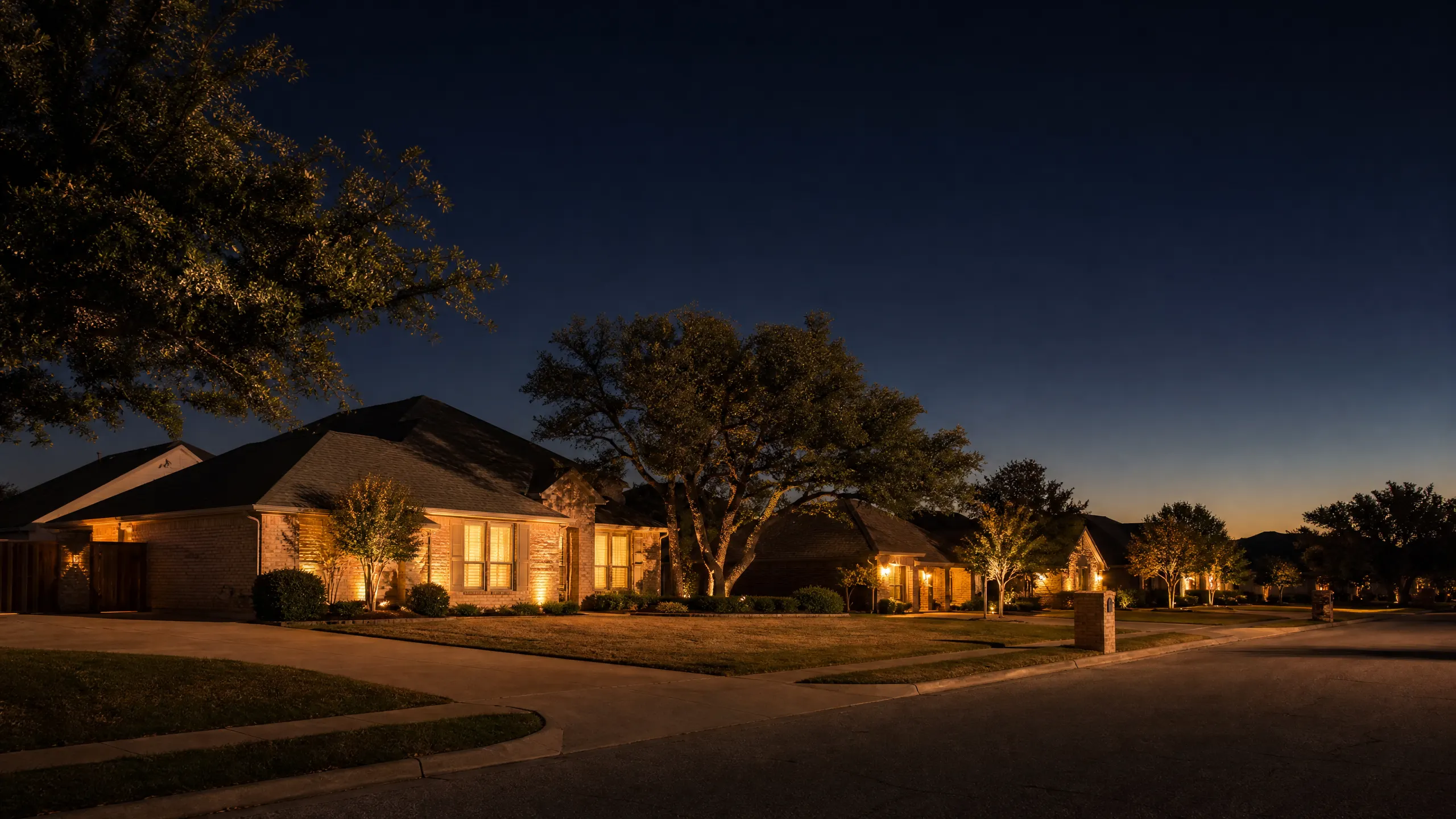
A twilight view of single-story brick homes on a suburban street, lit by warm amber landscape spotlights that illuminate the facades and surrounding trees.

Mini Split Installation in Waxahachie, TX

Tell us about the job

Takes about a minute. No obligation.

Step 1 of 3: Equipment

Texas electricity ran 14.94 cents per kilowatt-hour in 2024, and a mini split that holds its efficiency rating shows up on every bill after that. These systems don't lose heat or cool air through ductwork because there isn't any, so the power you pay for goes into the room instead of the attic. The inverter driven compressor also runs at partial speed most of the time instead of switching fully on and off, which costs less to operate than a system that only knows on or off. Sizing it right for the room matters as much as the equipment itself, since a unit too large or too small works harder than it should.

5 months
November through March, your system heats
6 months
May through October, it cools
38°F
the average winter night it heats against
94°F
the average summer afternoon it cools against
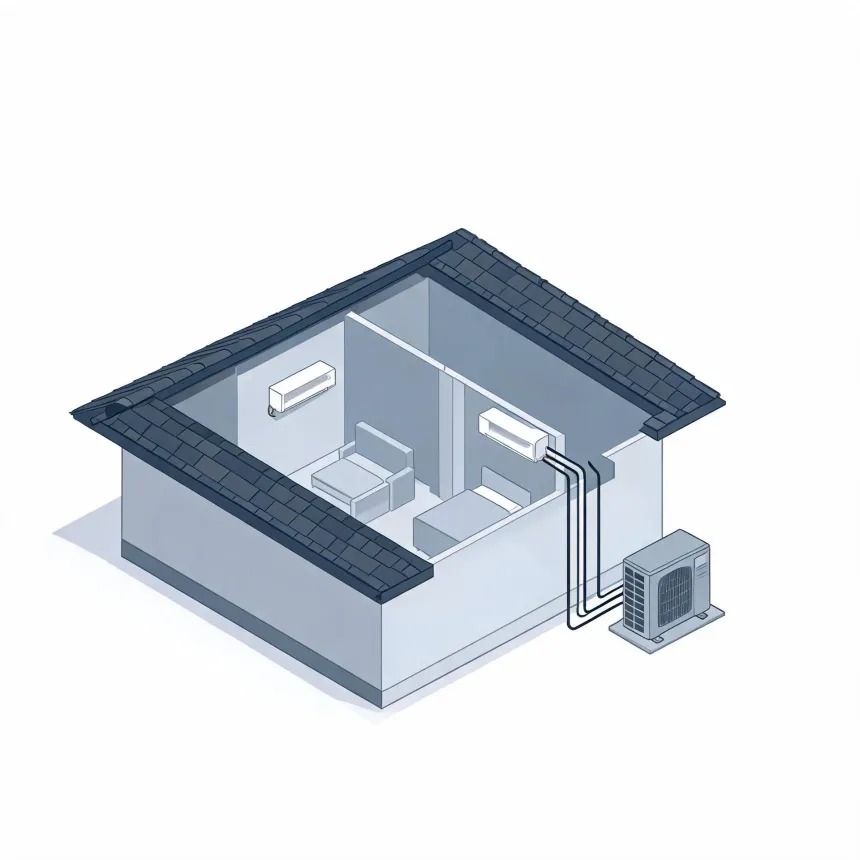
Isometric illustration of a cutaway house with tiled roof showing two wall-mounted indoor mini-split units connected by line sets to an outdoor condenser beside the building.
Your system heats November through March and cools May through October.

NOAA nClimDiv, 1991–2020 normals

A mini split in Ellis County runs cooling six months a year, May through October.

Size the unit for the room it serves, not just the square footage on paper.

Most homes here already run on electricity, so a mini split fits right in

75.4% of homes heat with electricity
Cooling runs May through October
Summer afternoons average 94°F

Ellis County falls under zone 2A, and any mini split installed here has to meet 14.3 SEER2 for cooling and 7.5 HSPF2 for heating at minimum. That standard applies to the unit itself, not how it's installed, so every ductless system sold new meets this floor already. A system rated above that minimum costs less to run than one sitting right at it, especially with cooling as the main load most of the year. There's also a federal tax credit for qualifying heat pump installations, worth checking against the unit you're considering before you decide.

Efficiency pays here

Power costs more here, so an efficient system pays you back on every bill.

Find a contractor
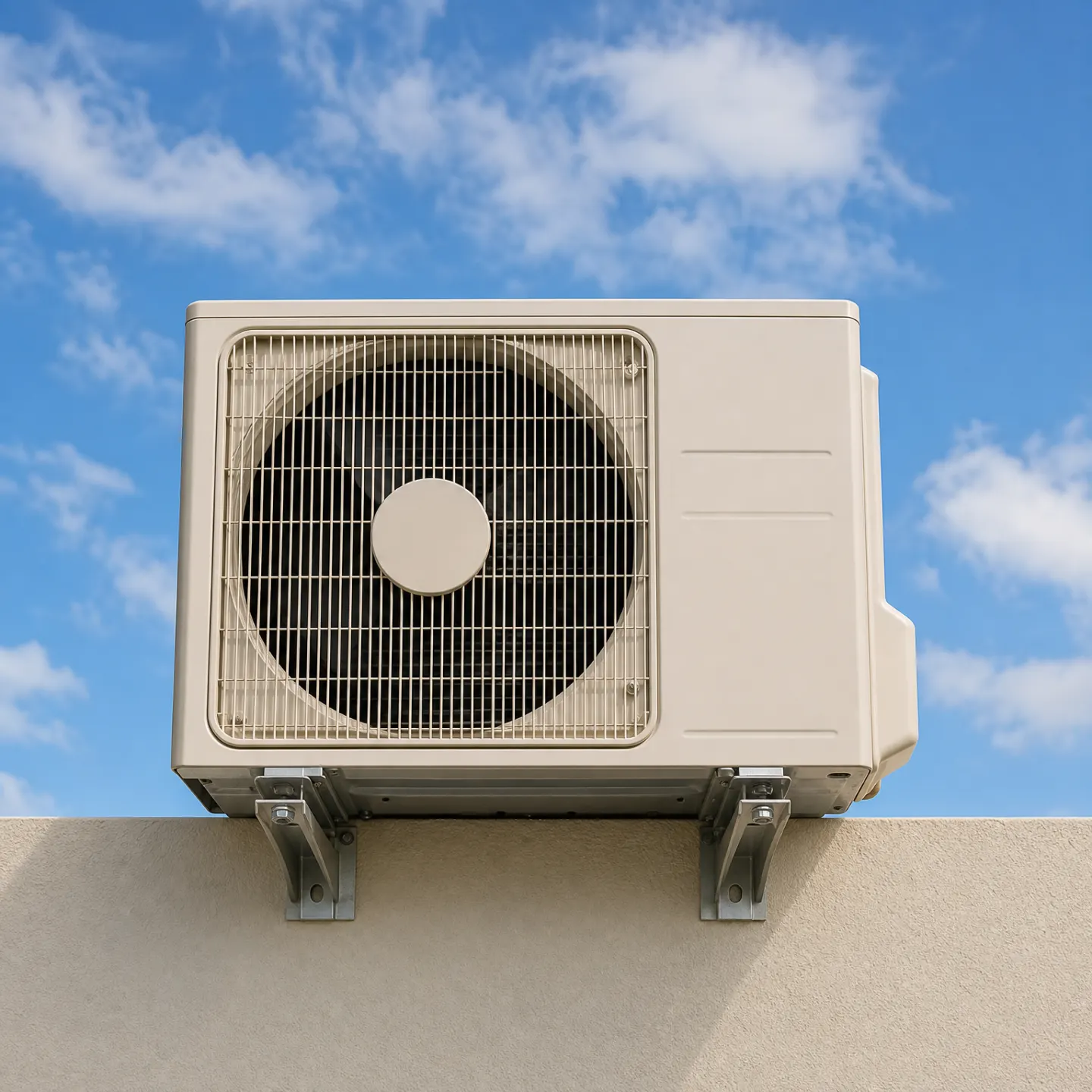
A beige split-system air conditioner outdoor condenser unit mounted on metal wall brackets atop a stucco wall.

Put it in before May, not during it

Cooling starts in May here and runs through October, six months straight. April is the month to get a mini split installed, before that run begins. Pick the day, compare contractors, let the crew take their time on the setup. Put it off and the job happens after cooling has already started, on whatever day a contractor can fit you in instead of the one you picked.

How many rooms, how many heads

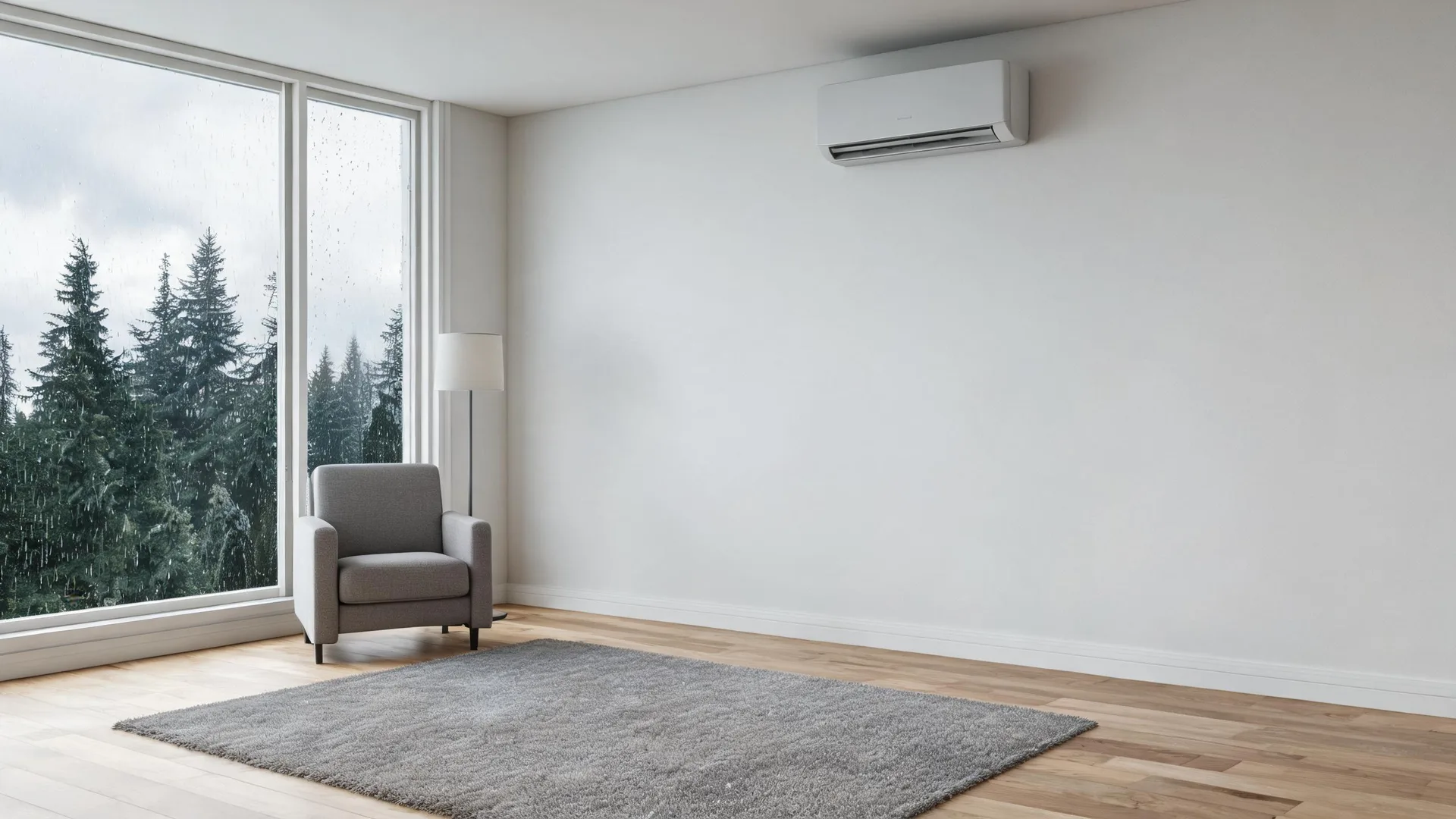
A single room needs one indoor head and one outdoor compressor. Cover more rooms and you're either running separate single-zone systems or one multi-zone compressor feeding several heads, and a multi-zone unit costs more than a single-zone one because the compressor has to modulate across every head running at once.
What the crew runs into on site

The line set between the indoor head and the outdoor unit has to go somewhere, through a wall, up a chase, along an exterior line hidden behind a cover. A straight shot through one wall is the simplest version of this job. A longer run, a second story, or a mounting spot for the outdoor unit that takes extra work to reach all add time before the system ever turns on.

Whatever is heating and cooling the rooms now has to go somewhere once the mini split is in, and what happens depends on what it is. A window unit comes out and that's the end of it. A central system being replaced outright means a contractor reclaiming the refrigerant before anything gets disconnected, since it's against the law to vent it into the air. If the mini split is only covering one room and the rest of the house still runs on the old system, nothing about the existing equipment changes at all, it keeps running the other zones same as before. Where ductwork already feeds a room, that duct run usually gets capped off rather than torn out, in case the house ever goes back to central air in that space. None of this touches the wiring or the breaker the old system used, so a contractor has to work out what the mini split needs on its own circuit before the first line is run.

Installation day starts outside and in, not with the equipment. A contractor mounts the indoor head on its bracket first, then drills through the wall for the line set, the electrical whip, and the condensate drain, all bundled together in one small hole. Those refrigerant lines get connected and then the whole system is pulled down to a vacuum, which pulls out moisture and air before any refrigerant moves through it. Skip that step and moisture sits in the lines, and that leads to a compressor failure down the road. Once the vacuum holds, the outdoor unit gets set on its pad or brackets, the lines get connected on that end, and the system runs through a test cycle in both heating and cooling before the crew leaves. A clean install shows almost nothing on the wall besides the head itself and a thin line hidden behind a cover.