Texas Cooling Help
Three white clapboard houses with wraparound porches glow with warm interior and landscape lighting beneath Spanish moss-draped oak trees at dusk.

Mini Split Installation in Tyler, TX

Tell us about the job

Takes about a minute. No obligation.

Step 1 of 3: Equipment

Electricity here runs 14.94 cents a kilowatt-hour

Texas homes paid that rate in 2024, and a mini split that sits in a room all summer runs on whatever rate your utility charges. A unit that uses less to hit the same temperature keeps showing up as less on the bill.

Efficiency is the number to compare

When you're looking at systems for your home, the efficiency rating tells you how much one will cost to run against another. At Texas power prices, that difference between models is worth more here than it would be somewhere electricity costs less.

5 months
November through March, your system heats
6 months
May through October, it cools
38°F
the average winter night it heats against
93°F
the average summer afternoon it cools against
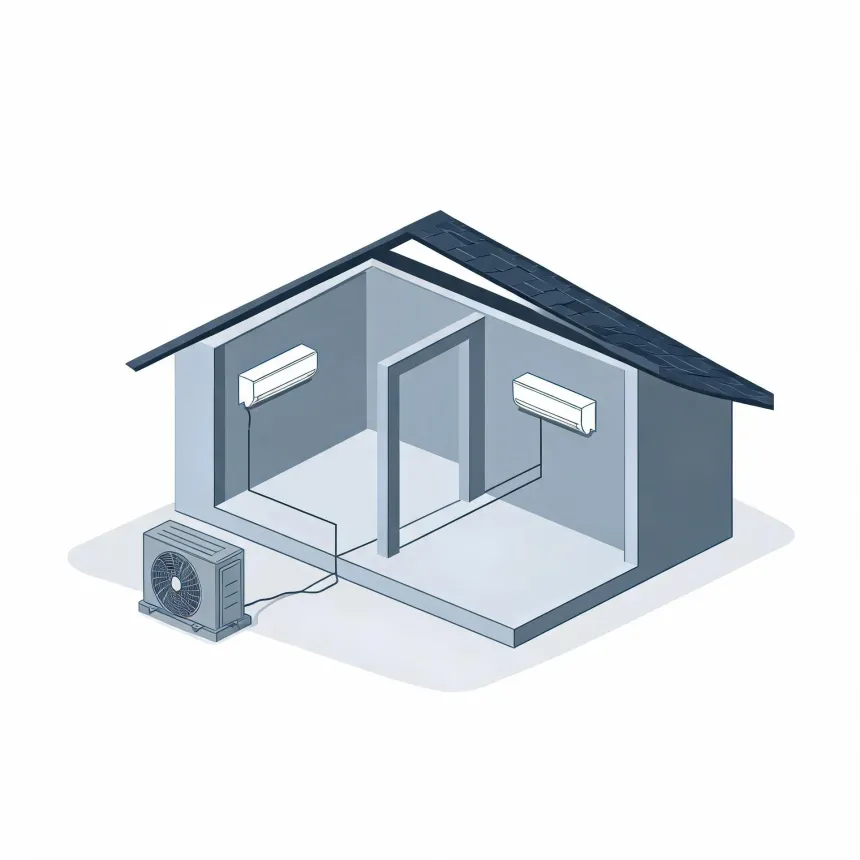
Isometric illustration of a cutaway house showing two wall-mounted indoor air conditioning units connected by lines to a single outdoor condenser unit on the ground outside.
Your system heats November through March and cools May through October.

NOAA nClimDiv, 1991–2020 normals

A bigger unit is not a better unit if it doesn't match the room.

The contractor sizing your space should ask about square footage, ceiling height and window exposure, not just quote the biggest system they sell.

April puts a new mini split in before May asks anything of it

Cooling runs May through October
Summer afternoons average 93°F
148 damaging wind events from 2015 to 2024
Six months of Tyler summer on one unitAfternoon highs here average 93°F across June, July and August

Ask the contractor for the SEER2 and HSPF2 numbers on each system quoted, not just the price. Those ratings tell you what the unit will cost to run at 14.94 cents a kilowatt-hour, and the gap between a mid-grade unit and a high-efficiency one holds for as long as you own it. A mini split that runs all summer and most of the winter puts those numbers to work every day it's on. Get the efficiency ratings in writing alongside the quote, so you're comparing what each system costs to buy against what it costs to run.

Most of Tyler already runs on electricity

Electricity heats 58.9% of homes in Smith County, more than any other fuel. A mini split fits that setup without any new gas line or fuel switch to plan around. It just runs on the same power your home already has.

Find a contractor
A man in a dark long-sleeved shirt and brown work pants carries a worn canvas tool bag up wooden porch steps toward a red-orange front door, with a potted shrub beside the entry.
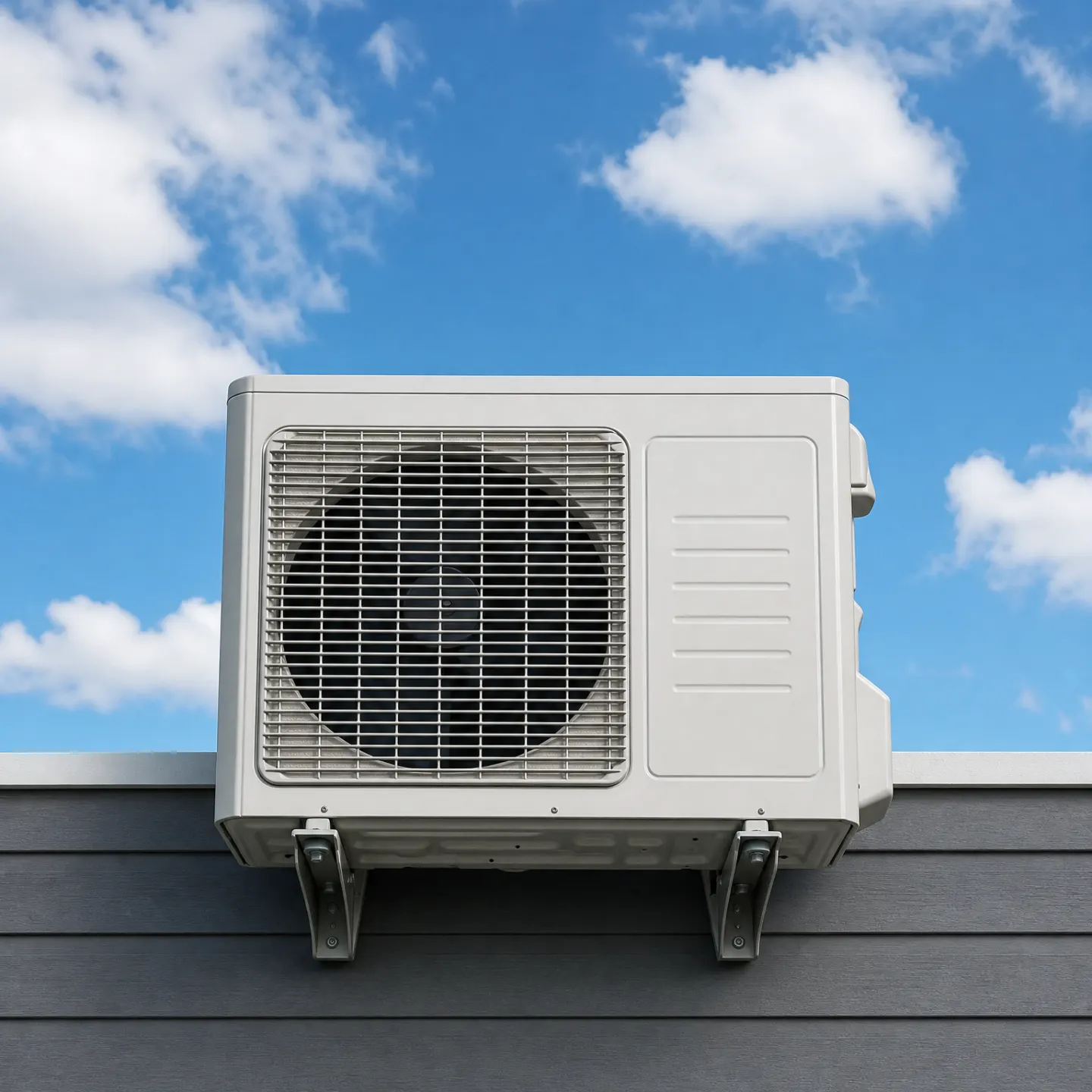
A white outdoor air conditioner condenser unit mounted on metal wall brackets against gray horizontal siding, with a blue sky and white clouds behind it.

Size it for the load it will actually carry

Six months a year this unit runs, and most days it's working against a 93 degree afternoon. That's the load it was sized for, so get the sizing right before it goes in. A unit matched to the room cycles the way it's supposed to. One that's too big or too small strains every time it kicks on, and six months of that adds up faster here than somewhere milder.

The sizing comes from a load calculation, not a square footage chart

A contractor works out how much heat a room gains in summer and loses in winter, counting the windows, the insulation, what's above and below the room, and how the walls face. Rooms that look alike on paper can carry different loads. The calculation is what tells the installer which unit size actually matches the room.

A unit sized wrong wears out doing the wrong job

Too big and it cools the room fast, shuts off, then starts again before it's pulled the moisture out of the air, leaving the room cold and damp. Too small and it runs flat out without ever catching up on the hottest afternoons. Either way the compressor is cycling or straining more than it should, and that shortens its life.

If you're replacing a system, the old unit still has to come out before the new one goes in. The indoor head comes off the wall, and the line set that runs to the outdoor unit gets disconnected. A contractor has to recover the refrigerant from that line set before it's cut loose. That refrigerant can't legally be vented into the air, so it gets pulled out with a recovery machine and handled separately from the old equipment. The outdoor unit, the indoor head and the mounting bracket are usually scrapped for the metal and parts inside them. None of that old equipment can be reused in the new install, even if it looks to be in decent shape, since the new system is matched and charged as a set.

Installation starts outside. The contractor mounts the outdoor condenser on a pad or brackets, then runs the line set through a small hole drilled in the wall to the spot picked for the indoor head. That line set carries refrigerant lines, a condensate drain and electrical wiring together, so the hole only gets drilled once. Once the indoor head is hung and connected, the lines get pressure tested to check for leaks before any refrigerant goes in. The system then gets pulled down into a vacuum, which clears out moisture and air that don't belong in a sealed refrigerant line. Only after it holds that vacuum does the contractor charge it and run it to see that it's cooling and draining the way it should.