Texas Cooling Help
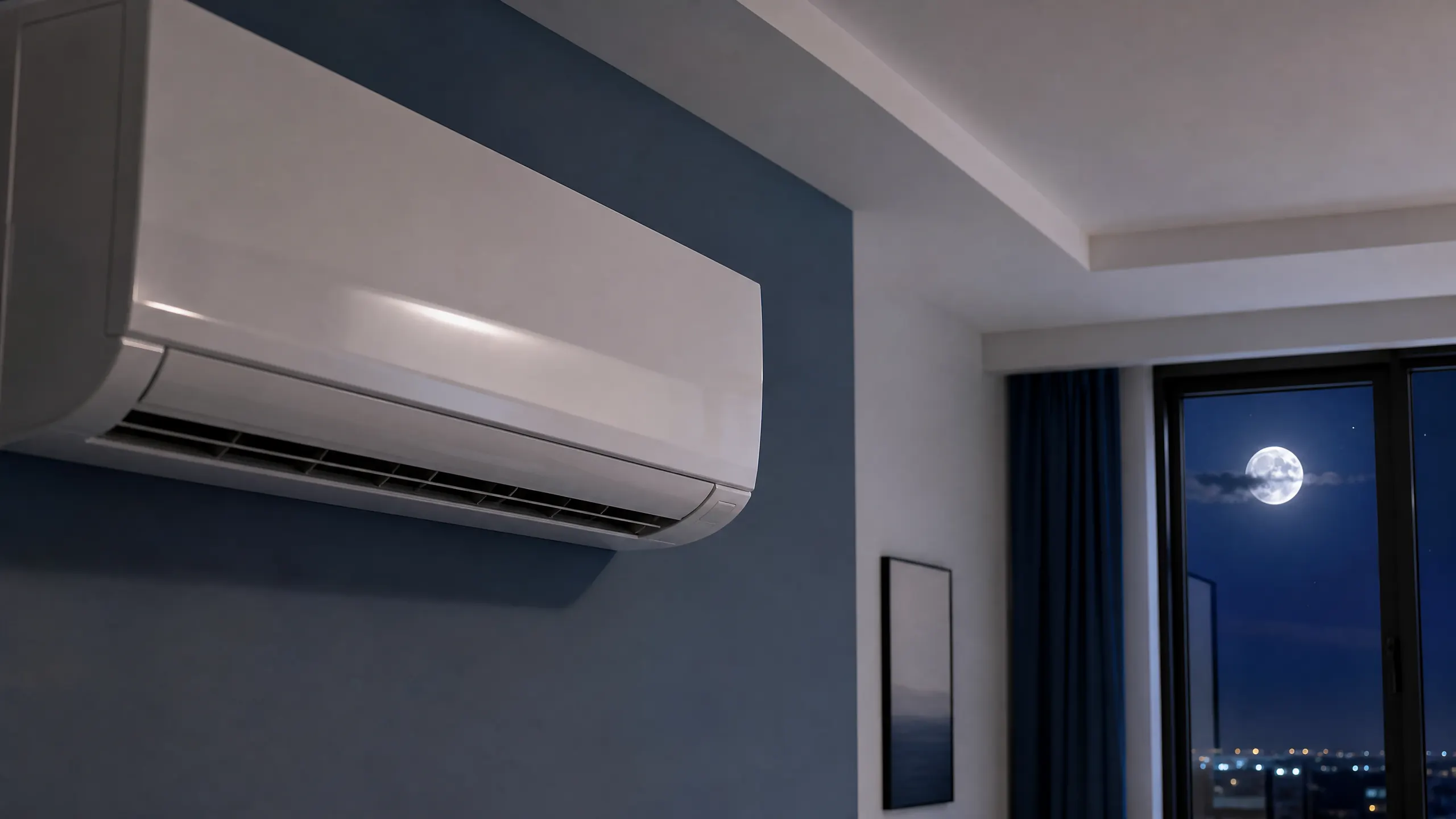
A white wall-mounted split air conditioner on a blue-grey wall, with a moonlit night sky visible through a nearby window.

Mini Split Installation in Sugar Land, TX

Tell us about the job

Takes about a minute. No obligation.

Step 1 of 3: Equipment

Electricity here runs 14.94 cents per kilowatthour

Texas homes paid that rate on average in 2024. A mini split that sits at a low efficiency number spends more of every kilowatthour on waste heat, and at this rate that waste shows up fast on the bill.

The efficiency rating is what you're buying

Two mini splits can cost the same to install and run very differently. When you're comparing units for a Sugar Land home, the efficiency number matters as much as the price tag, because this state's power rate makes the gap between an efficient unit and a weak one show up every single month.

4 months
November through February, your system heats
7 months
April through October, it cools
46°F
the average winter night it heats against
93°F
the average summer afternoon it cools against
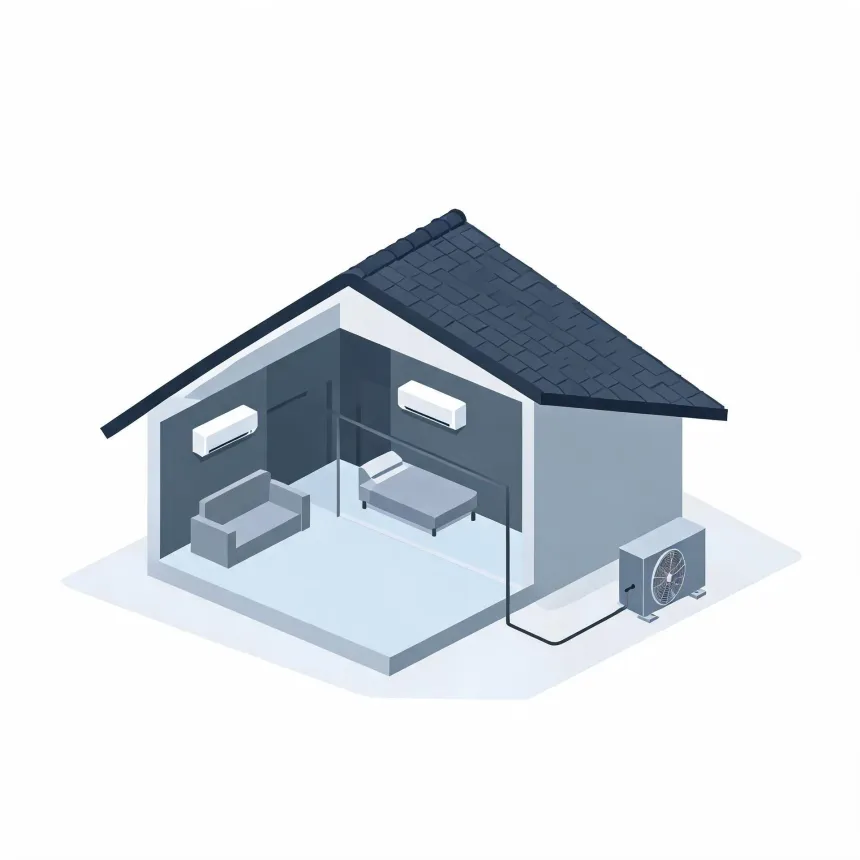
Isometric illustration of a cutaway house showing two wall-mounted indoor air conditioning units connected by a line to an outdoor condenser unit beside the building, with a sofa and bed inside.
Your system heats November through February and cools April through October.

NOAA nClimDiv, 1991–2020 normals

Cooling runs April through October here, seven months straight on the mini split.

Put the install in before April and the unit starts the season already broken in, not under a first heat wave.

Fort Bend County sees 91 severe weather events a decade, and a third of Texas homes lost power a day or more in 2024

91 severe weather events from 2015 to 2024
33% of homes statewide lost power a day or more in 2024
39 damaging wind events from 2015 to 2024

A mini split here runs cooling April through October, seven months straight, and June through August the afternoon high averages 93 degrees. That's not a handful of hot days to get through. It's a long run where the unit has to hold a big gap between outdoor and indoor air, day after day. A system too small for the space will run flat out trying to close that gap and still fall short on the worst afternoons. One sized to the room, the windows, and the sun it gets will cycle the way it's meant to and hold steady instead. Get the sizing wrong and it shows up every summer, not just the hottest stretch of it.

Know what you're installing before the quote

Most Fort Bend County homes heat with gas, not electricity. A mini split handles cooling either way, but if your home doesn't already have ductwork for central air, it's worth knowing what you're replacing or adding before the crew shows up.

Find a contractor
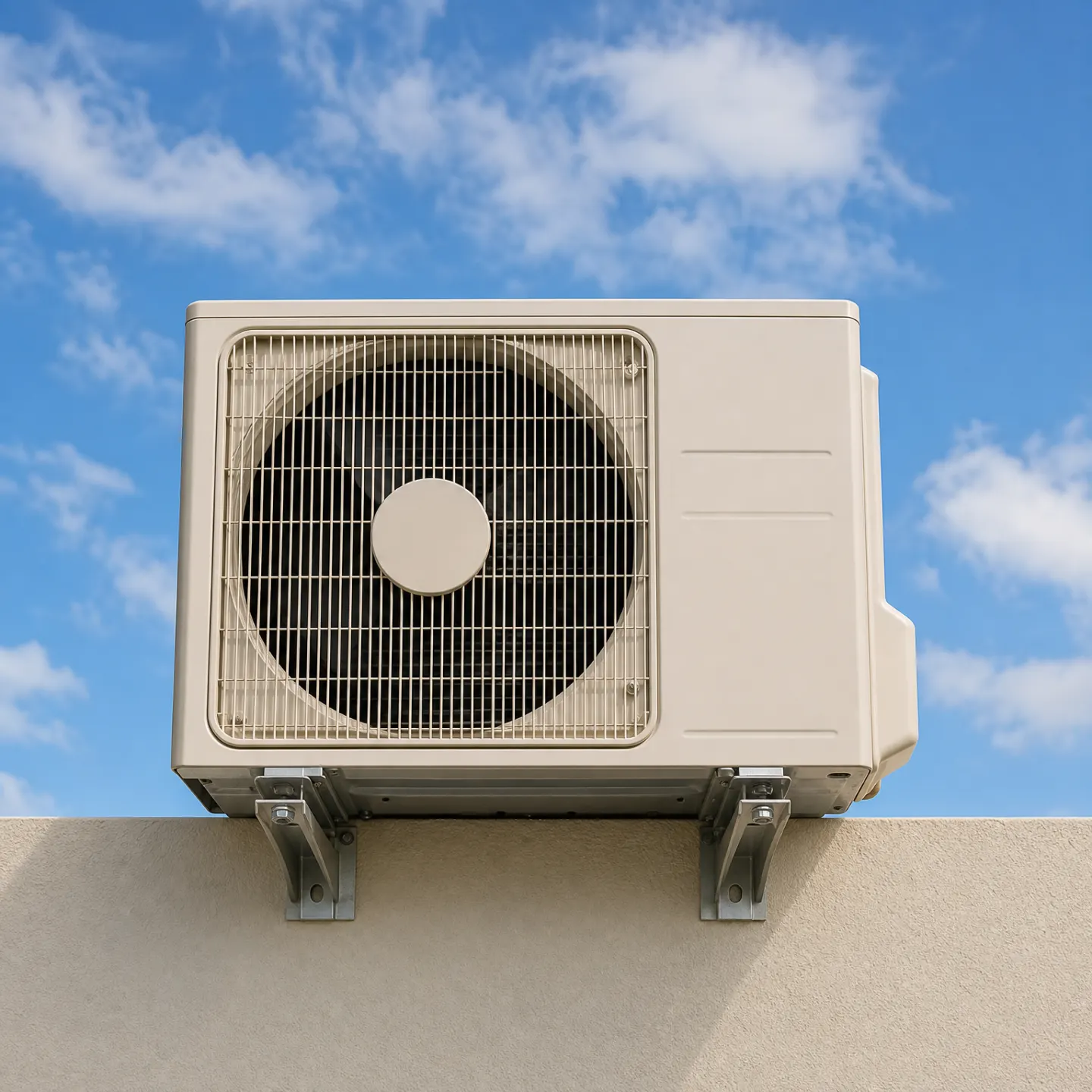
A beige split-system air conditioner outdoor condenser unit mounted on metal wall brackets atop a stucco wall.

Sized once, it runs this way every summer

Seven months of cooling, with afternoons at 93 degrees, is the load this unit sizes against. Get a load calculation done for the room, not a guess based on square footage or what the last unit was rated for. A contractor who skips that step and quotes off a floor plan is pricing a unit, not sizing one for your house. Ask what they used before you compare numbers.

The rating is a ratio, not a size

The efficiency number on a mini split tells you how much cooling comes back for the electricity it uses. It says nothing about whether the unit is strong enough for the room. A high rating on an undersized unit still leaves the room short on the hottest afternoons. Sizing and efficiency are separate questions, and both need an answer.

The rating holds only if the install is right

The number on the label comes from lab testing with the line set at a certain length and the refrigerant charge exact. Run the lines longer than they should be, or get the charge off even slightly, and the unit stops performing to its rating. A careful install earns that number. A rushed one doesn't, no matter what the label says.

What you pay for with a mini split install is mostly labor and judgment, not the box on the wall. The indoor and outdoor units are only part of it. Running the line set, the refrigerant lines between indoor and outdoor units, takes time and skill. The length and path of that run affects both the price and how well the system ends up performing. A straight run through one wall costs less than one that has to snake around framing or climb several stories. The electrical work matters too. A dedicated circuit sized to the unit, run to code, is not optional. Multi-zone systems cost more than single-zone for a plain reason. Each indoor head needs its own line set and its own careful charge of refrigerant. The mounting work matters just as much, getting the outdoor unit placed where it drains properly and gets enough airflow, and getting the indoor head positioned so it delivers air to the whole room instead of one corner of it. Rushed mounting work doesn't show up on install day. It shows up later.

Install day starts with the outdoor unit and the indoor head going up before any line set gets run. The crew mounts the outdoor pad or bracket first, since that spot has to drain well and get clear airflow, and it decides how the rest of the run gets routed. Next comes the hole through the wall for the line set, the refrigerant lines, the electrical whip, and the condensate drain, all bundled through one penetration. Once the lines are run and connected at both ends, the system gets evacuated with a vacuum pump to pull out air and moisture before any refrigerant moves through it. Skipping that step is the single biggest reason a new mini split underperforms from day one. Only after the vacuum holds does the unit get charged and powered on, and a good installer checks static readings and airflow at the head before calling it done.