


Texas Cooling Help
Two single-story brick suburban houses with attached garages and mature trees, photographed at night under a dark blue sky.

Mini Split Installation in Sherman, TX

Tell us about the job

Takes about a minute. No obligation.

Step 1 of 3: Equipment

Grayson County saw 150 hail events between 2015 and 2024, and the outdoor unit for a mini split sits right out in the weather. Where it goes and what it's mounted on matters more here than in places that see quieter storms. A mini split has an advantage after a storm knocks the power out. Each indoor head runs on its own, so a bedroom or a living room can get heat or cooling back without waiting on the rest of the house. That matters in this county, where a third of Texas households went at least a day without power in 2024. Ask the installer about surge protection for the outdoor unit and where to mount it so hail and wind debris do the least damage.

5 months
November through March, your system heats
5 months
May through September, it cools
35°F
the average winter night it heats against
93°F
the average summer afternoon it cools against
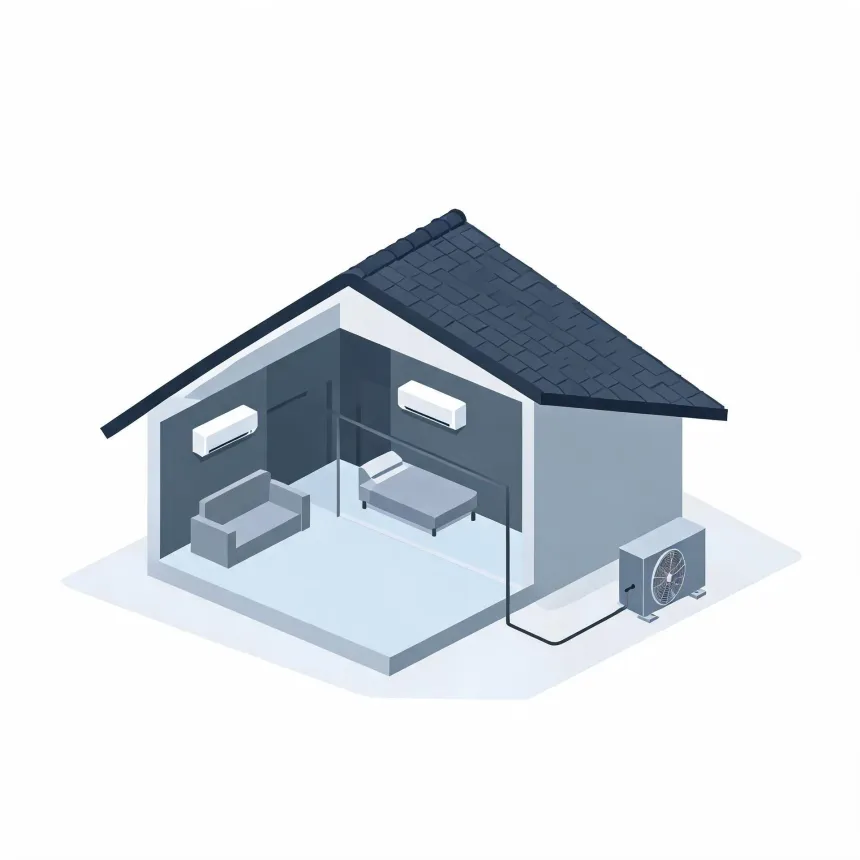
Isometric illustration of a cutaway house showing two wall-mounted indoor air conditioning units connected by a line to an outdoor condenser unit beside the building, with a sofa and bed inside.
Your system heats November through March and cools May through September.

NOAA nClimDiv, 1991–2020 normals

Texas electricity ran 14.94 cents per kilowatt-hour in 2024.

A mini split that holds its efficiency keeps paying that rate back to you, not the other way around.

Most homes in Grayson County already run on electricity, and a mini split fits right into that

60% of homes heat with electricity
Cooling runs May through September
Summer afternoons average 93°F

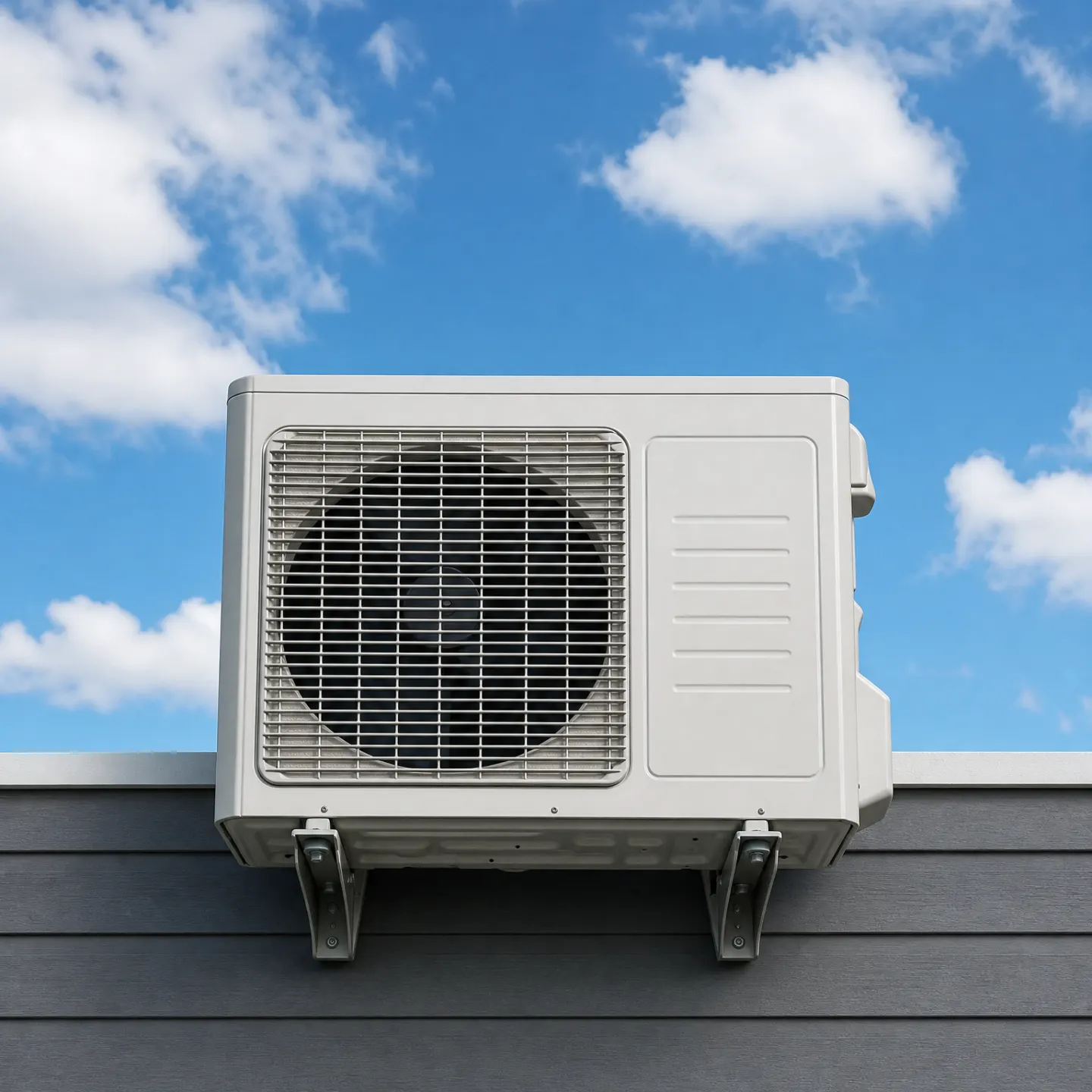
Mounting height is worth asking about before the crew shows up. An outdoor unit set low to the ground catches more wind-blown debris and sits closer to standing water after heavy rain. Grayson County has had 79 damaging wind events between 2015 and 2024, on top of the hail, so a bracket mounted higher on the wall or a pad set well clear of the drip line both do real work. If the county gets another ice storm like the ones recorded in that same stretch, a unit that's off the ground and clear of roof runoff is easier to keep running. None of this takes long to decide. It just has to happen before the install, not after.

Get it installed before cooling starts in May

Cooling here runs May through September. Have it installed in April and the crew can mount the outdoor unit, run the lines and check the system before the heat sets in, not while it's already running.

Find a contractor
A white outdoor air conditioner condenser unit mounted on metal wall brackets against gray horizontal siding, with a blue sky and white clouds behind it.

Five months of real heat, every year

Cooling here runs May through September, five months straight. Afternoon highs average 93°F through June, July and August. That's five months of the system working at or near full load, not a few hot weeks here and there. A mini split sized right for this county handles that without trouble. One sized wrong shows it early, a compressor that runs longer than it should, a head that can't keep a room cool when the afternoon heat sets in. Ask what tonnage the installer is sizing for and why, not just what fits the budget.

Taking out the old system

If a central system is coming out, the installer disconnects the ductwork or caps it off, and the refrigerant gets recovered before any line is cut. That recovery step is required. The old condenser, air handler or furnace gets hauled off once the new mini split is in and running, not before, so there's no gap without heat or cooling.
What it means for the job

Removal adds time to the install, especially if the old equipment is tied into ductwork that won't be used anymore. Ask whether the crew is hauling the old unit away as part of the job or whether that's a separate call. It's worth settling before the crew arrives, not after they've already pulled the old system out.

What drives the cost of a mini split install is mostly what the crew has to do beyond hanging the indoor head on a wall. The line set between the outdoor unit and each indoor head has to be run through the wall, insulated and sealed, and the distance and the path it takes, through a closet, up through an attic, around framing, change how long that takes. A system with one outdoor unit feeding several indoor heads costs more in equipment and labor than a single zone, because each head needs its own line set and its own power. Electrical work adds to it too. A mini split needs a dedicated circuit, and if the panel doesn't have room or the wiring to the outdoor unit location isn't already there, that's its own job before the mechanical work even starts. Where the outdoor unit ends up, a pad at ground level or a bracket mounted on the wall, also factors in, since one takes concrete work and the other doesn't.

Installation day starts outside, not in. The crew sets the outdoor unit first, on the pad or bracket agreed on ahead of time, because everything else runs off that location. Then comes the line set, the refrigerant lines and wiring that connect the outdoor unit to each indoor head, run through a wall sleeve drilled for that purpose. Each indoor head gets mounted on an interior wall, leveled, and connected back to that line set. Once everything is run and sealed, the system gets charged with refrigerant and tested, each head checked for airflow and temperature before the crew calls it done. A single zone might wrap up in a day. More than one indoor head, or a line set that has to travel through an attic or around framing, stretches that out.