



Texas Cooling Help
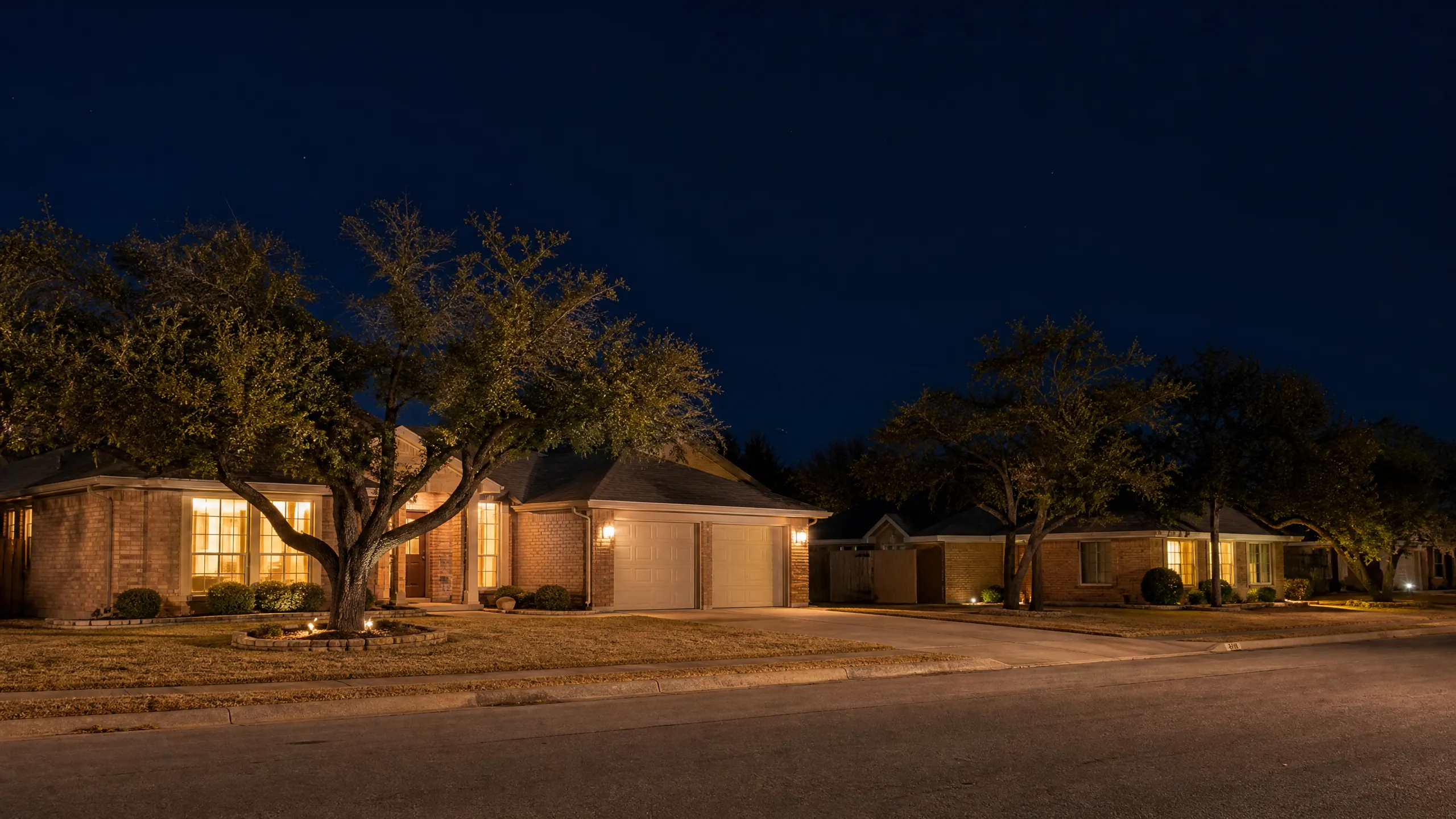
Two single-story brick suburban houses with attached garages and mature trees, photographed at night under a dark blue sky.

Mini Split Installation in Seguin, TX

Tell us about the job

Takes about a minute. No obligation.

Step 1 of 3: Equipment

A mini split's SEER2 rating matters more here than in a cheaper state, since Texas homes paid 14.94 cents per kilowatt-hour in 2024. That rate applies whether the system is efficient or not, so the difference shows up entirely in how much power it draws to do the job. A unit sized right for the room it serves will cycle on and off instead of running flat out, and that's where the savings actually come from. One running loose with the wrong capacity, too big or too small for the space, works harder to reach the thermostat setting and pulls more power doing it. Ask whatever contractor quotes the job for the SEER2 number and the load calculation for the room, not just the brand name.

5 months
November through March, your system heats
7 months
April through October, it cools
42°F
the average winter night it heats against
95°F
the average summer afternoon it cools against
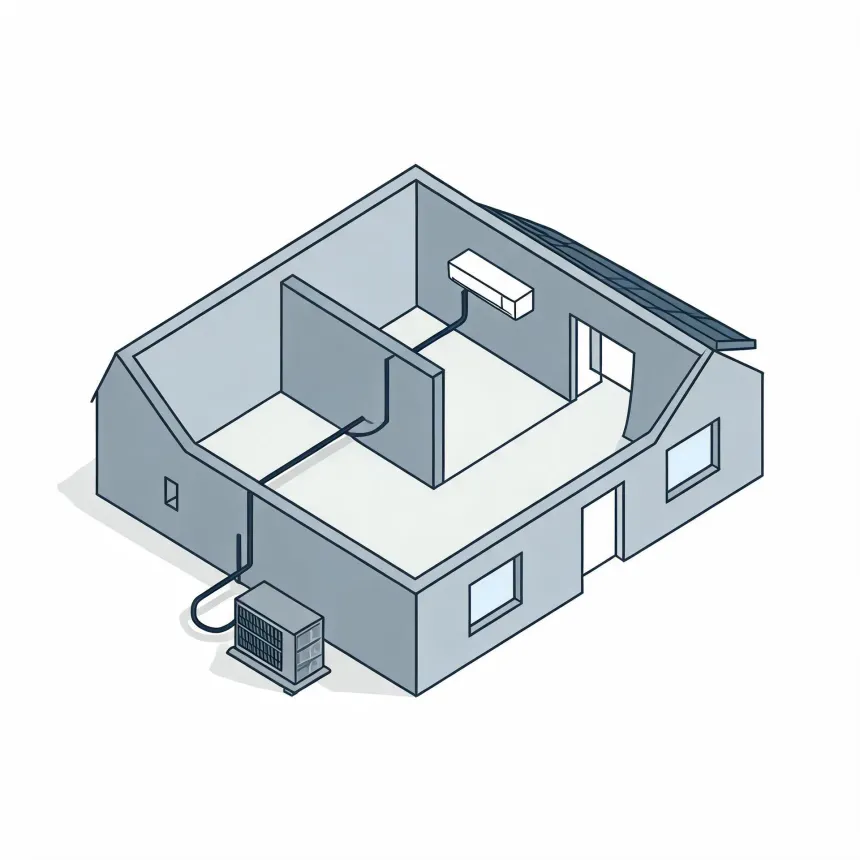
Isometric line illustration of a cutaway house showing an interior wall-mounted air conditioning unit connected by a line to an outdoor condenser beside the exterior wall.
Your system heats November through March and cools April through October.

NOAA nClimDiv, 1991–2020 normals

Electricity heats 84.6% of homes in Guadalupe County.

A mini split runs on electricity already, so it drops into this house without a fuel change.

Seven months of cooling, with afternoons near 95°F

Cooling runs April through October
Summer afternoons average 95°F
Power costs 14.94 cents a kWh statewide

Get the SEER2 number and the load calculation in writing before the work starts, not after. Once the line set is run and the unit is mounted on the wall, you're living with whatever capacity got installed. A contractor who won't commit to a number on paper before the job usually hasn't done the math. That number is what decides the power draw on every bill this unit pulls for as long as it runs.

A mini split here has to meet 14.3 SEER2, and some systems qualify for a federal credit

Guadalupe County falls in climate zone 2A, and any mini split installed here, ductless units included, has to meet 14.3 SEER2 for cooling and 7.5 HSPF2 for heating under the federal standard. That floor is already set before a contractor shows up with a quote. A federal tax credit is available on qualifying systems, so it's worth asking which models on the quote meet it.

Find a contractor
A man in a cap, long-sleeved shirt and work pants carries a canvas tool bag up concrete steps toward a wooden front door of a gray-sided house, with a shrub in a terracotta pot to the right.
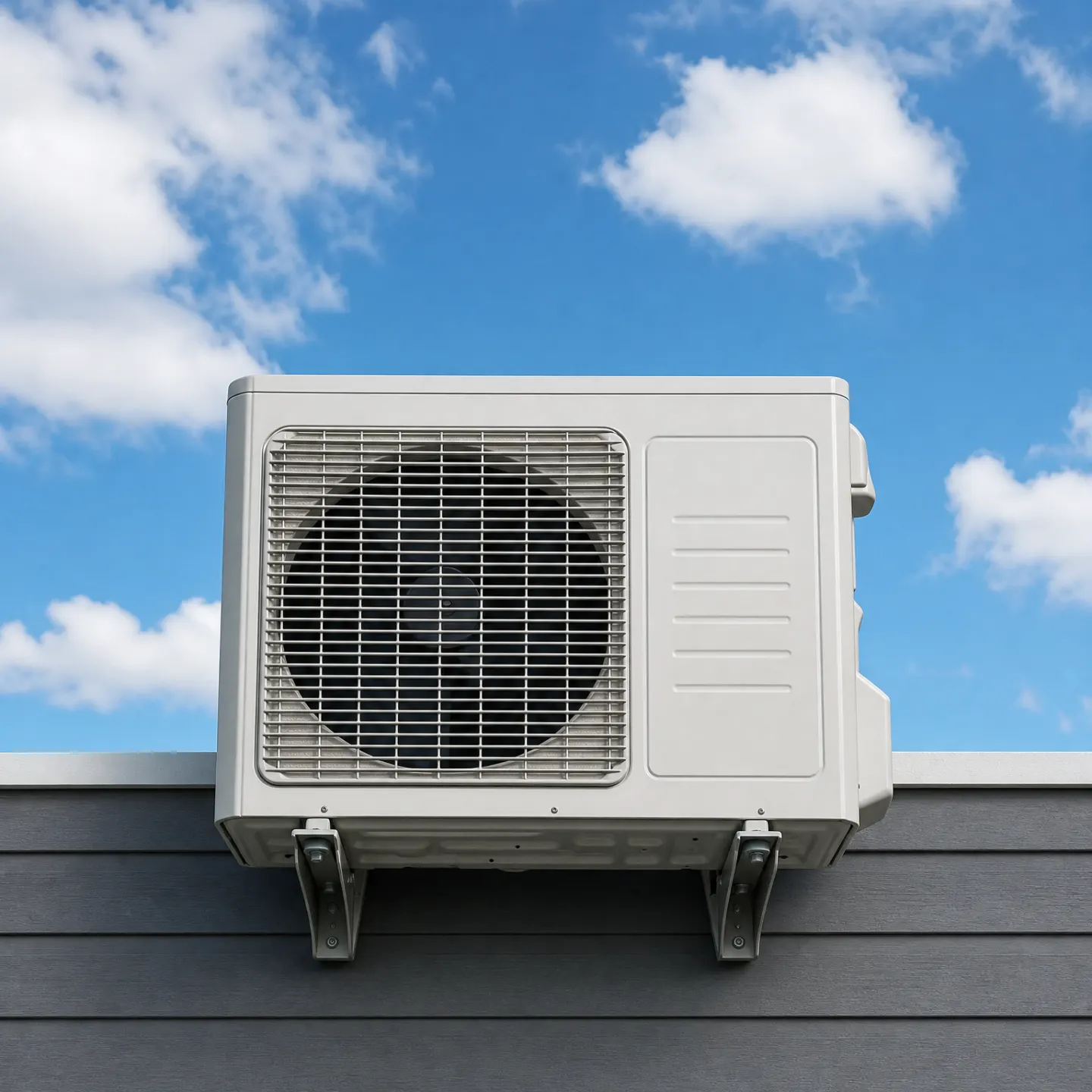
A white outdoor air conditioner condenser unit mounted on metal wall brackets against gray horizontal siding, with a blue sky and white clouds behind it.

What to ask before you compare quotes

A compressor built to run long stretches every season wears differently than one that only kicks on now and then, so it's worth asking how this one is staged. Some run at one speed and shut off fully between cycles. Others throttle down and hold a lower output instead of stopping, which means less wear on the bearings and windings over time since the hard part is always the start, not the running. Ask whether the outdoor unit has a base pan heater. Ice building up under the unit during a cold snap blocks the condensate drain and forces the system into defrost more often than it needs. Ask about the refrigerant line length the system is rated for, too, and whether the install being quoted falls inside that range. A line run longer than the compressor is rated for makes it push harder to move refrigerant through the extra distance, on every cycle, for as long as the system runs.

The number of zones changes the job

One indoor head paired with one outdoor unit is a simpler install than a system feeding several rooms off one compressor. Each added zone means another line set run through the wall, another mounting spot picked and leveled, and another spot where the refrigerant lines get brazed and pressure tested. More zones means more labor before anyone turns the system on.
Where the outdoor unit sits adds or saves work

A condenser placed close to where the indoor head goes keeps the line set short and the path simple. One that has to sit farther away, or around a corner of the house, means a longer line set and more wall or soffit to route it through. The electrical run to the outdoor unit matters too. If the panel is far from where the unit lands, that's more wire and more conduit to install.

Sizing a mini split means matching its output to the heat gained through the walls, windows, and roof of the one room it serves, not guessing from square footage alone. Too big and it cools the air fast, shuts off, and leaves the room sticky because it never ran long enough to pull moisture out. Too small and it runs constantly, straining to hold a setting it can't quite reach on the hottest afternoons. A proper load calculation looks at window size and facing, ceiling height, insulation, and what's on the other side of each wall. That math is what tells a contractor which capacity unit to mount, not a chart matched to room size alone.

Installation day starts outside, not in. The outdoor unit gets mounted on brackets or a pad, leveled so the compressor inside doesn't run at an angle for years. Inside, the contractor marks where the indoor head goes, high on the wall, clear of furniture and sunlight, then drills through for the line set. That line set, the refrigerant lines, the condensate drain, and the electrical, all get run through a single small hole and connected on both ends. The lines get brazed, then the whole system gets pulled down to a vacuum to clear out moisture and air before any refrigerant moves through it. Skip that step and moisture sits in the lines, and it causes problems long after the crew leaves. Once the system holds vacuum, refrigerant gets released, the unit gets powered on, and the contractor checks the temperature split between the air going in and the air coming out to confirm it's running the way it should.