


Texas Cooling Help
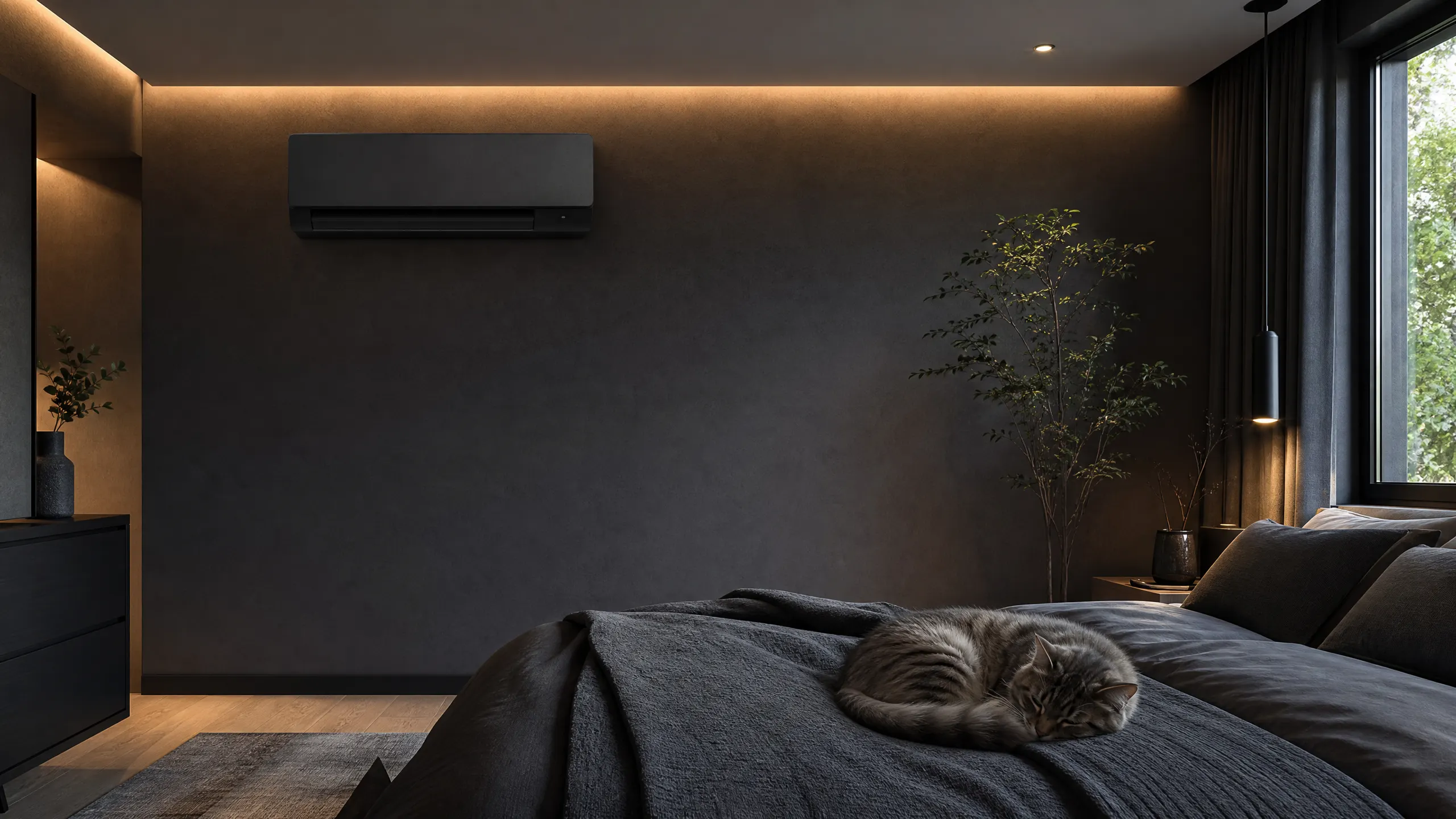
A gray tabby cat sleeps curled up on a dark gray bed in a dimly lit modern bedroom with warm ceiling cove lighting and a wall-mounted air conditioning unit.

Mini Split Installation in San Marcos, TX

Tell us about the job

Takes about a minute. No obligation.

Step 1 of 3: Equipment

A mini split runs on electricity, and Texas homes paid 14.94 cents per kilowatthour in 2024. That rate applies whether the unit fits the room or not. One sized and installed right will hold a room's temperature without the compressor cycling on and off more than it needs to. An oversized unit cools the air fast, shuts off, then kicks back on again soon after. Each of those cycles draws power. The efficiency rating on the unit you choose matters more here than it would somewhere with cheaper power, because whatever it saves gets multiplied by every kilowatthour at the San Marcos rate.

5 months
November through March, your system heats
7 months
April through October, it cools
41°F
the average winter night it heats against
94°F
the average summer afternoon it cools against
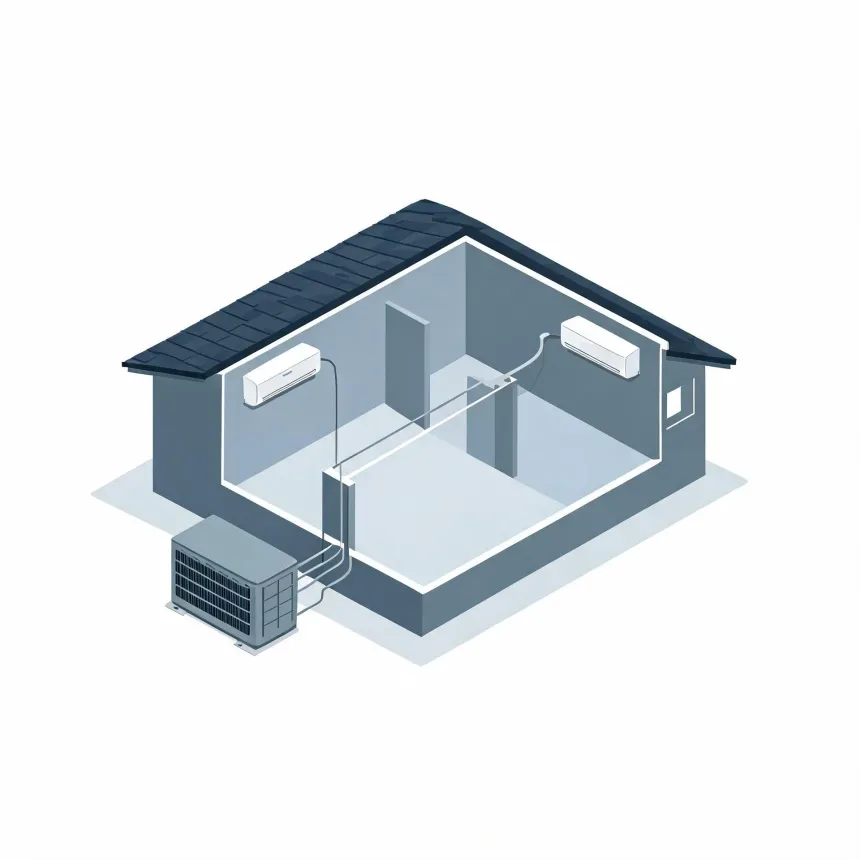
Isometric illustration of a cutaway house showing two wall-mounted mini-split indoor units connected by line sets to a single outdoor condenser beside the exterior wall.
Your system heats November through March and cools April through October.

NOAA nClimDiv, 1991–2020 normals

Cooling runs April through October here, seven months straight.

Get the mini split installed in March, so it's already running before the first hot week hits.

Hays County gets hit with storms. Where you mount the outdoor unit should account for that.

108 severe weather events from 2015 to 2024
33% of homes statewide lost power a day or more in 2024
36 damaging wind events from 2015 to 2024

Most homes in Hays County heat with electricity, 62.1 percent. Utility gas comes in well behind at 31.0 percent, with bottled or LP gas a small slice at 5.8 percent. A mini split fits that pattern, since it heats and cools on electricity alone and needs no gas line run to it. That's one less thing to plan around during installation. If the home already runs on electric heat, adding a mini split means working with a system the house is already set up for, not against it.

Any mini split installed here has to meet this region's efficiency minimum

Hays County falls in climate zone 2A, and a mini split sold here has to clear 14.3 SEER2 for cooling and 7.5 HSPF2 for heating, the same minimum as any other split system. That floor is already built into what's on the market. A federal tax credit is available on top of it for qualifying equipment.

Find a contractor
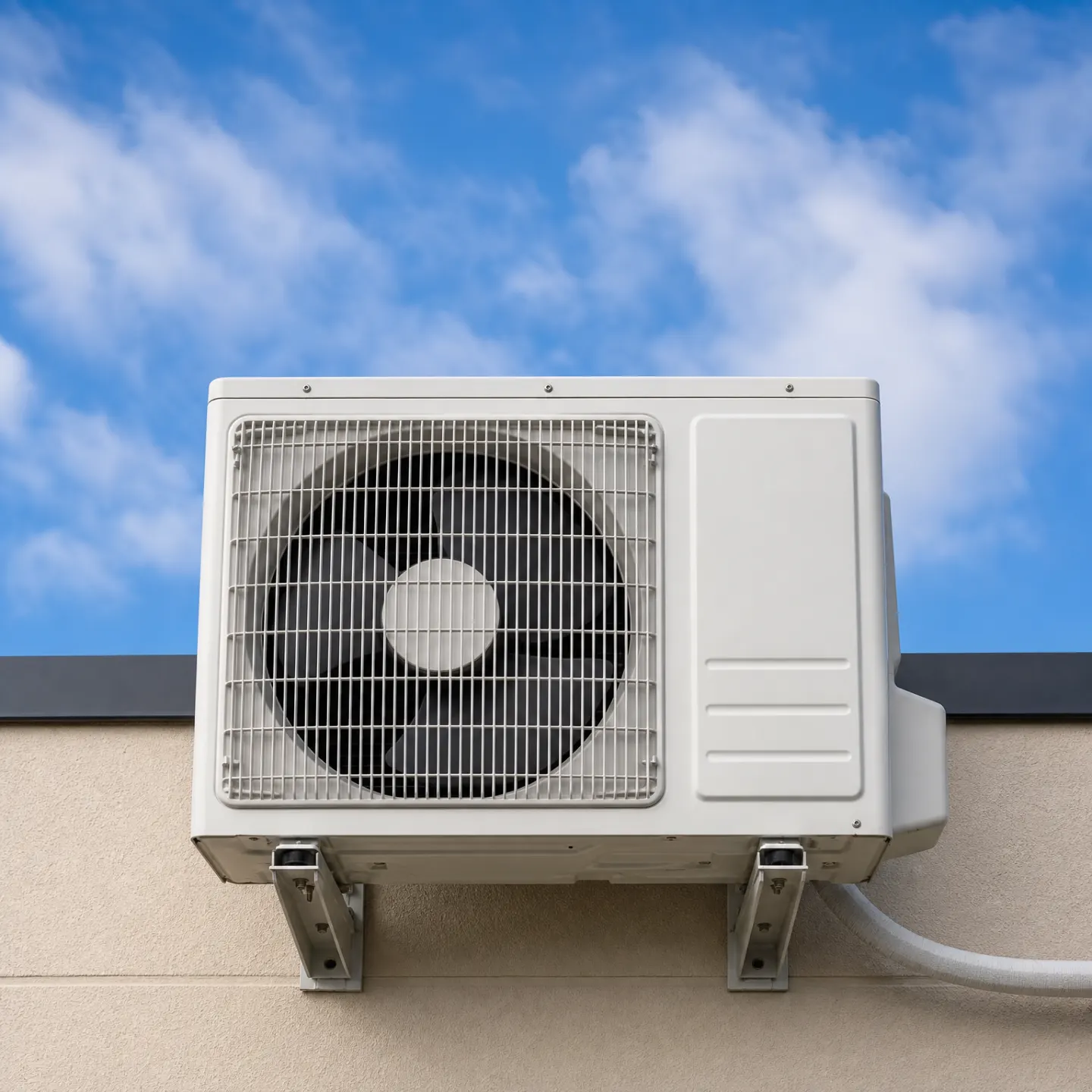
A white mini-split air conditioner outdoor condenser unit mounted on metal brackets against a beige stucco exterior wall, with a blue sky and scattered clouds in the background.

What happens to the system you're replacing

Whatever is being replaced does not get reused. A mini split moves heat differently than a furnace or a window unit, so the old equipment comes out rather than staying as a backup. A window unit is simple. It gets pulled and the opening gets closed up. A central system is more involved. The old air handler comes out, the refrigerant lines get disconnected, and any ductwork that no longer has a job once the mini split is running either stays sealed off or comes out too. Refrigerant left in the old lines has to be recovered properly rather than vented, so that is a step to expect, not a surprise. None of it runs alongside the new system to see how it does. Once the mini split is in and holding the room's temperature on its own, the old equipment's work is finished.

How many zones, and what each one covers

A mini split system can run one indoor head or several off the same outdoor unit. Ask what's being proposed and why. One head in an open living area works differently than a head in every bedroom. More zones means more control room to room, but each indoor head is another thing that needs its own clear wall space and its own line set run to the outdoor unit.
What happens if a zone needs service later

On a multi-zone system, the indoor heads share one outdoor compressor. Ask what it means for the rest of the house if one head needs a repair. Some systems let the others keep running while one is worked on. Others don't. That's worth knowing before the system goes in, not after something breaks.

Sizing a mini split comes down to how much heat moves through the walls, windows and roof of the space it's covering, not the square footage alone. A contractor works that out room by room, accounting for how many windows face the sun, how much shade the room gets, and what's on the other side of each wall. Get it wrong and both directions cause trouble. Too big, and the unit blasts the room cold, shuts off, then starts again before it's pulled the moisture out of the air, leaving the room cold and clammy. Too small, and it runs constantly without ever catching up on the hottest or coldest days. The right size looks almost boring by comparison. It runs long, steady cycles and holds the temperature without strain. That calculation also has to account for every indoor head on the system, since each one draws from the same outdoor compressor and the sizing has to work for the whole house, not just one room.

What drives the price on a mini split job is mostly labor, not the box on the wall. Running the line set between the indoor head and the outdoor unit takes time, and it takes longer if that line has to go through brick, stucco, or a tight attic space rather than a straightforward exterior wall. Every indoor head needs its own line set and its own electrical run, so a multi-zone system costs more mainly because there's more of that work to do, not because the equipment itself is that much pricier. Where the outdoor unit ends up matters too. A mounting spot that needs a pad poured or a bracket built out takes more time than one with a clear, level spot waiting. Electrical work can add to it as well, if the panel doesn't already have room for another circuit. None of that shows up by looking at the equipment alone, which is why jobs that look alike on paper can still cost differently once the walls and the wiring get involved.