



Texas Cooling Help
Single-story brick ranch houses with lit garages and large oak trees along a residential street at dusk.

Mini Split Installation in San Antonio, TX

Tell us about the job

Takes about a minute. No obligation.

Step 1 of 3: Equipment

Electricity in Texas ran 14.94 cents per kilowatthour in 2024, and a mini split's biggest advantage is how little of it the system needs to move heat in or out of a room. There's no ductwork losing air on the way to a vent, and the compressor only works as hard as the room actually calls for. Set it to cool one bedroom at night and it draws power for that bedroom, not the whole house. That matters more here than somewhere with cheaper power, because every kilowatt saved on a Texas bill is worth more than the same kilowatt saved elsewhere. A unit sized right for the space you're putting it in will keep showing that difference, month after month, for as long as you run it.

5 months
November through March, your system heats
7 months
April through October, it cools
43°F
the average winter night it heats against
95°F
the average summer afternoon it cools against
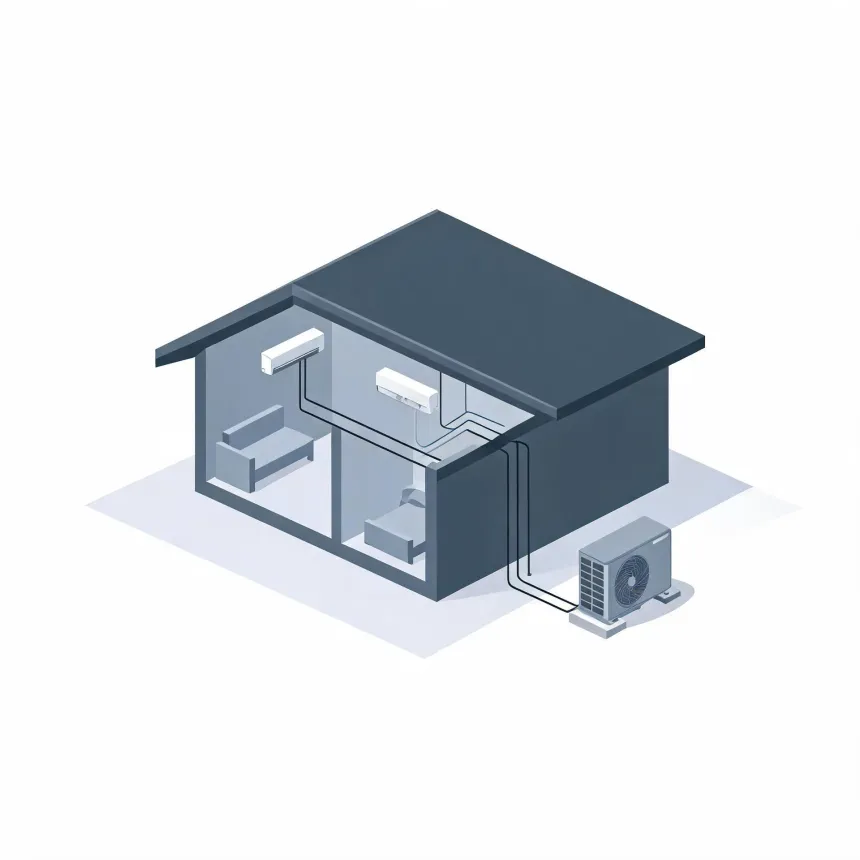
Isometric illustration of a cutaway house showing two wall-mounted mini-split indoor units connected by line sets to an outdoor condenser on a pad outside.
Your system heats November through March and cools April through October.

NOAA nClimDiv, 1991–2020 normals

Every quote should list a specific number of zones and the exact head location in each room.

A vague quote means a vague install, and you'll find out what got skipped after the walls are patched.

Most homes here already run on electricity, so a mini split fits right in

69.6% of homes heat with electricity
Cooling runs April through October
Summer afternoons average 95°F
Get it in before AprilCooling runs April through October here, so March is the month to get a mini split in.

Bexar County sits in climate zone 2A, a hot, humid zone where cooling carries most of the load all year. Any mini split installed here has to meet the federal minimum for a split-system heat pump, 14.3 SEER2 for cooling and 7.5 HSPF2 for heating. That's not a ductless-specific rule. The standard treats a mini split as a split system like any other and holds it to the same floor. If you're looking at a unit already in stock, check the nameplate date, since older stock may carry different numbers than what's required now.

Seven months of cooling a year means sizing matters here

Cooling runs seven months here, April through October, with afternoon highs averaging 95°F through June, July and August. A mini split sized right for the room keeps up with that load all season. One sized wrong will struggle through the summer, and it'll show in how hard it has to run to keep up.

Find a contractor
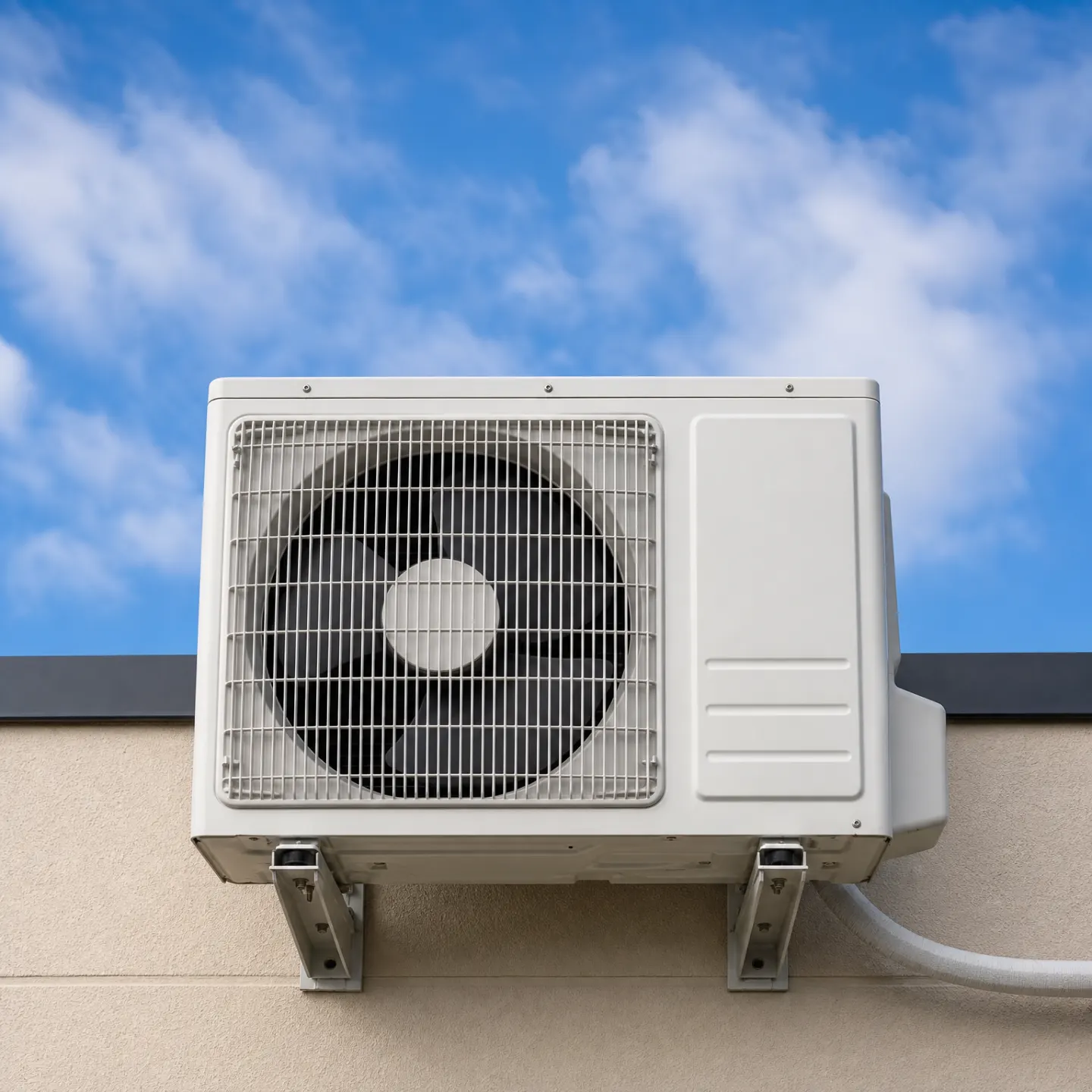
A white mini-split air conditioner outdoor condenser unit mounted on metal brackets against a beige stucco exterior wall, with a blue sky and scattered clouds in the background.

Ask for the load calculation, not a square footage guess

A load calculation looks at the room itself, not just its square footage. Sun exposure, ceiling height, how many walls face outside, all of it changes what size unit the room needs. Ask whether the quote is based on one of those or just a square footage guess. A unit sized off a guess can run flat out through August and still lose ground on the hottest afternoons.

Bigger isn't better here

An oversized mini split cools the air fast and shuts off before it pulls the moisture out of the room. That leaves the space cold and clammy at the same time, and the compressor is starting and stopping all day instead of running steady. A unit sized to the room's actual load runs longer, lower cycles and pulls the humidity down along with the temperature.
The room sets the number, not the brochure

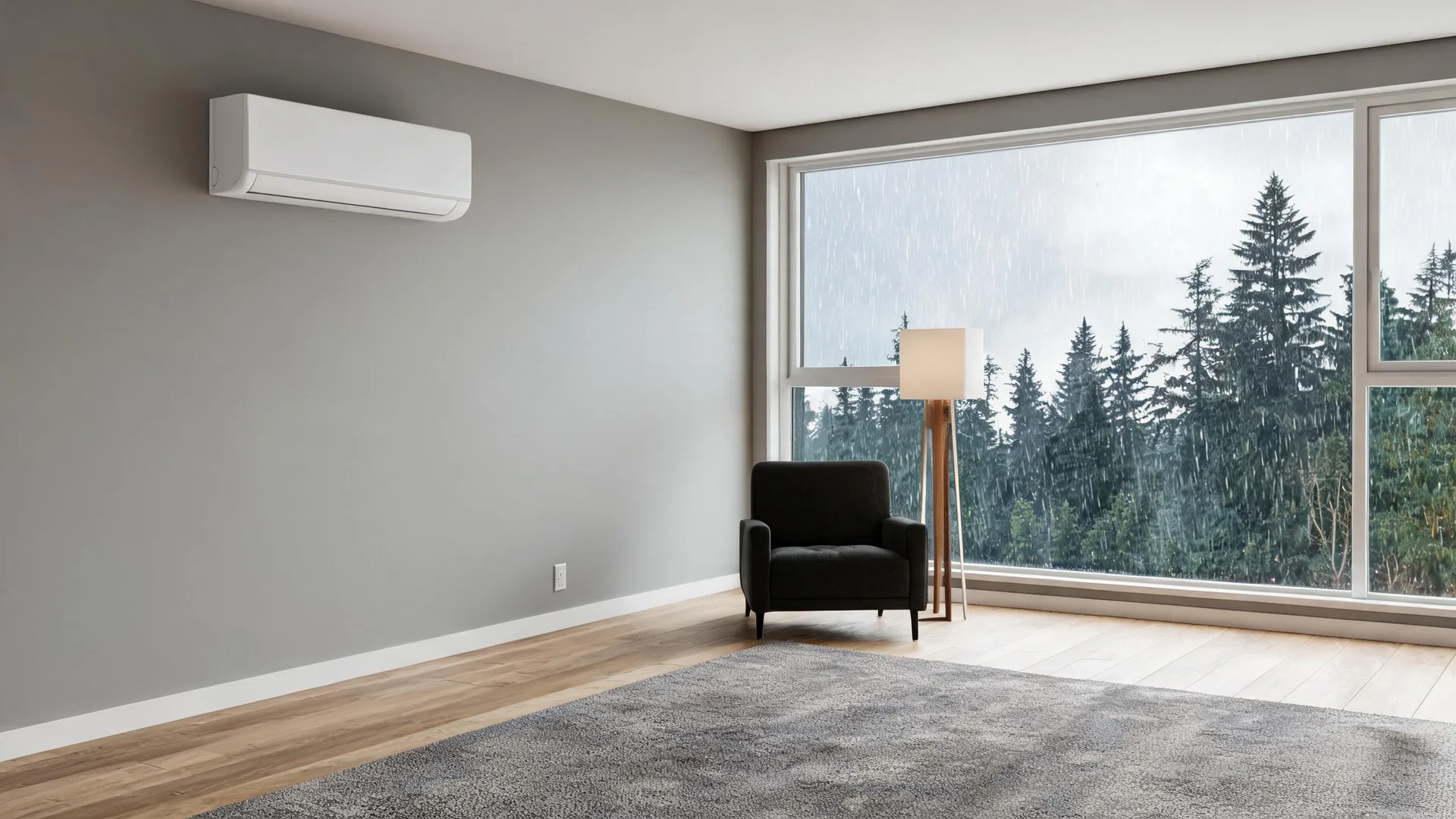
Bedrooms with the same floor space can still need different sized heads, depending on which way the windows face, how high the ceiling runs, and whether an attic sits right above. That's why a tech measures the room instead of handing you a chart. Get the sizing wrong on a zone and that head either short-cycles or runs flat out, and neither one is fixable once it's mounted on the wall.

Price comes down mostly to how many zones you're running and how hard the install itself is. A single head feeding one room is the simplest version of this job. Add zones and you add line sets, each one run from the outdoor unit to its own indoor head, and each run has to be sized and charged correctly on its own. Where the outdoor unit sits matters too. A straightforward wall penetration costs less labor than a run that has to go up through an attic or across a long stretch of exterior wall. Electrical work can be its own line item, since some systems need a dedicated circuit and that means running new wire back to the panel. Mounting height, condensate drainage, how the line set gets concealed outside, all of that is labor before the unit ever turns on.

Install day starts with the outdoor unit and the line set path, not the indoor head. The tech runs the line set first, from where the compressor will sit to where each head mounts, because that path decides everything else. Refrigerant lines, a condensate drain and an electrical whip all travel together through one wall penetration, usually no bigger around than a soup can. Once that's run, the indoor head goes up on its mounting plate, and the outdoor unit gets set on a pad or brackets outside. The lines get connected, then the system gets pulled down into a vacuum before any refrigerant moves, which clears out moisture and air that would otherwise ruin the compressor. Only after it holds vacuum does the tech open the line and charge the system, then run it through both cooling and heat to check pressures and airflow at the head.