Texas Cooling Help
A twilight view of single-story brick homes on a suburban street, lit by warm amber landscape spotlights that illuminate the facades and surrounding trees.

Mini Split Installation in San Angelo, TX

Tell us about the job

Takes about a minute. No obligation.

Step 1 of 3: Equipment

How many zones you need

Each indoor head cools and heats one room or one open area. A house that needs several heads to cover the living space costs more than one that only needs a single head for an addition or a converted garage. The line set and wiring run from each indoor head back to the outdoor unit, so more heads also means more of that work.

Where the outdoor unit can go

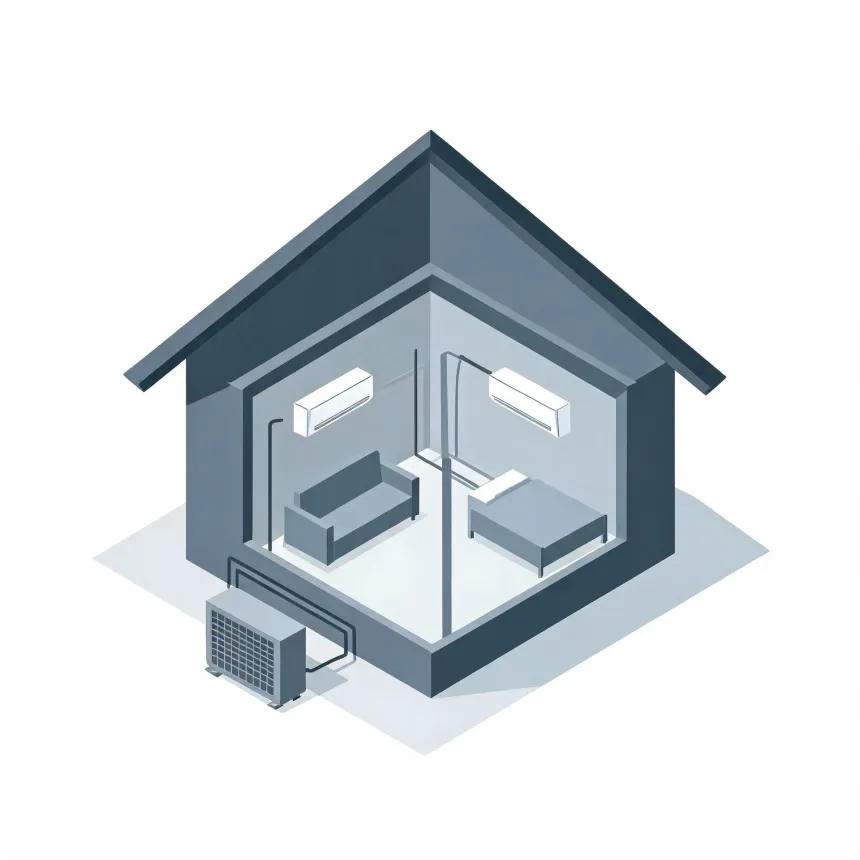
The outdoor unit needs a clear, level spot with room for air to move across the coil, and a path back to each indoor head that doesn't fight the walls or the roofline. A straightforward run keeps the job simple. A wall that's hard to get through, a long distance to the indoor heads, or a tight spot for the outdoor unit all add work before the system ever turns on.

5 months
November through March, your system heats
7 months
April through October, it cools
34°F
the average winter night it heats against
95°F
the average summer afternoon it cools against
Isometric cutaway illustration of a small gray house showing two rooms, one with a sofa and one with a bed, each with a wall-mounted indoor air conditioning unit connected by line sets to an outdoor condenser unit on the ground outside.
Your system heats November through March and cools April through October.

NOAA nClimDiv, 1991–2020 normals

Electricity in Texas ran 14.94 cents per kilowatt-hour in 2024.

A mini split that holds its SEER2 rating all summer keeps more of that rate off your bill than a system that falls short of it.

Cooling runs seven months here, with afternoons near 95

Cooling runs April through October
Summer afternoons average 95°F
171 damaging wind events from 2015 to 2024

Electricity heats 65% of homes in Tom Green County, and a mini split fits that setup without a fight. It runs on electricity already, so there's no gas line to tie into and no venting to work around. Gas still heats about 3 in 10 homes here, and a mini split doesn't care either way. It heats as well as it cools, so a house with a gas furnace can still add one for the rooms the furnace doesn't reach well, or use it as the main system if that furnace is on its way out.

A mini split here has to clear a set minimum, and there's a credit to offset it

Any mini split installed here has to hit 14.3 SEER2 for cooling and 7.5 HSPF2 for heating, the federal minimum for split-system heat pumps. That's the baseline for what can go in, no matter how many zones the job needs. A federal tax credit is available toward the cost of qualifying equipment.

Find a contractor
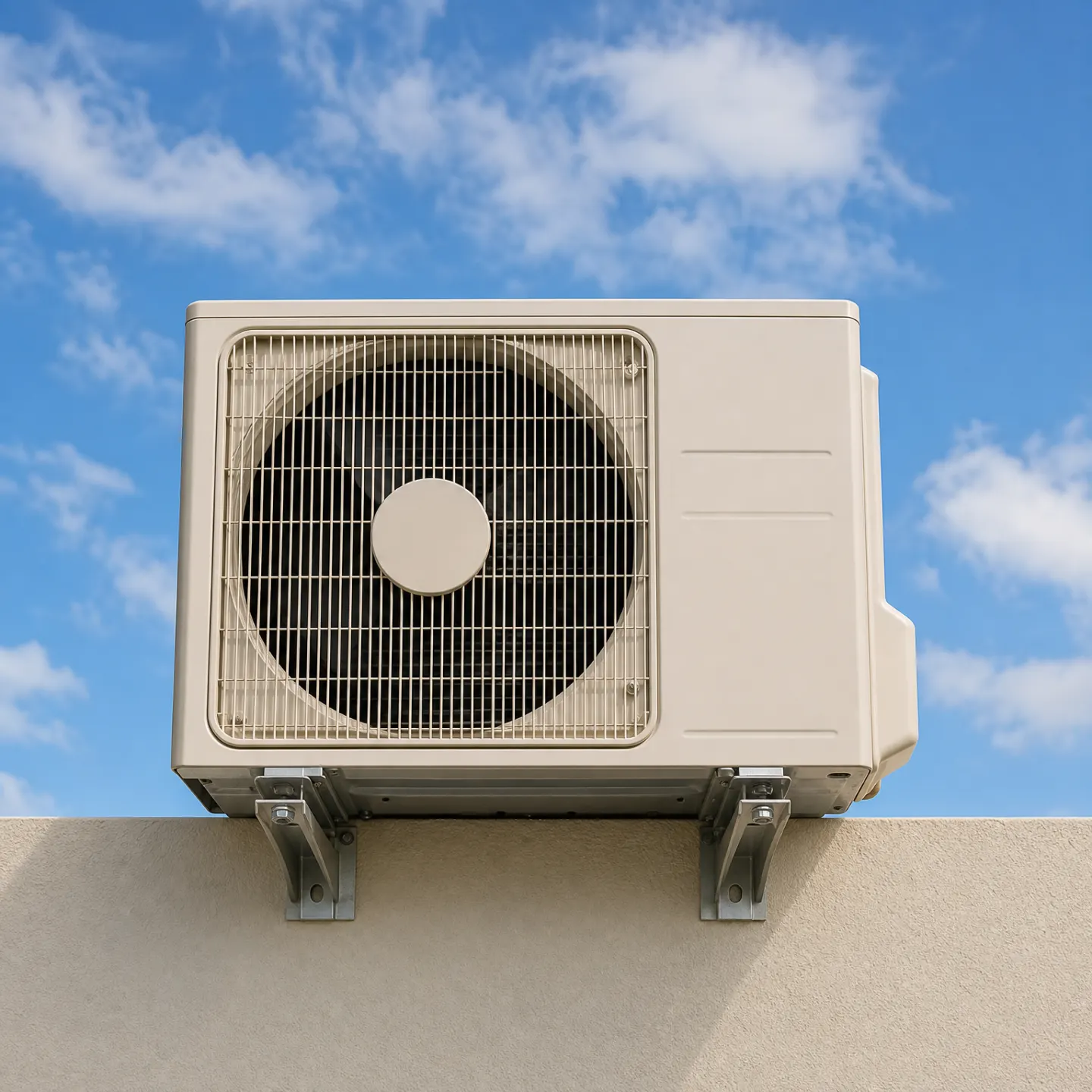
A beige split-system air conditioner outdoor condenser unit mounted on metal wall brackets atop a stucco wall.

Seven months of cooling start in April

Cooling runs here from April through October, seven months straight. That's most of the year the outdoor unit spends cycling on and off, the compressor working through every hot afternoon in that stretch. Installing before April means the system goes in on a normal schedule, with time to size it right and route the line set without rushing. Wait until the heat is already on and you're making that same decision in a hurry, often with the old system down and the house getting warmer while you wait.

How it's rated to perform

Ask for the SEER2 and HSPF2 numbers on the exact model being quoted, not the product line in general. The same line can ship different capacities with different ratings attached. Ask too what happens at the coldest part of a cold snap, since a heat pump's output drops as the outdoor temperature drops, and some models hold their heat output much better than others at the low end.

How the quotes differ

Contractors quoting the same brand can still mean different jobs. Ask each one to walk through the zones being proposed, where the outdoor unit sits, and how the line set gets from there to each indoor head. A lower number sometimes means a shorter line set run or a zone left out, not a better price on the same work.

Bigger isn't safer with a mini split. A head that's too large for the room blasts it down to temperature and shuts off before it's pulled any real moisture out of the air, so the room feels cool but clammy. A head that's too small runs flat out all afternoon and still can't catch up. Sizing it right means looking at the floor area of the room it covers, how many windows it has and which way they face, how much insulation is behind the walls, and what else in that room gives off heat. A contractor works through that room by room, not by guessing at the square footage of the house as a whole. The unit that fits runs long, steady cycles instead of short bursts, and that's what keeps the temperature even and the air dry.

Install day starts with the line set, not the equipment. The contractor runs refrigerant lines, a drain line, and electrical from where the outdoor unit sits to each indoor head, usually through a single hole drilled where the wall backs up to the outdoor unit's location. Once the lines are run, the indoor head mounts to a bracket on the wall and the outdoor unit sets on its pad or bracket outside. The lines get connected, then the system is evacuated to pull all air and moisture out before any refrigerant moves through it. Skip that step or rush it and the compressor is working against moisture and air pockets from day one. Once it's charged, the contractor checks refrigerant pressures against what that model calls for, then runs the system through both heating and cooling before calling it done.