Hail and wind are the regular risk
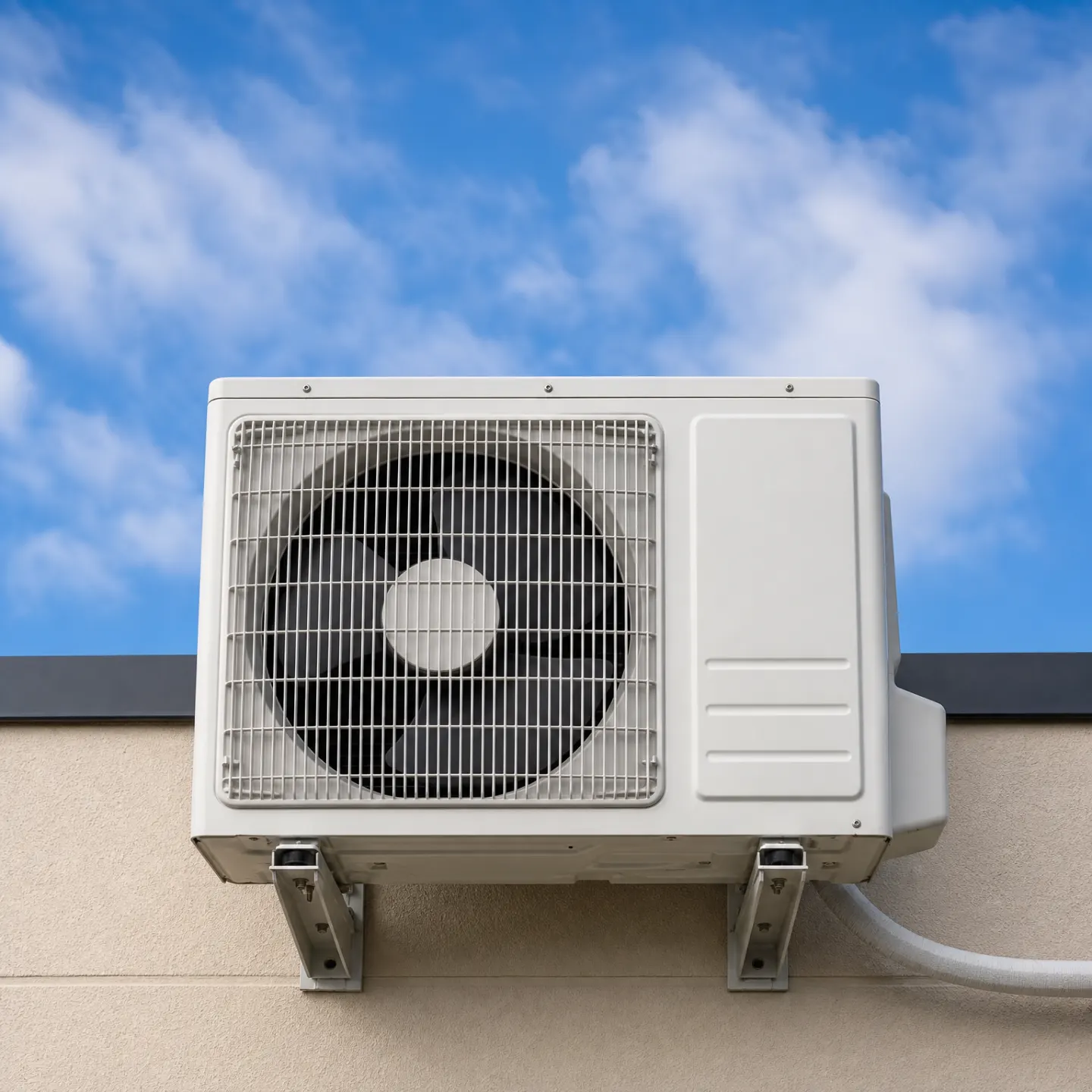
Ector County logged 137 hail events and 71 damaging wind events over the past decade. An outdoor condenser sits exposed to both, so where it goes and what shields it matters as much as the unit itself.
Takes about a minute. No obligation.
Ector County logged 137 hail events and 71 damaging wind events over the past decade. An outdoor condenser sits exposed to both, so where it goes and what shields it matters as much as the unit itself.
About a third of Texas households went at least a day without power in 2024. A mini split needs electricity to run, so an outage means no heat or cooling from it until the power is back, the same as any other electric system.
NOAA nClimDiv, 1991–2020 normals
Summer afternoons in Ector County average 95°F, June through August.
A mini split here runs five months straight, May through September, with no break from the heat.



May through September, cooling runs five months straight here. April is the month before that starts, and it's the better time to put in a new system. A contractor can schedule the work around your own calendar instead of fitting you in between emergency calls. Once May hits, installers are busy with units that failed under the first real heat, and a homeowner replacing ahead of that gets first pick of scheduling. Wait until the heat is already on your house and you're choosing from whatever slot is open.
Ector County falls in zone 3B, and any new mini split put in has to hit 14.3 SEER2 for cooling and 7.5 HSPF2 for heating at minimum, the federal floor for split-system heat pumps. A federal tax credit is available toward the cost of a qualifying system. Get the specifics from a contractor who can walk you through what qualifies.
Find a contractorFive months of 95-degree afternoons is a long stretch for one unit to carry. The size has to match the square footage it's actually cooling, not get picked off a chart by guesswork. A unit too small for the space runs flat out all summer and still falls behind on the hottest days. One sized right cycles on and off like it's supposed to, and that's what holds up over years of this kind of heat.
Whatever is on the wall or window now gets disconnected and hauled off before the new system goes in. If it is a window or wall unit, that opening may need to be patched or closed up. If it is an older central system, the indoor coil and outdoor condenser both come out, and any ductwork that fed it either gets capped or stays in place for a backup, depending on what you want to keep.
Taking out an old system adds time to the install, so a contractor needs to see what is actually there before quoting a timeline. A straightforward swap of one mini split for another is quick. Pulling a full central system, patching old duct openings, or running new electrical for the new unit takes longer, and that is worth sorting out before the crew shows up, not after.
SEER2 measures how much cooling a unit delivers for the electricity it uses over a whole season, not just at one moment. A higher number means the compressor is doing more with less power across all the different loads it sees, from a mild afternoon to the hottest stretch. HSPF2 does the same job for heating mode. These ratings compare efficiency, not strength. A high SEER2 unit that's undersized for the space still won't keep up, and an oversized one won't hit its rated efficiency because it's cycling on and off instead of running steady. The number on the label tells you how well the unit converts power into comfort, once it's sized and installed to actually reach that rating.
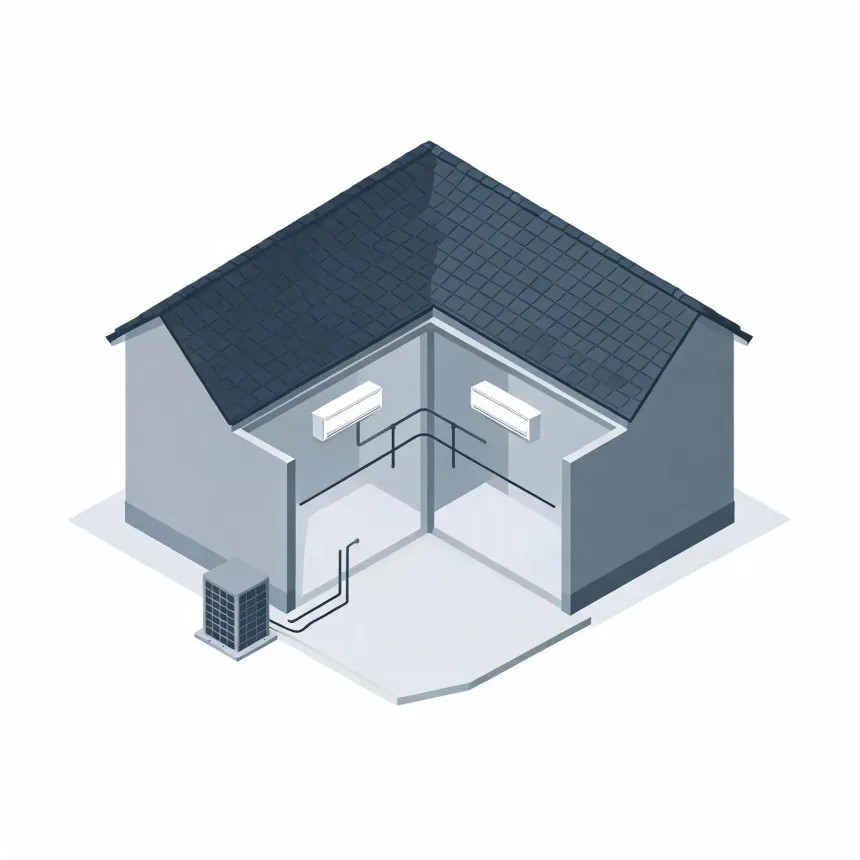
Installation day starts with the walk-through, confirming where the indoor head and outdoor unit go before anyone touches a tool. The indoor unit mounts high on an interior wall, and the spot matters, since it needs clear airflow across the room and a straight enough path to the outside for the line set. That line set, the pair of refrigerant lines running between indoor and outdoor units, gets routed through a hole drilled through the wall, then connected on both ends. Once the outdoor unit is set on its pad or bracket, the lines get connected, the system is sealed and pulled down to a vacuum to clear out air and moisture before refrigerant ever flows. Only after that vacuum holds does the tech charge the line and power it up to test heating and cooling both. A straightforward single-zone swap wraps up in one day, start to finish.