Texas Cooling Help
A weathered wooden fence runs along the left side of a dry grass lot beside a row of single-story brick houses, under a large overhanging oak branch and overcast sky.

Mini Split Installation in Midland, TX

Tell us about the job

Takes about a minute. No obligation.

Step 1 of 3: Equipment

Bigger isn't better

A mini split that's oversized for the room cools the air fast and shuts off before it pulls the moisture out. The room feels clammy even at the right temperature, and the compressor spends its life cycling on and off instead of running steady. That short cycling wears on the compressor harder than a longer, steady run would.

The room gets measured, not guessed

A contractor works out the load for the specific room. Square footage, ceiling height, how many windows it has and which way they face, what sits on the other side of the walls. A room that gets full sun all afternoon needs a different size unit than one that doesn't, even if the rooms match on paper. That load calculation is what decides which unit goes in, not the size of the unit in the next room or what was installed at another house.

5 months
November through March, your system heats
5 months
May through September, it cools
33°F
the average winter night it heats against
95°F
the average summer afternoon it cools against
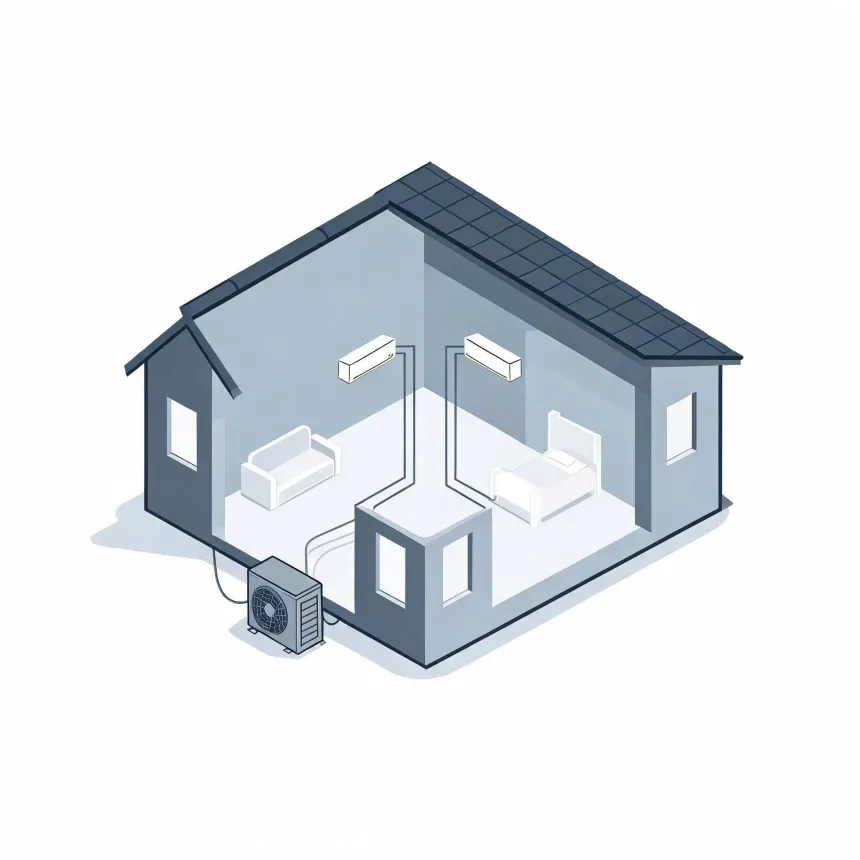
Isometric cutaway illustration of a small house showing two wall-mounted indoor air conditioning units connected by lines to a single outdoor condenser unit beside the building, with a sofa in one room and a bed in another.
Your system heats November through March and cools May through September.

NOAA nClimDiv, 1991–2020 normals

Cooling runs May through September here.

Get the mini split in during April and it's already settled in before that first hot week hits.

More than half of Midland runs on electricity already

51.7% of homes heat with electricity
Climate zone 3B
Power costs 14.94 cents a kWh statewide
Every bill here runs on itElectricity in Texas ran 14.94 cents per kilowatthour in 2024, and a mini split that sips power keeps it that way.

Midland County logged 154 hail events between 2015 and 2024, and the outdoor unit of a mini split sits right out in that weather. Where a contractor mounts it matters because of this. Low against a wall under an eave, it takes less direct hail than one set out in the open, and a pad above grade keeps runoff from pooling at the base. Winter storms and damaging wind show up here too, and about a third of Texas households lost power for at least a day in 2024. A mini split needs electricity to run, so an outage takes down your heat same as it would a furnace's blower. If that matters to you, ask about backup options before the unit goes in, not after.

Five months of 95 degree afternoons means sizing matters

Cooling runs five months here, and the afternoon high averages 95°F through June, July and August. A mini split sized right for the room can carry that load without cycling on and off all summer. Get the sizing wrong and the unit works harder than it should for five months straight.

Find a contractor
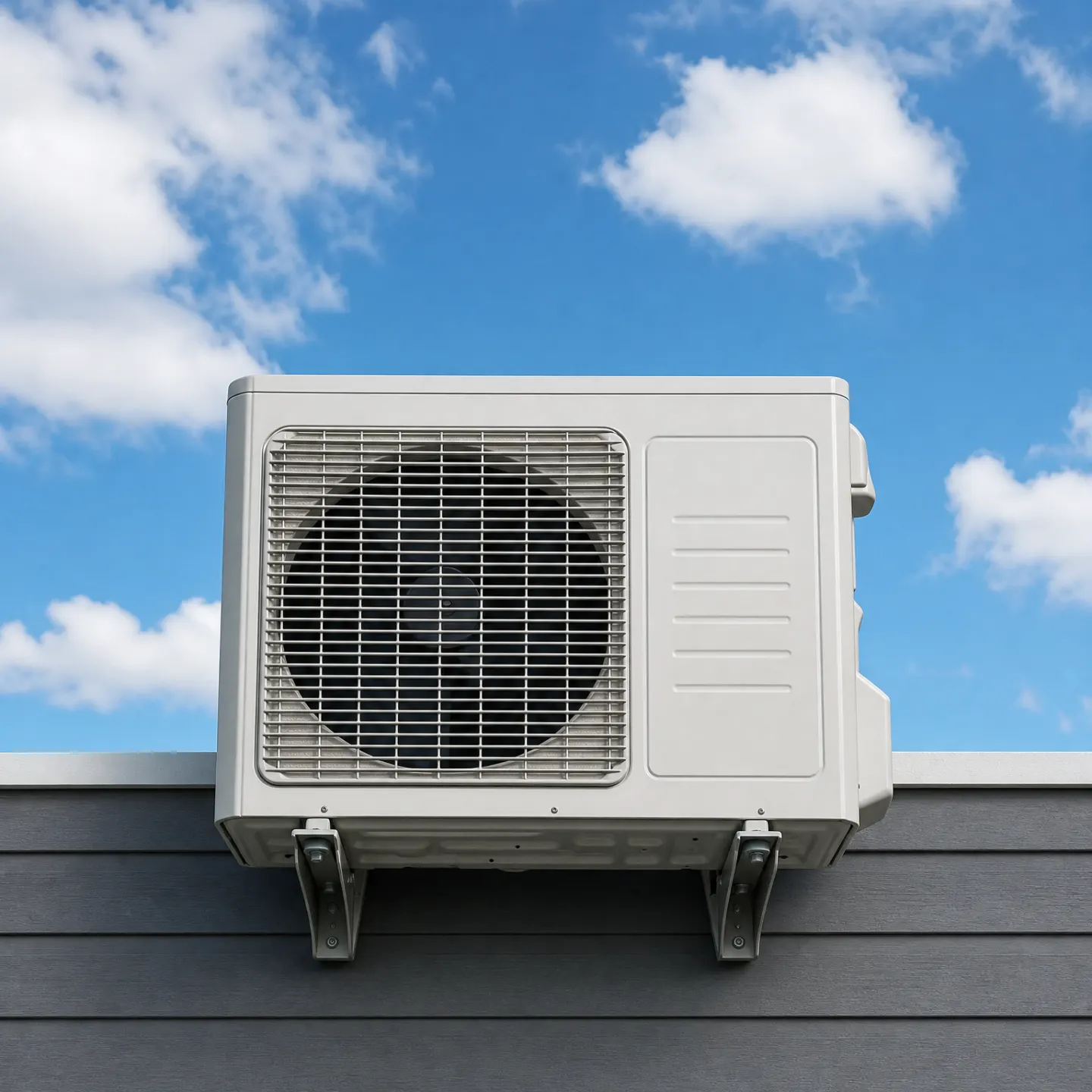
A white outdoor air conditioner condenser unit mounted on metal wall brackets against gray horizontal siding, with a blue sky and white clouds behind it.

Five months a year, this earns its keep

Five months of running near that 95 degree mark adds up to a lot of hours on the compressor. A unit sized right for the room handles those hours without extra strain, but it's still working the whole stretch from May through September. When you're comparing bids, ask what load calculation they used, not just what brand or tonnage they're quoting. The contractor who measured the room can tell you why they landed on that size. The one who didn't is guessing.

How many zones you're running

One outdoor unit can feed one indoor head or several. Each extra zone means another indoor unit, another line set, another spot for a contractor to mount and wire. A single room costs less than a whole house split into zones, and that's before anything else about the job changes.

What the line set has to cross

The refrigerant lines run from the outdoor unit to each indoor head, and they have to get through a wall at minimum. If they have to run through brick, stucco, or up multiple floors, that's more labor and more material than a straight shot through a wood-framed wall. The electrical work matters too. A mini split needs its own dedicated circuit, and if the panel doesn't have room for one, that's a separate job on top of the install.

The efficiency rating on a mini split tells you how much heat it moves for the power it draws, nothing more. It's not a measure of how big the unit is or how fast it cools the room. A higher rating means the compressor moves the same heat on less electricity than a lower rated one would. That advantage only shows up if the unit is sized right for the room it's in. Put a high rated unit in a room it's too big for, and it still shuts off before it runs long enough to earn that rating back.

Installation day starts with the spots already picked out from the load calculation, so there's not much guesswork left when the crew shows up. The indoor head goes up first, mounted to a bracket on the wall, and the line set runs from there to wherever the outdoor unit will sit. That line set has to pass through the wall, which means a hole gets drilled, the lines get fed through, and the gap gets sealed up afterward so air and water can't get in around it. Outside, the condenser gets set on its pad or bracket and leveled, then connected to the lines and the electrical whip running back to its dedicated circuit. Once everything's connected, the system gets charged with refrigerant and tested, running through cooling and heating to check that the head is actually moving air where it should. A contractor walks the room with you before they leave, showing you the thermostat or remote and where the filter sits for cleaning.