





Texas Cooling Help
A brick single-story house with warm landscape and window lighting photographed at dusk on a residential street lined with mature trees.

Mini Split Installation in McAllen, TX

Tell us about the job

Takes about a minute. No obligation.

Step 1 of 3: Equipment

Electricity in Texas runs 14.94 cents per kilowatthour. A mini split earns its keep against that rate because it moves heat instead of generating it, so it uses less power to put out the same cooling or heat. The SEER2 rating on the unit tells you how it stacks up against other systems for efficiency, not how big a space it can handle. In a place where the system runs most months of the year, that efficiency difference shows up on every bill, not just a few.

2 months
December through January, your system heats
10 months
February through November, it cools
51°F
the average winter night it heats against
97°F
the average summer afternoon it cools against
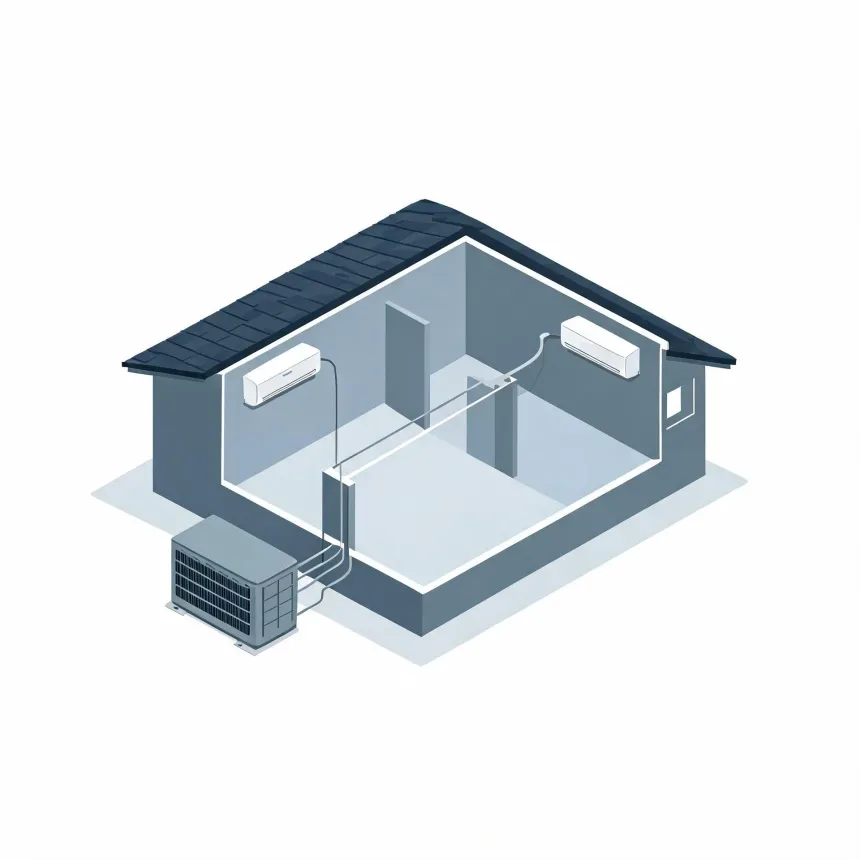
Isometric illustration of a cutaway house showing two wall-mounted mini-split indoor units connected by line sets to a single outdoor condenser beside the exterior wall.
Your system heats December through January and cools February through November.

NOAA nClimDiv, 1991–2020 normals

Cooling runs February through November in Hidalgo County, ten months out of the year.

A mini split here works harder than one installed almost anywhere else, so getting the size right matters more.

Storms hit this county often, and the outdoor unit sits outside through all of them

148 severe weather events from 2015 to 2024
33% of homes statewide lost power a day or more in 2024
90 damaging wind events from 2015 to 2024
Install before FebruaryCooling starts in February here. January is the month to get it in.

When you're comparing units, look past the price tag and check the SEER2 number on each one. A higher rated mini split costs more up front, but at McAllen's electricity rate, that gap closes fast with cooling running most months of the year. Ask the installer to size the unit to the room, not the other way around. An oversized mini split cycles on and off more and never settles into the steady, efficient run that earns back its cost.

A mini split matches how this county already heats

Electricity heats 90.6 percent of homes in Hidalgo County. A mini split runs on electricity already, so it drops in without any new gas line or venting to plan for. That makes it the straightforward swap for most homes here.

Find a contractor
A man in a cap, dark T-shirt and work pants carries a worn canvas tool bag up wooden porch steps toward a red front door.
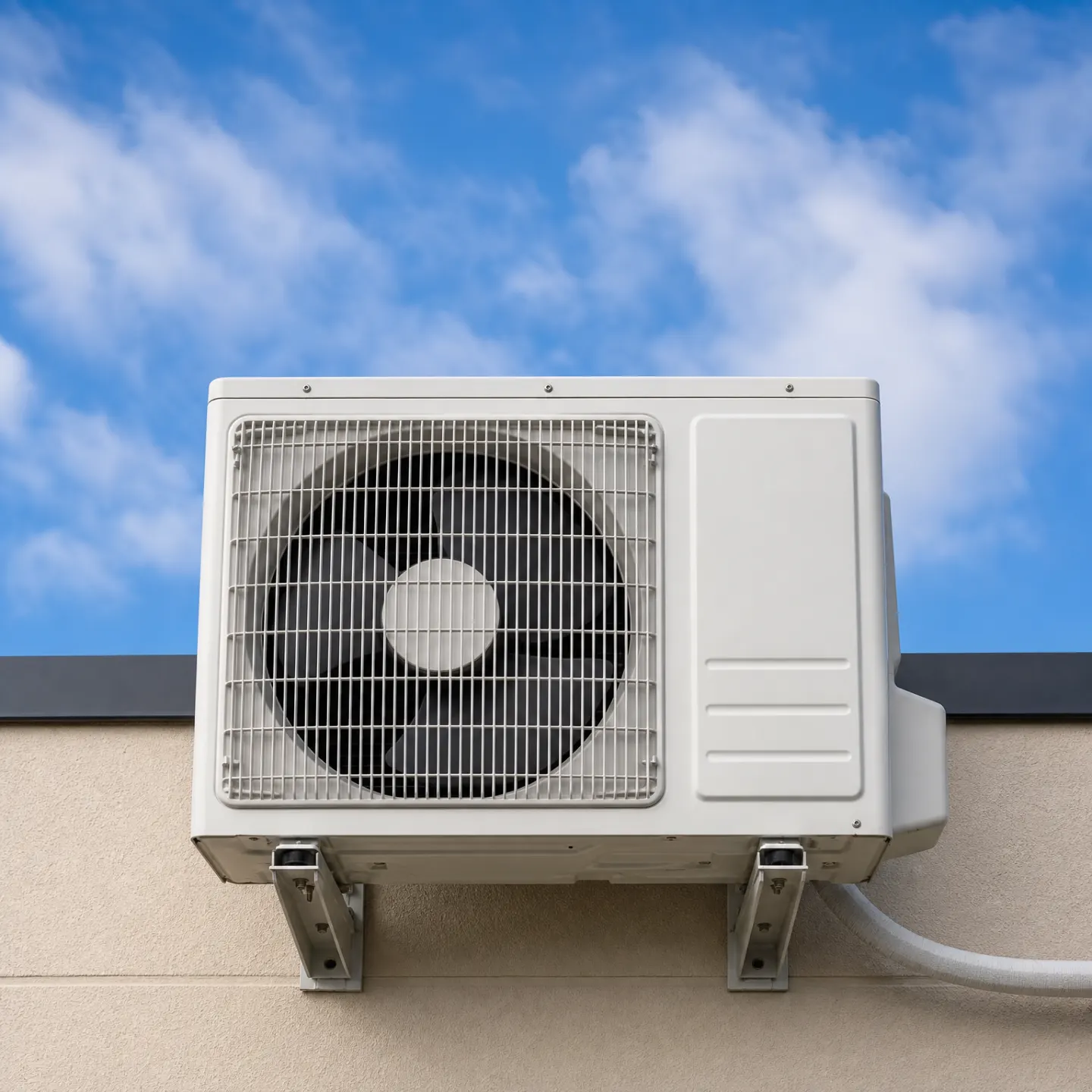
A white mini-split air conditioner outdoor condenser unit mounted on metal brackets against a beige stucco exterior wall, with a blue sky and scattered clouds in the background.

Built to run most of the year, not just a few weeks of it

Ten months of cooling means the compressor spends most of the year cycling on and off, and afternoons averaging 97°F push it to run longer each time it starts. That kind of stretch wears on a system faster than a mild summer would. Get the size right at install, and the unit settles into steady runs instead of short, hard cycles that wear parts sooner.

The number compares systems, not sizes

SEER2 tells you how much cooling a mini split delivers for the power it draws, measured against other systems. A unit can cool the same room as another and still carry a different rating, because the number describes efficiency, not output. Don't read a higher SEER2 as a bigger or stronger unit. It just means that one does the job on less electricity.
The rating only holds if the install is right

A mini split earns its SEER2 number under test conditions, with the right refrigerant charge and a line set sized and run the way the manufacturer calls for. Undercharge it, kink the line set, or let the installer guess at the charge, and the unit falls short of that number every time it runs. The rating on the label is only as real as the install behind it.

The number on the quote isn't padding. Mounting the indoor head is the easy part. The line set is where the work is, because the refrigerant lines have to be cut to length, run through a wall, connected, and then checked for leaks before anything gets charged. More indoor heads means more line sets, more wall penetrations, and more time spent brazing joints and pulling vacuum on the system before it's sealed. A single zone system is a shorter job than a multi-zone one covering the same square footage, simply because there's one line set instead of several. Where the outdoor unit can sit, and how far it has to be from each indoor head, changes how much line set the job needs. None of this shows up in the SEER2 number or the price tag on the unit itself. It shows up in the labor.

Installation starts with a walkthrough, not a drill. The installer checks where the outdoor unit will sit, where each indoor head goes, and the shortest clean path between them. That path decides how much line set gets run and how many walls get a penetration. Once that's set, mounting the indoor head is quick work. The slower part is the line set itself. It has to be cut to length, run through the wall sleeve, flared or brazed at the joints, then pulled down to a vacuum so moisture and air are gone before any refrigerant goes in. Skip the vacuum or rush it and the system runs with moisture in the lines. That doesn't show up on install day. It shows up later as a failed compressor. Once the lines hold vacuum, the unit gets charged, the outdoor unit gets leveled and secured, and the installer runs it through a cycle to check that every head is cooling and the charge matches what the manufacturer calls for. A single zone wraps up in a matter of hours. Add zones and the day gets longer, because each one needs its own line set, its own wall penetration, and its own leak check before anything gets turned on for good.