Texas Cooling Help
A gray cat sleeps curled up on a dark-made bed in a moody, minimalist bedroom with a wall-mounted air conditioning unit and warm accent lighting.

Mini Split Installation in Lubbock, TX

Tell us about the job

Takes about a minute. No obligation.

Step 1 of 3: Equipment

How many zones you're conditioning

Each indoor head cools and heats one zone, so a whole-home setup costs more than adding a single head to one room. The outdoor condenser has to be sized to match the total heads running off it, and matching that load correctly is most of what a contractor is pricing when they quote the job.

What it takes to run the lines

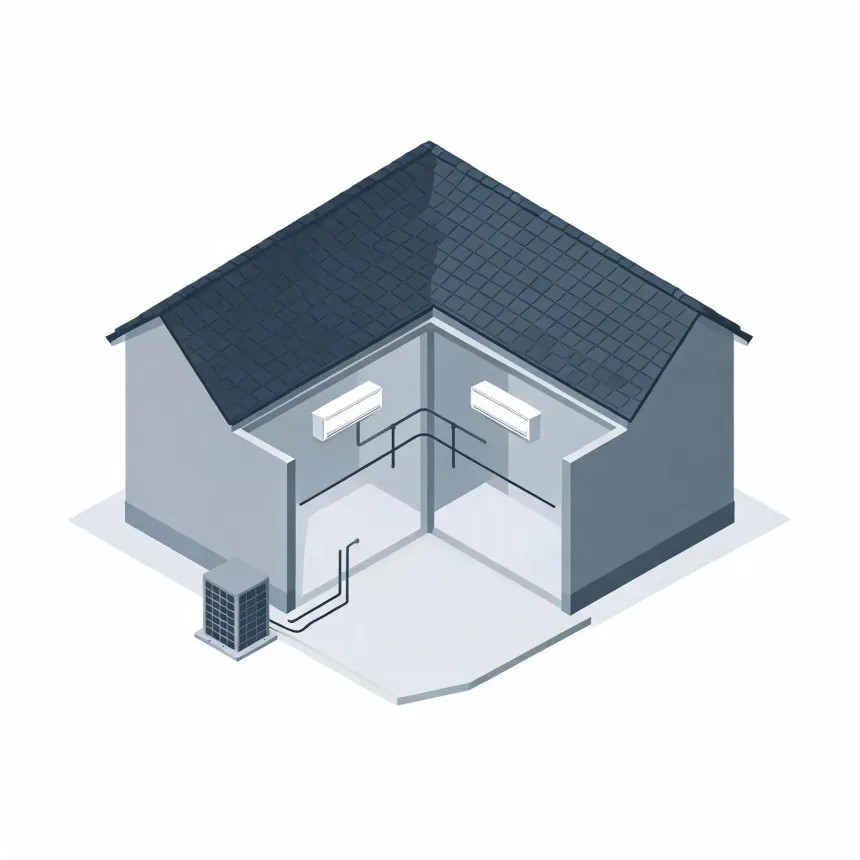
The indoor and outdoor units connect through a line set carrying refrigerant, plus a drain for condensation and a power run. Where the outdoor unit can sit, how far the lines have to travel, and what they pass through on the way all change how much labor the install takes before the system ever turns on.

6 months
November through April, your system heats
5 months
May through September, it cools
29°F
the average winter night it heats against
92°F
the average summer afternoon it cools against
Isometric illustration of a cutaway gray house with a dark shingled roof, showing two wall-mounted indoor air conditioning units connected by piping to an outdoor condenser unit on the ground outside.
Your system heats November through April and cools May through September.

NOAA nClimDiv, 1991–2020 normals

Over half the homes in Lubbock County heat with electricity.

A mini split runs on electricity already, so adding one doesn't mean bringing in a new fuel line or venting.

April is the month to put in a mini split before Lubbock asks it to cool anything

Cooling runs May through September
Summer afternoons average 92°F
150 damaging wind events from 2015 to 2024
Five months of 92 degree afternoons ask a lot of one systemCooling runs May through September here, with afternoon highs averaging 92°F in June, July and August.

Texas homes paid 14.94 cents per kilowatt-hour in 2024. A mini split moves heat instead of burning power to make it, so it costs less to run than a straight electric furnace or a window unit left on all summer. That gap shows up every month on the bill, not just once at installation. Sizing still matters more than the label on the box. A condenser matched to the zones it feeds runs the way it's supposed to. One that's too big or too small for the load works harder than it should, no matter what the spec sheet says.

Lubbock's climate zone sets the minimum. A mini split that meets it may also qualify for a federal credit.

Lubbock falls in zone 3B, and any split system heat pump installed here, ductless units included, has to meet 14.3 SEER2 for cooling and 7.5 HSPF2 for heating at minimum. That's the floor a contractor is designing to before anything gets sized or quoted. A system that clears it may also qualify for the federal tax credit on heat pump installations.

Find a contractor
A man in a dark t-shirt and tan work pants walks up concrete steps toward a red front door, carrying a worn canvas tool bag, with a potted shrub beside the entry.
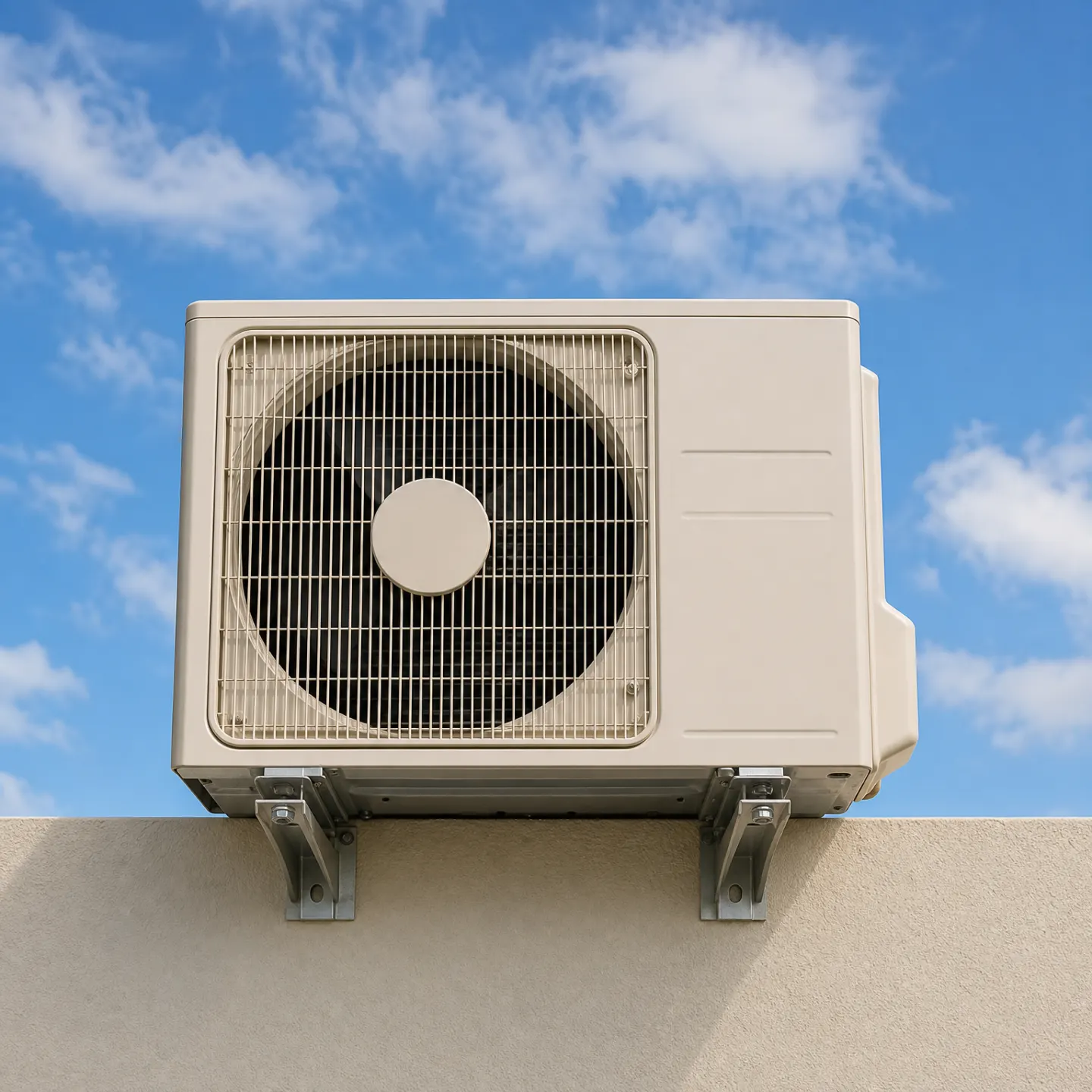
A beige split-system air conditioner outdoor condenser unit mounted on metal wall brackets atop a stucco wall.

Five months of hard running is a sizing problem, not a shopping problem

That same stretch of summer is what sizes the condenser. One picked off a square footage chart runs short of what five months of 92 degree afternoons actually demand, and it never stops working to catch up. One sized to the zones it feeds cycles the way it should and holds up under the repeat. A contractor pricing the job off the heads and the Lubbock heat is sizing it correctly. A quote that skips that step is guessing, and the system runs that guess every summer.

What the warranty actually covers

A manufacturer warranty on the equipment and a labor warranty from the contractor are different things, and a quote should say both. The parts warranty means little if nobody says who pays to diagnose a failure and pull the unit apart to replace what's inside it. Ask what's covered on parts, what's covered on labor, and whether either one survives if a different contractor services the system later.

Who services it after the install

A mini split needs the filters cleaned and the coils checked on a schedule, same as any heat pump. Ask whether the contractor quoting the job does that service themselves or whether you're left to find someone once the install is finished. A system that goes unserviced loses efficiency the same way a neglected furnace does, no matter how well it was sized going in.

Sizing a mini split starts with a room by room heat load calculation, not a guess based on square footage. A contractor measures each zone, the windows in it, the insulation around it, and how much sun it takes over the day, then works out what it will take to hold temperature in there. Skip that step and the condenser ends up wrong in one direction or the other. Oversized, it blasts the room to temperature and shuts off before it's pulled the moisture out of the air, so the space feels cool and damp at once. Undersized, it runs flat out all afternoon and still can't catch up. Either way the compressor is cycling wrong, and a compressor that short cycles or runs nonstop wears out faster than one matched to the room. The load calculation is what lets a contractor pick the head for each zone and the condenser to match them, and it's worth asking to see the numbers instead of taking the total on faith.

Install day starts with the outdoor unit and the line set, not the indoor head on the wall. The contractor mounts the condenser pad first, then runs the line set from each indoor head back to it, through whatever wall or soffit the path demands. Each line gets connected, then pulled down to a vacuum to clear out any air and moisture before refrigerant ever enters it. That step matters more than it looks. Moisture left in the line set mixes with refrigerant and breaks down the compressor from the inside, slowly, so a system charged without a proper vacuum can run fine for a while before it fails. Once the vacuum holds, the system gets charged to the line length run that day, powered up, and tested across every zone before anyone calls it finished.