




Texas Cooling Help
Two white Southern-style homes with wraparound porches lit by landscape lighting at night, flanked by live oak trees hung with Spanish moss.

Mini Split Installation in Longview, TX

Tell us about the job

Takes about a minute. No obligation.

Step 1 of 3: Equipment

Electricity in Texas ran 14.94 cents per kilowatt-hour in 2024. A mini split uses that power to move heat instead of generating it, so it gets more out of every kilowatt than a furnace or a baseboard unit does. That gap matters more here than in a state with cheaper power, because every inefficient hour costs you more to begin with. The efficiency rating on the unit you pick decides how much of that cost you keep paying year after year. Worth comparing ratings closely before you settle on a system.

5 months
November through March, your system heats
6 months
May through October, it cools
38°F
the average winter night it heats against
93°F
the average summer afternoon it cools against
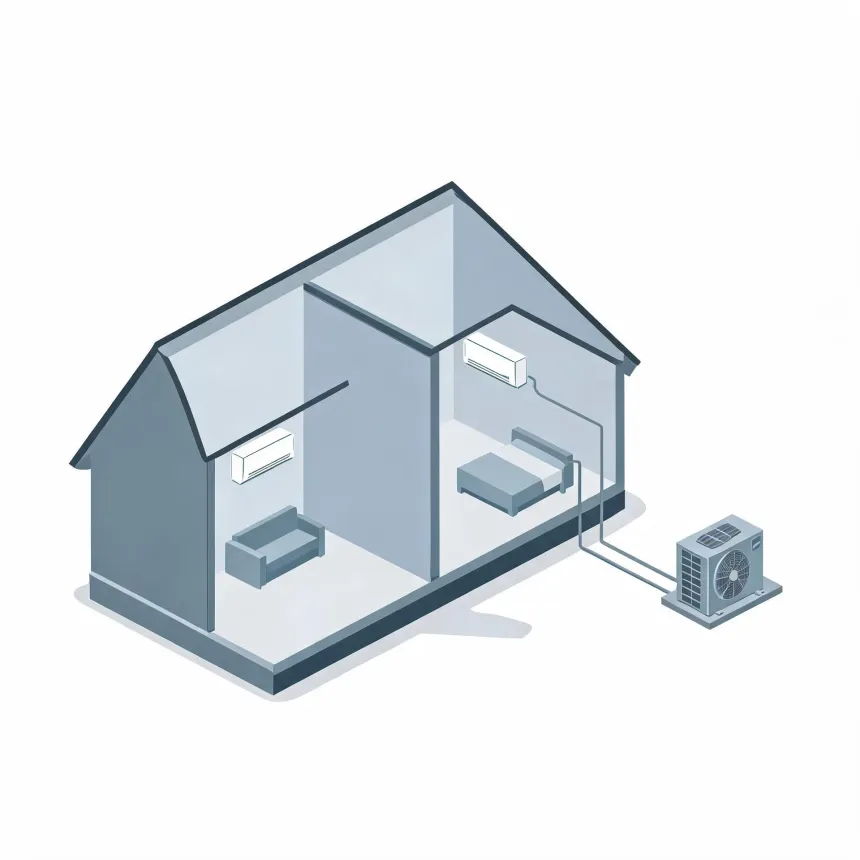
Isometric grey illustration of a cutaway house showing two rooms with wall-mounted indoor air conditioning units connected by lines to an outdoor condenser unit beside the building.
Your system heats November through March and cools May through October.

NOAA nClimDiv, 1991–2020 normals

A mini split in Longview runs cooling six months straight, May through October.

Afternoon highs averaging 93°F all summer mean the system you pick has to hold up under steady, hard use.

Most homes here already run on electricity, and a mini split fits right into that

65.6% of homes heat with electricity
Cooling runs May through October
Summer afternoons average 93°F
Longview gets hit hard105 severe weather events in Gregg County between 2015 and 2024, and outages hit a third of Texas homes for a day or more in 2024

April is the month to get this done in Longview. Cooling starts in May and runs through October, so a unit installed in April is already running before the heat sets in. Installing before the season means the sizing and setup get done without six months of cooling load riding on it. Once the heat arrives, that same system is working every day with no slow start to it.

A new system here has to clear the region's efficiency minimum

Gregg County falls in climate zone 3A, and any mini split installed here now has to hit 14.3 SEER2 for cooling and 7.5 HSPF2 for heating. That's the floor, not a suggestion, so it narrows the field to systems built for this kind of heat. A federal tax credit is available on qualifying equipment, worth checking against whatever unit you're considering.

Find a contractor
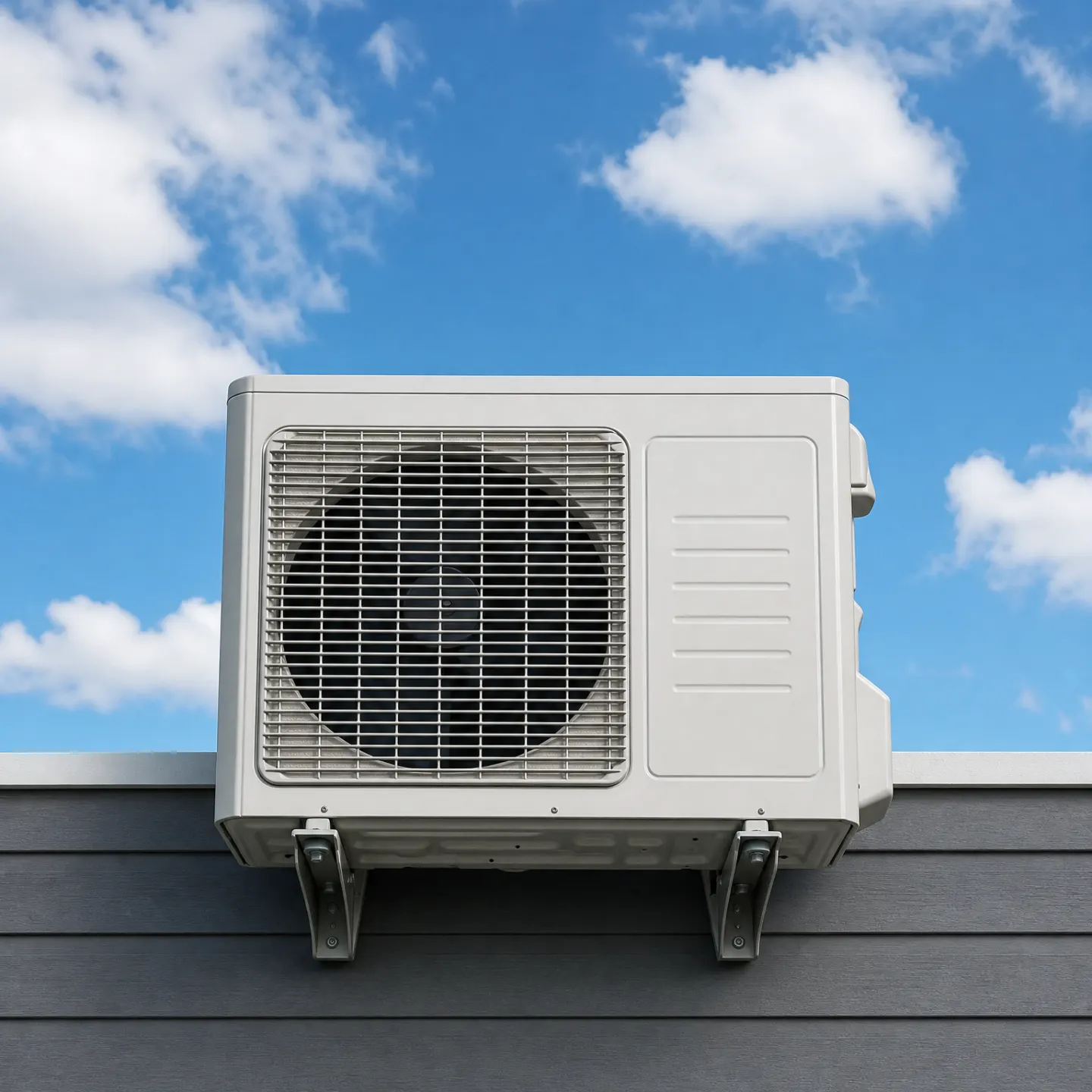
A white outdoor air conditioner condenser unit mounted on metal wall brackets against gray horizontal siding, with a blue sky and white clouds behind it.

Built for six months at 93, not the mildest week

Six months of cooling, afternoon highs near 93, and the unit runs every one of those days without a break. Size for that load, not for the mildest week of the year. An undersized system keeps running and still can't catch up. An oversized one cycles on and off so often it never pulls the humidity down right. Either way you feel it inside the house. Ask whoever quotes the job to run a load calculation on your home specifically, and weigh that against the unit's rated capacity before you decide.

The old unit has to come out first

Whatever is heating and cooling the place now, whether it's a window unit, a furnace and condenser, or baseboard heaters, has to be disconnected and removed before the new lines and head units go in. Refrigerant in an old condenser has to be recovered properly, not vented. If the old system ran on ductwork, that ductwork either gets capped off or stays in place depending on whether any of it is staying in use.
What's left behind depends on what it was

A removed window unit leaves a hole in the wall or window frame that needs sealing. An old central system leaves a condenser pad outside and a line set that gets pulled out with it. Electric baseboard heaters usually get pulled off the wall and the circuit either gets reused for something else or capped at the breaker. None of it runs again once the new system is in, so there's no point keeping it around as backup.

Since you're comparing systems, ask about the zoning setup, not just the equipment. A mini split can run one indoor head or several off the same outdoor unit, each on its own thermostat, which means one room can run cooler than the next without fighting over a single setpoint. Ask how many zones the outdoor unit supports and whether it's sized to add another head later if you need one. Ask about the line set length too. Every outdoor unit has a maximum distance it can run to the indoor head, and going near that limit can cost you capacity. Ask what sound level the outdoor unit runs at, since some sit right outside a bedroom window. And ask what happens if one indoor head needs service. On some systems the whole thing shuts down, on others the rest keep running.

Installation starts with the outdoor condenser going on a pad or wall bracket somewhere close to where power and the line set can reach it without a long run. From there, a technician drills a small hole through the exterior wall to route the refrigerant lines, a condensate drain, and electrical wiring to each indoor head. Those lines get connected, then the whole system gets evacuated with a vacuum pump to pull out air and moisture before any refrigerant goes in. Skipping that step is one of the most common reasons a new system underperforms from day one. Once it's charged and powered on, the technician checks refrigerant pressure, confirms each head is communicating with the outdoor unit, and walks through the remote or thermostat setup with you. A straightforward single-zone job can wrap in a day. Add more indoor heads, longer line runs, or tricky wall penetrations, and it stretches longer.