Electricity here runs 14.94 cents per kilowatt-hour
Texas homes paid that rate in 2024. A mini split that loses efficiency to a bad install or the wrong size unit will turn that rate into a bigger bill every month it runs.
Takes about a minute. No obligation.
Texas homes paid that rate in 2024. A mini split that loses efficiency to a bad install or the wrong size unit will turn that rate into a bigger bill every month it runs.
Two mini splits can cost the same to install and cost very differently to run. The one sized right for the room, with the line set installed correctly, is the one that earns back the difference at this electric rate.
NOAA nClimDiv, 1991–2020 normals
Cooling runs April through October in Bell County, about seven months straight.
Put a mini split in during March and it's already earned its keep before the first hot week hits.




Bell County falls in climate zone 2A, a hot, humid zone where cooling is the main load for most of the year. Any mini split installed here counts as a split-system heat pump under the federal standard, ductless or not. Units built from January 2023 on have to meet 14.3 SEER2 for cooling and 7.5 HSPF2 for heating, whether the system serves one room or several. A unit right at that floor will run and will meet code. In a zone where the air conditioner carries most of the year's work, that floor is just the minimum the law allows, not the number that decides what the unit costs to run.
Power costs more here, so an efficient system pays you back on every bill.
Find a contractorLoad it right and this unit runs close to the floor plan it was sized for. Load it wrong, undersized for the room or a line set run that's too long, and it works harder than the rating on the box ever promised. At seven months of cooling and afternoons near 95, that gap shows up fast. Get the room measured and the unit matched to it before anything goes on the wall.
Square footage alone doesn't size a mini split. A contractor works out the load from the windows, which way the room faces, the ceiling height, and what's on the other side of the walls. Rooms that look alike on a floor plan can need different capacity units. Skip this step and the unit gets picked off a chart instead of off the room.
An undersized unit runs constantly and never quite catches up. An oversized one cools the air fast, shuts off, and leaves the room clammy because it never ran long enough to pull the moisture out. Bigger isn't the safe mistake. The right size is the only size that keeps the room both cool and dry.
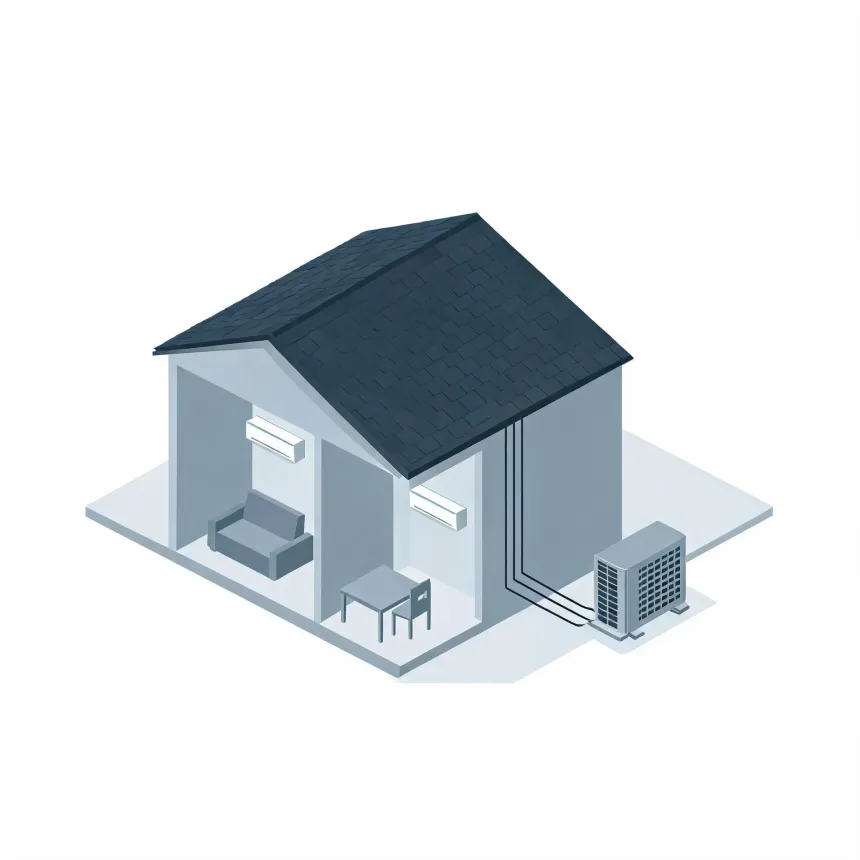
A mini split's installed cost comes down to what has to happen before the unit goes on the wall. A single zone facing a straight shot through an exterior wall costs less than a multi-zone system feeding several indoor heads from one outdoor unit. Line set length and routing matter too. A run that has to snake through framing or travel further than a straight shot takes more refrigerant line, more mounting, more time. The condenser's pad or bracket, the electrical circuit it needs, and whether the panel has room for that circuit all factor in before the first line of refrigerant gets run. None of this shows up on a price list by itself. It shows up when a contractor walks the room and figures out what the installation actually requires.
Installation day starts with the outdoor unit and the indoor head going up before any line gets run. The condenser gets mounted on a pad or bracket outside, leveled so condensate drains the way it should. Inside, the air handler goes on the wall at the height and spot the load calculation called for, not wherever looks convenient. Then comes the hole through the exterior wall for the line set, the refrigerant lines, the electrical whip, and the condensate drain all passing through together. Once everything's connected, the system gets evacuated with a vacuum pump to pull out air and moisture before refrigerant ever enters the lines. Skip that step and the system runs with contamination in it from day one, and that shows up later as a failure, not a weak reading.