




Texas Cooling Help
A white Southern-style house with a wraparound porch photographed at night, surrounded by Spanish moss-draped oak trees lit by landscape lights.

Mini Split Installation in Houston, TX

Tell us about the job

Takes about a minute. No obligation.

Step 1 of 3: Equipment

Harris County saw 403 severe weather events between 2015 and 2024, counting wind, hail, tornadoes and storms. A mini split's outdoor unit sits outside through all of it, so where it goes matters. Mounting it under an eave or on a side wall away from open sky gives it some cover from hail. Line set and wiring entry points should be sealed well since wind-driven rain finds gaps. Across Texas, a third of households lost power for a day or more in 2024, and a mini split won't run without it. If backup power matters to you, that's worth asking about before installation, not after.

4 months
November through February, your system heats
7 months
April through October, it cools
45°F
the average winter night it heats against
93°F
the average summer afternoon it cools against
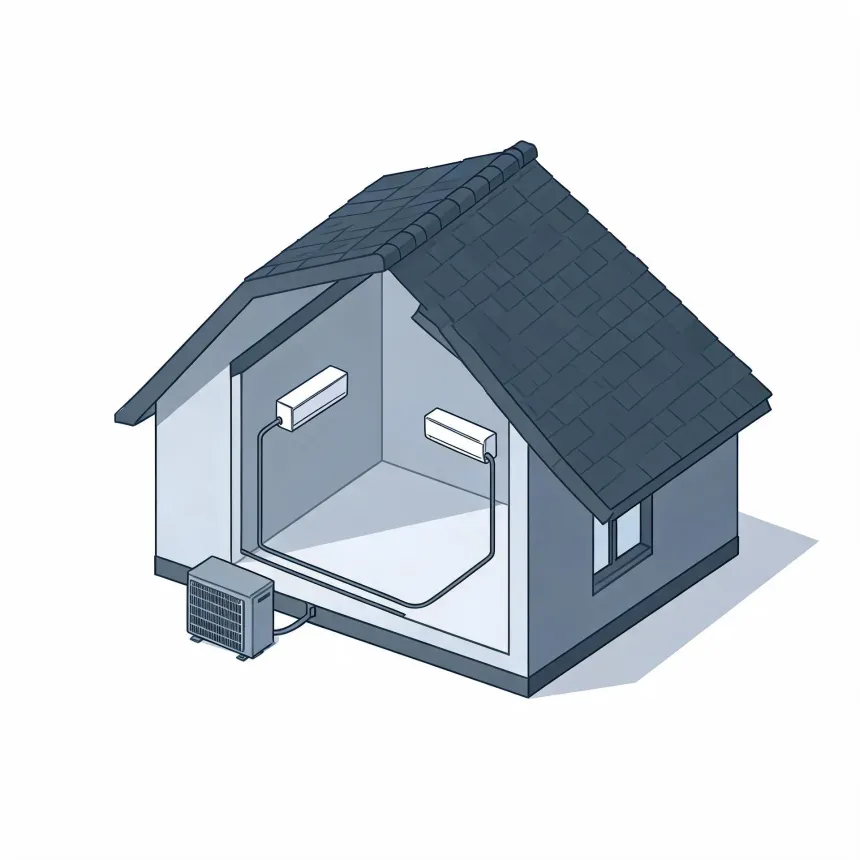
Isometric cutaway illustration of a small house with a shingled gable roof, showing two wall-mounted indoor air conditioning units connected by refrigerant lines to an outdoor condenser unit on the ground outside.
Your system heats November through February and cools April through October.

NOAA nClimDiv, 1991–2020 normals

Cooling in Harris County starts in April and runs seven months, through October.

Get the mini split installed before March ends, so you're not waiting on a crew in the first hot week.

Houston runs this system hard. Size it for that.

Cooling runs April through October
Summer afternoons average 93°F
178 damaging wind events from 2015 to 2024

Most homes in Harris County heat with electricity, 55.4% of them, and utility gas covers another 42.2%. A mini split fits an electric home without adding anything new to the picture. It runs on a standard electric circuit and does both heating and cooling, so if your home already relies on electric heat, you're not bringing in a second fuel or a second system to maintain. In a gas home, a mini split can still make sense for a room an existing system doesn't reach well, but it works alongside the gas furnace rather than replacing its job.

Plan for storms

Storms and outages are common here. Plan where the outdoor unit goes, how it's protected, and how you'll keep heat and hot water in an outage.

Find a contractor
A man in a cap, dark T-shirt and work pants carries a worn canvas tool bag up wooden porch steps toward a red front door.
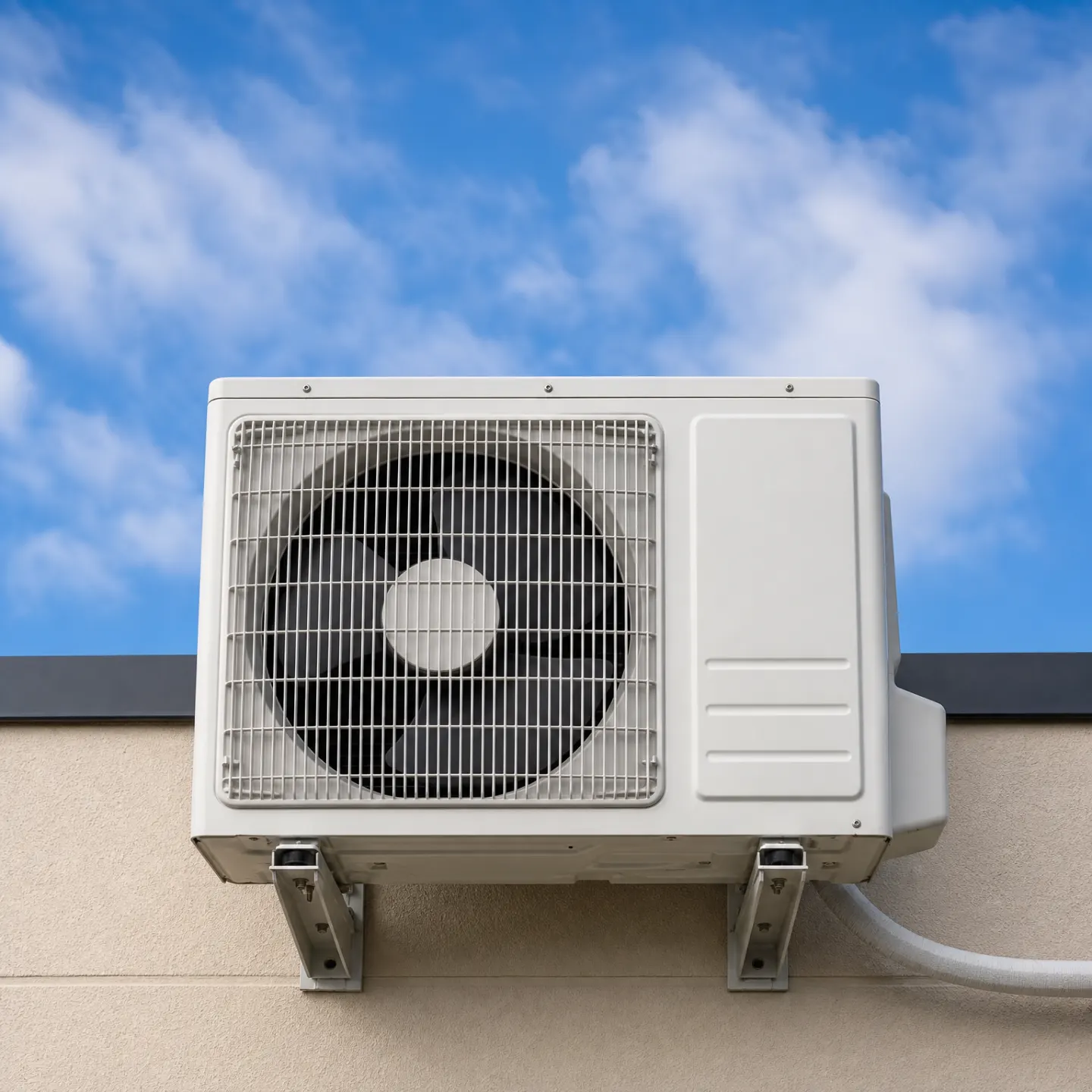
A white mini-split air conditioner outdoor condenser unit mounted on metal brackets against a beige stucco exterior wall, with a blue sky and scattered clouds in the background.

Built for a Houston summer, not a mild one

At a 93°F average afternoon high through June, July and August, a mini split's outdoor unit is pulling heat out of air that's already hot, for seven months straight. That's the condition to size for, not a mild spring day. An undersized system will run flat out trying to catch up on the worst afternoons and still fall short. An oversized one cycles on and off too fast to pull moisture out of the air properly. Either way, the compressor logs more hours than it should. Ask whoever quotes the job to size it off a load calculation for your house, not off the square footage of the room alone.

Sizing runs room by room

Each indoor head is matched to the space it serves, not to a whole-house average. A load calculation accounts for window area, wall exposure, ceiling height and how many walls face outside. A bedroom with afternoon sun needs a different number than an interior room the same size. Get this wrong per room and one head runs constantly while another short cycles.
What the wrong size feels like

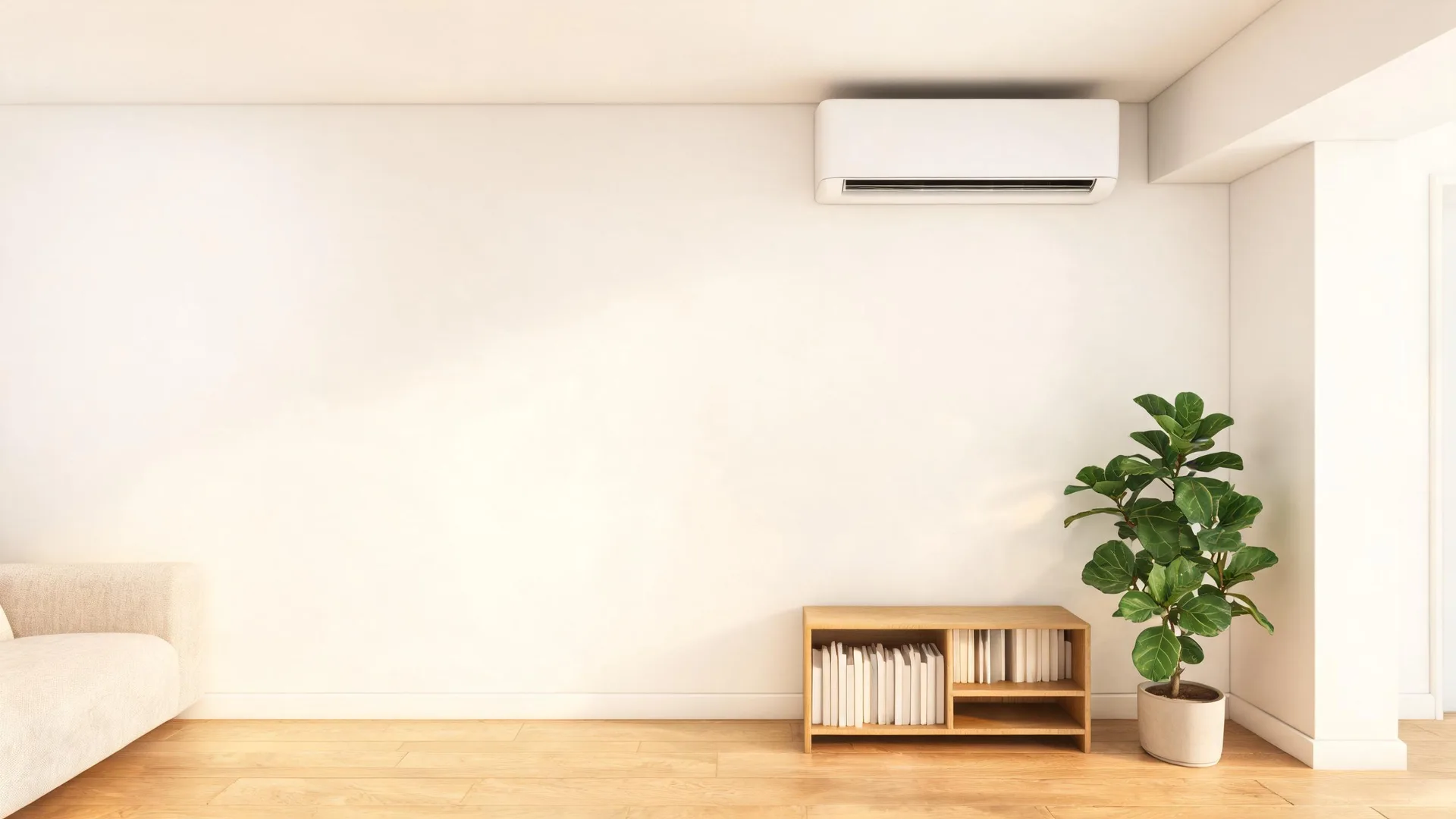
An undersized head never catches up on the hardest afternoons, so it runs nonstop and still loses ground. An oversized one cools the air fast, shuts off, and starts again before it's pulled the moisture out, so the room ends up cold and damp at once. Neither shows up on a spec sheet. It shows up in how the room feels and how often the compressor cycles on and off.

Installation cost comes down mostly to how many indoor heads you're running and how far each one sits from the outdoor unit. A single zone is a simpler job than a multi-zone system feeding several rooms off one compressor. Line set length matters too, since refrigerant lines running up through an attic or across a long exterior wall take more time and material than a short run between adjacent rooms. Where the outdoor unit can go affects it as well. A spot with easy access costs less to wire and mount than one requiring a mounting bracket on a tough wall or a longer electrical run back to the panel. Electrical work is its own factor, since a mini split needs a dedicated circuit, and if the panel doesn't have room for one, that's added work before the system itself goes in. The condition of whatever wall or ceiling the lines pass through plays a part too, since a crew working around existing framing or finished surfaces takes longer than one working in open space.

Installation starts with where the lines run, not with the indoor head itself. The crew marks the spot on the wall, drills through for the line set, and runs it back to wherever the outdoor unit will sit, whether that's straight through an exterior wall or routed up through an attic. The outdoor unit gets mounted on a pad or bracket and the lines get connected at both ends, then the whole system gets evacuated with a vacuum pump to pull out air and moisture before any refrigerant moves through it. That step matters more than people expect. Any moisture left in the lines turns into acid once refrigerant hits it, and that shortens the compressor's life from day one. Once the system holds a vacuum, the lines get charged, the electrical gets tied in on its own circuit, and the crew runs the system through a cycle of both heating and cooling before calling it done.