Electricity here runs 14.94 cents a kilowatt-hour
Texas homes paid that rate in 2024. A mini split running on that rate needs to earn its keep every month, not just on install day.
Takes about a minute. No obligation.
Texas homes paid that rate in 2024. A mini split running on that rate needs to earn its keep every month, not just on install day.
A mini split's efficiency rating tells you how much power it uses to heat or cool this house. In Fort Worth, where the rate is high and the system runs most months of the year, that number decides what it costs you to run, not just what it costs to buy.
NOAA nClimDiv, 1991–2020 normals
Most homes in Tarrant County heat with electricity, at 66.6%.
A mini split runs on electricity already, so it fits the setup most of this area's homes have.



Fort Worth sits in zone 2A, a hot, humid climate where cooling is the main load on the system. Any mini split installed here has to be a split-system heat pump under the federal standard. There's no separate, lower bar for ductless units. The minimum is 14.3 SEER2 for cooling and 7.5 HSPF2 for heating, and units built from January 2023 on have to meet it. That's a floor, not a ceiling. Plenty of systems sold here are rated well above it, and a unit that clears it by enough may also qualify for the federal tax credit, worth checking when you compare models.
Cooling runs May through October here, with afternoon highs averaging 94°F through the summer. A mini split sized right for this house carries that load without strain. One sized wrong will show its wear sooner than it should.
Find a contractorCooling here runs May through October, six months a year. April is the month before any of that starts, and it's the better time to put a new mini split in. Installed in April, it gets set up and checked before the house needs it to do anything. Wait and you're making this decision once the heat's already on, which is a worse time to pick a system and worse time to wait on one.
Every mini split head has a sound rating, and it varies more between models than people expect. A noisy one is easy to live with in a garage, harder in a bedroom. Ask for the rating at low and high fan speed, not just the quiet marketing number.
A mini split needs its filters cleaned and its outdoor coil checked, same as any heat pump. If the installer can't name who handles warranty repairs after the sale, that's worth knowing before you buy, not after something breaks.
The price of a mini split install comes down to what the job actually takes, not just the equipment on the truck. A single head cooling one room costs less to put in than a multi-zone setup feeding several rooms off one outdoor unit, because each indoor head needs its own line set, its own mounting, its own spot picked for airflow and drainage. Where the outdoor unit can go matters too. A short, straight run between indoor and outdoor units is simpler than one that has to snake through an attic or down an exterior wall. Electrical work adds to it if the panel needs a new circuit to run the system. The brand and the efficiency tier push the number too, since a unit rated well above the minimum costs more up front than one that just clears it. None of this is padding. Each piece is a reason the job takes the time it takes.
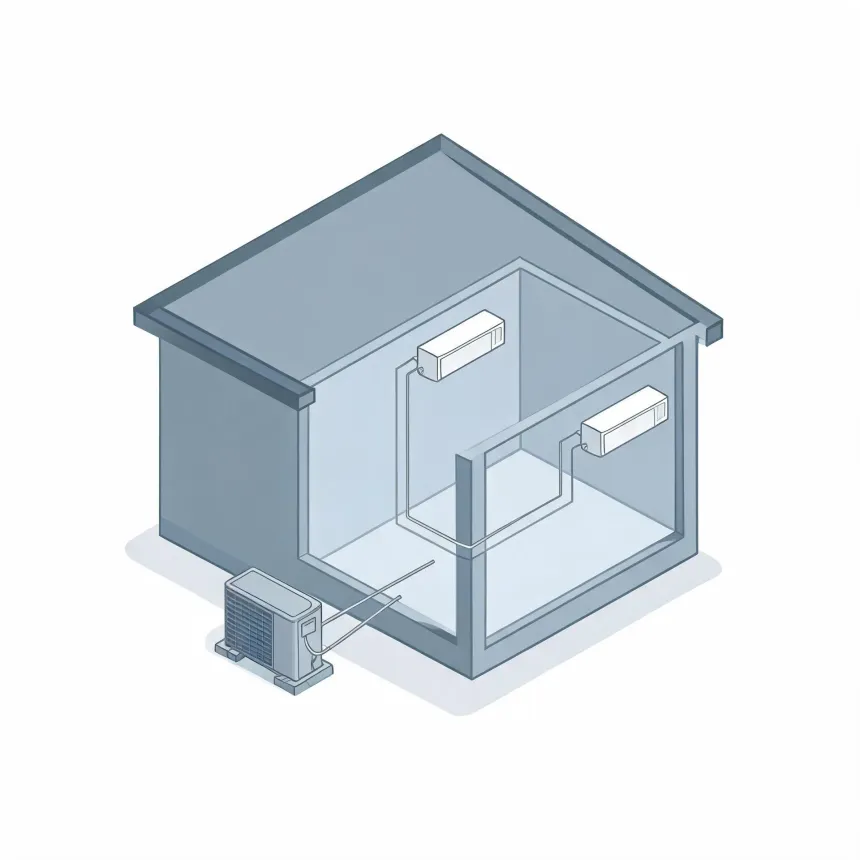
Installation starts with the line set, the copper tubing that connects the indoor head to the outdoor unit. The installer drills one hole through the wall for it, runs the refrigerant lines, the power cable, and the condensate drain through together, then seals the hole against weather. The outdoor unit gets mounted on a pad or brackets, leveled so condensate drains the way it should. Once both ends are connected, the line set gets pulled down to a vacuum before any refrigerant moves, which clears out moisture and air that don't belong in the system. Skip that step and the compressor wears faster from day one. After that the system gets charged, powered up, and run through both heating and cooling before anyone calls the job done.