Electricity here runs 14.94 cents per kilowatt-hour
Texas homes paid that rate in 2024. A mini split that moves heat instead of generating it costs less to run than straight electric resistance heat or an old window unit at that rate.
Takes about a minute. No obligation.
Texas homes paid that rate in 2024. A mini split that moves heat instead of generating it costs less to run than straight electric resistance heat or an old window unit at that rate.
The SEER2 and HSPF2 ratings on a mini split decide what every month of running it costs afterward. Choosing a unit sized and rated right for this house matters more here than in a place where power is cheap.
NOAA nClimDiv, 1991–2020 normals
Electricity heats 65.5% of homes in Kaufman County.
A mini split runs on electricity already, so it fits the setup most houses here have.



Kaufman County sits in climate zone 3A, warm with a long stretch of summer and short, mild winters. Any mini split put in here has to meet 14.3 SEER2 for cooling and 7.5 HSPF2 for heating. That rule applies to ductless systems the same as any other split system heat pump. There's no separate, lower bar for going ductless. A unit rated below that can't legally go in, so the real comparison is between systems that clear that mark, not whether a mini split has to meet it at all.
Cooling here runs May through October. April is the month to have a mini split in and running, so installation happens on your schedule instead of during the first hot week.
Find a contractorSix months of 93 degree afternoons is a load you size for. A unit too small runs flat out from May to October and never gets ahead of the heat. One too big cools the room fast then shuts off before it pulls the moisture out of the air, so the house feels damp even at the right temperature. Get the sizing wrong either way and the compressor is cycling harder than it should, every year, not just one hot week. A real load calculation on your house, the room sizes, the windows, which way they face, is what gets the sizing right. A unit picked without one is a guess that runs for years.
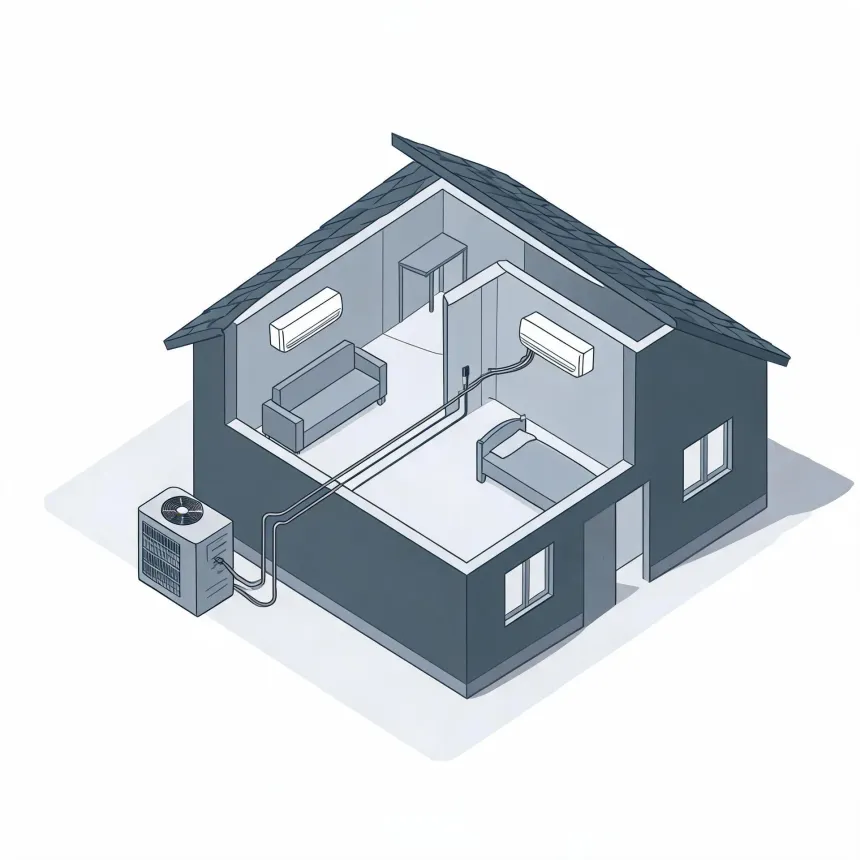
A multi-zone system splits one outdoor unit across several indoor heads, and each head has its own capacity. Ask what each room needs and what each head is rated to deliver, not just the total for the system. An installer who can only quote a combined number hasn't worked out whether any one room is actually covered.
On a multi-zone system, the indoor heads share one outdoor compressor. Ask whether a problem with one head takes down the others, and whether parts for that head are still being made. A single-zone system doesn't have this tradeoff, but it only covers one room.
Sizing a mini split starts with a load calculation, not the square footage of the room. That calculation looks at the walls, the windows, which way they face, and how much sun they take on through the day, then works out how much heat the space gains in summer and loses in winter. Skip that step and you're guessing, even if the guess is based on experience. A unit sized too small spends the whole afternoon trying to catch up and never does. One sized too big cools the air fast and shuts off before it has pulled the humidity out of the room, so the thermostat reads right and the room still feels damp. Either mistake makes the compressor cycle more than it should, and that wear adds up over years, not just on the hottest days.
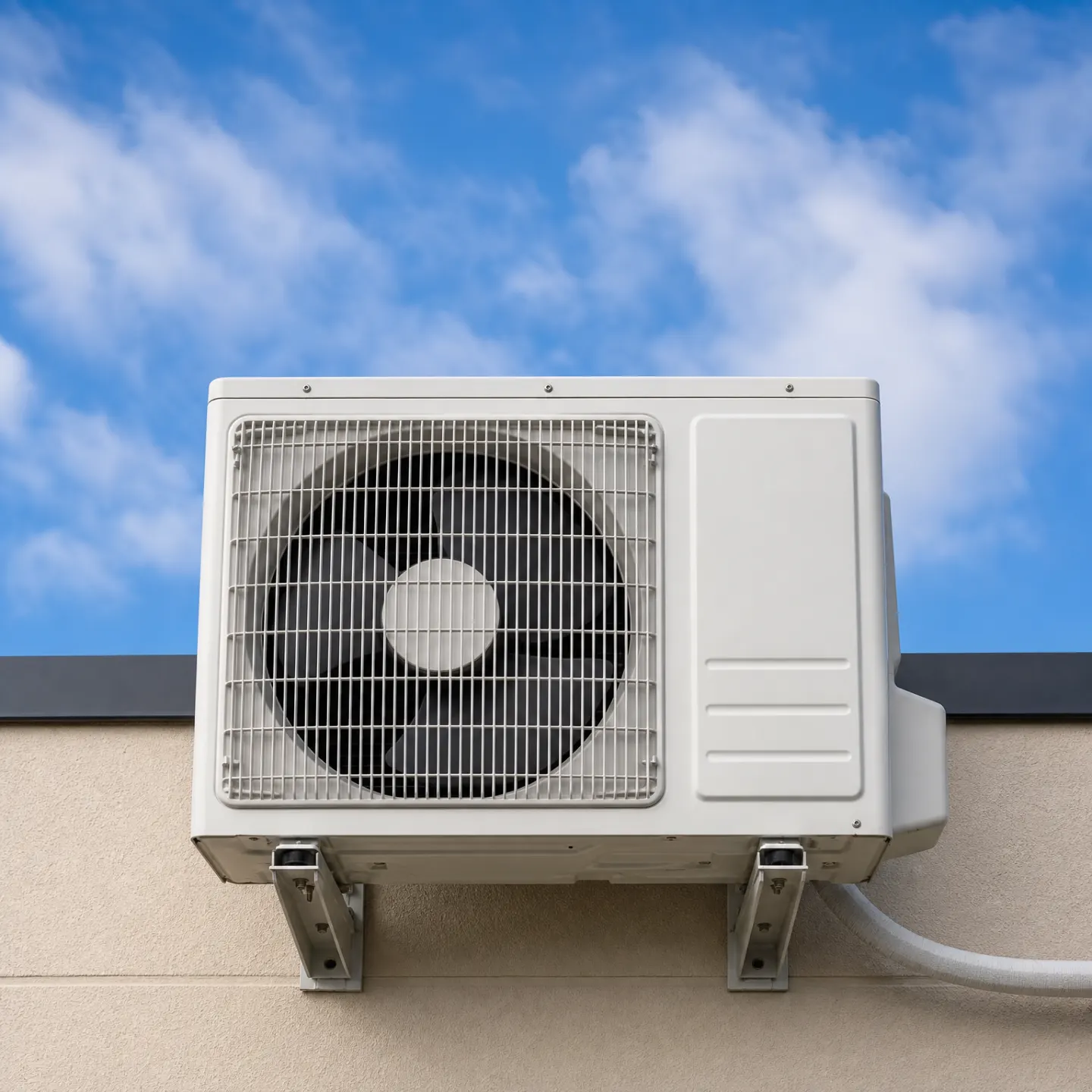
Installation starts with the outdoor unit, and where it sits matters. It needs clearance on all sides for airflow and a spot where the line set to each indoor head isn't run any longer than it has to be. Inside, the installer mounts a bracket high on the wall, runs the line set and a condensate drain through a small hole drilled behind it, and connects the refrigerant lines. Once everything's connected, the system gets pulled down to a vacuum before any refrigerant moves through it. That step pulls out moisture and air that don't belong in the line set, because either one left behind can damage the compressor later. Skipping it doesn't show up that day. It shows up as a failure down the road, with no way to trace it back to the install.