


Texas Cooling Help
A tabby cat sleeps on a dark quilted bed in a moody, minimalist bedroom with a black wall-mounted air conditioning unit.

Mini Split Installation in El Paso, TX

Tell us about the job

Takes about a minute. No obligation.

Step 1 of 3: Equipment

Electricity in Texas ran about 14.94 cents per kilowatt-hour in 2024. A mini split uses that power every time it cycles on, so the efficiency rating on the unit you choose is not a number you can skip past. A unit that holds a room at temperature with less cycling costs less to run than one that strains to keep up, same electricity rate, different bill. El Paso summers push a mini split hard for months at a time, so that difference shows up again and again, not just once. Ask what SEER2 rating a system carries before you decide between models.

5 months
November through March, your system heats
5 months
May through September, it cools
32°F
the average winter night it heats against
95°F
the average summer afternoon it cools against
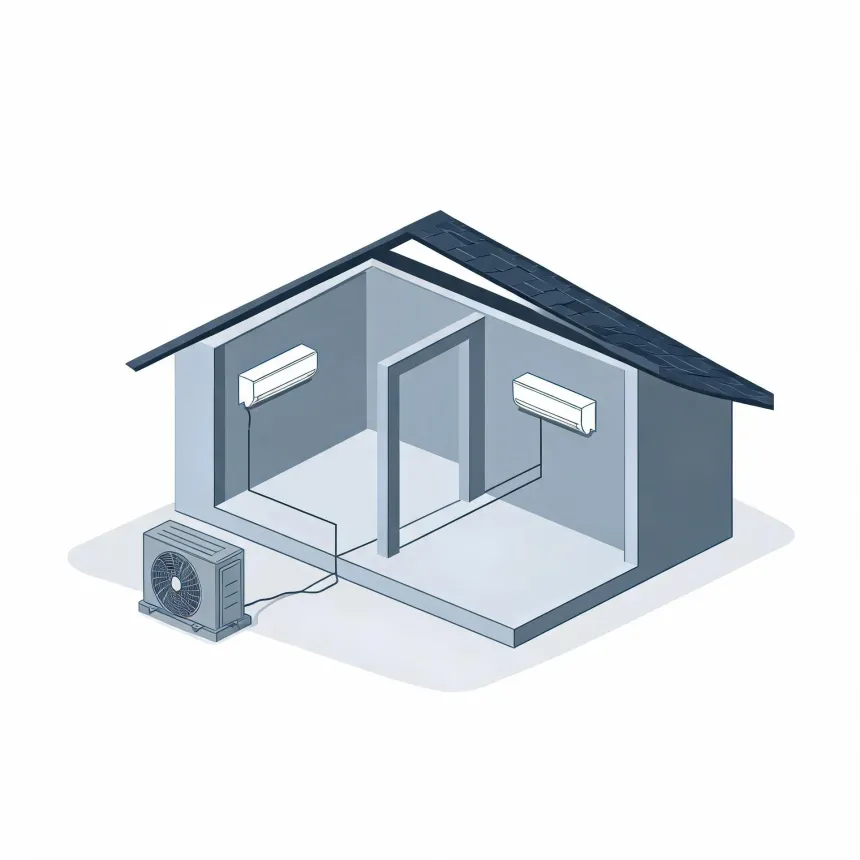
Isometric illustration of a cutaway house showing two wall-mounted indoor air conditioning units connected by lines to a single outdoor condenser unit on the ground outside.
Your system heats November through March and cools May through September.

NOAA nClimDiv, 1991–2020 normals

Outdoor units here run through five straight months of afternoon highs near 95°F.

A mini split sized wrong for El Paso summers will short cycle or run flat out trying to keep up, so getting the size right matters as much as the brand.

El Paso's weather is hard on outdoor units, and the power doesn't always hold either

133 severe weather events from 2015 to 2024
33% of homes statewide lost power a day or more in 2024
70 damaging wind events from 2015 to 2024

Most homes in El Paso heat with gas, 71 percent of them. Electricity accounts for most of the rest at 25.9 percent. A mini split is an electric system, so if your home is one of the many already on gas heat, adding a mini split means cooling and some heating on electricity while the furnace stays on for the coldest stretches. If your home already heats with electricity, a mini split can take over more of the job year round. Either way, knowing which fuel your home runs on now tells you what the mini split is actually replacing, not just adding to.

A mini split here has to meet zone 3B's minimum efficiency, and that may qualify for a tax credit

El Paso falls in zone 3B, and any mini split installed here has to meet 14.3 SEER2 for cooling and 7.5 HSPF2 for heating at minimum. That's the federal floor for split-system heat pumps, ductless included. A federal tax credit is available for qualifying high-efficiency equipment, worth checking against before you pick a system.

Find a contractor
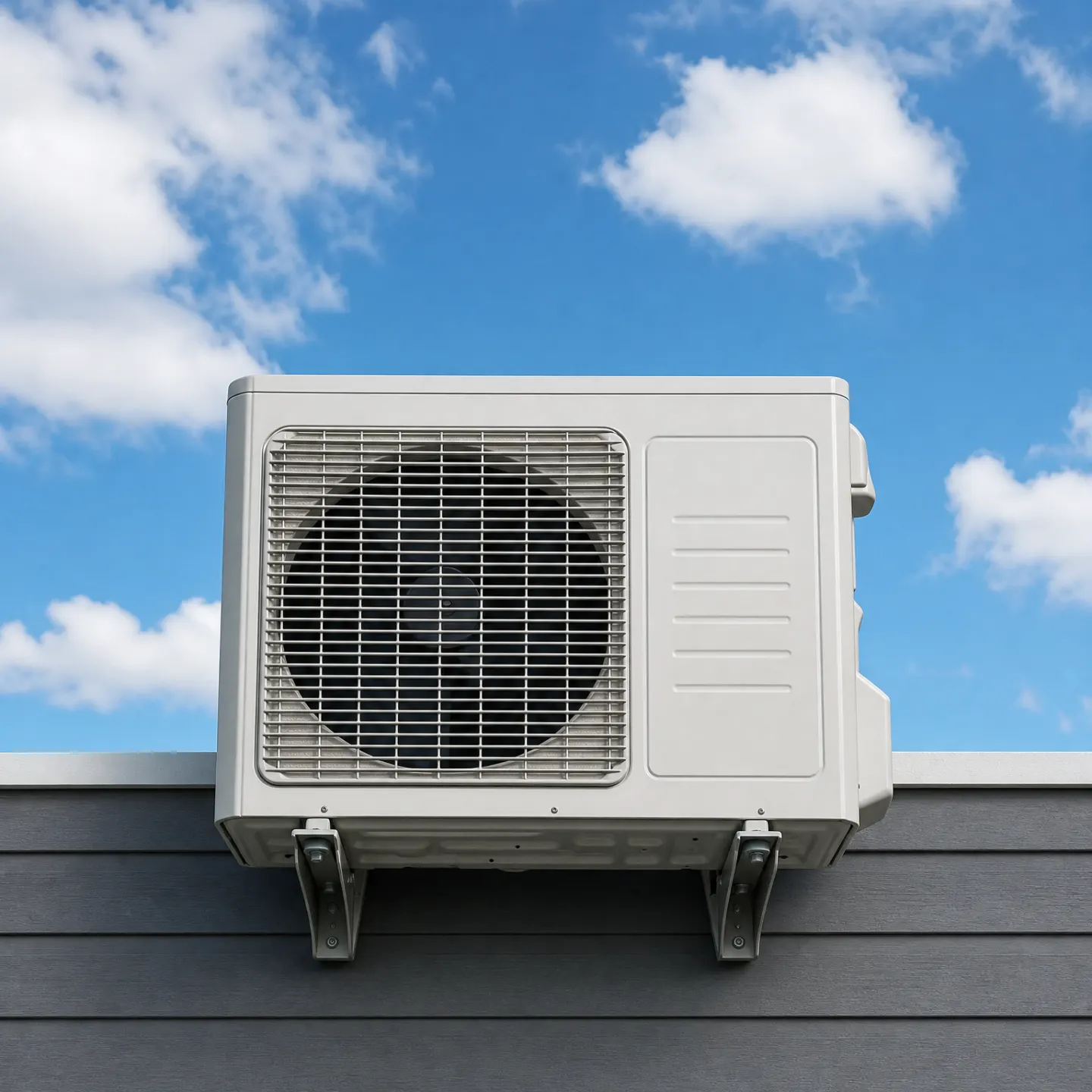
A white outdoor air conditioner condenser unit mounted on metal wall brackets against gray horizontal siding, with a blue sky and white clouds behind it.

Sized wrong, it wears out from either direction

A mini split that's too big for the room cools fast, shuts off, then starts again a few minutes later. That cycling is harder on the compressor than running steady, and it leaves the room swinging between too cold and too warm instead of holding steady. One that's too small never gets the rest it needs. It runs long stretches at full output and still struggles to keep up on the hottest afternoons, which wears on the compressor from the other direction. Getting the size right isn't a guess. A contractor works it out room by room, accounting for window area, insulation, ceiling height and which way the room faces, then matches the indoor unit and outdoor condenser to that load. Oversizing to be safe doesn't make a system perform better. It just moves the wear somewhere else.

How many zones, and what pulls them together

A mini split system can run a single indoor head or several off one outdoor condenser. Ask how many zones that condenser is rated to support at the same time, not just how many it can connect to. Some condensers lose capacity once several heads are calling for cooling at once, and that shows up as a room that never quite hits the temperature you set it to.
What happens if a part fails

Ask what's covered under warranty, and ask about the compressor separately from the rest of the unit, since it's often covered on different terms. Ask also whether the indoor and outdoor units have to be matched as a set to keep that coverage valid. Pairing a condenser from one lineup with a head from another can void the warranty even when both carry the same brand name.

A big part of what you're paying for is labor most people never see. Running refrigerant line between the outdoor condenser and each indoor head means a contractor has to drill through the wall, route the line set, and braze the joints so the system holds pressure for years without leaking. Longer runs between units, more walls to get through, or a condenser placed somewhere awkward all add time on the job before the system ever turns on. The number of zones matters too, since each indoor head needs its own line set, its own mounting, and its own electrical hookup back to the condenser. Removing an old system, patching the wall where lines pass through, and setting the condenser on a stable pad or bracket all add to the work beyond just mounting the equipment and connecting it.

Installation starts outside with the condenser. It needs a flat, stable spot with clearance on every side so it can pull in air and push heat out without strain. Inside, the contractor mounts each indoor head to the wall, finds the spot on the stud where the line set and drain can pass through, and drills that hole. Refrigerant line, electrical wire and a condensate drain all run through that same opening, then get routed to the condenser outside. Once the lines are connected, the system gets pressure tested and pulled down into a vacuum to clear out air and moisture before any refrigerant moves through it. Skipping that step is how a system ends up with a slow leak or a compressor that fails early. After that, it's powered on, checked for proper refrigerant charge, and set running so the contractor can confirm every head is cooling and heating the way it should before calling the job done.