



Texas Cooling Help
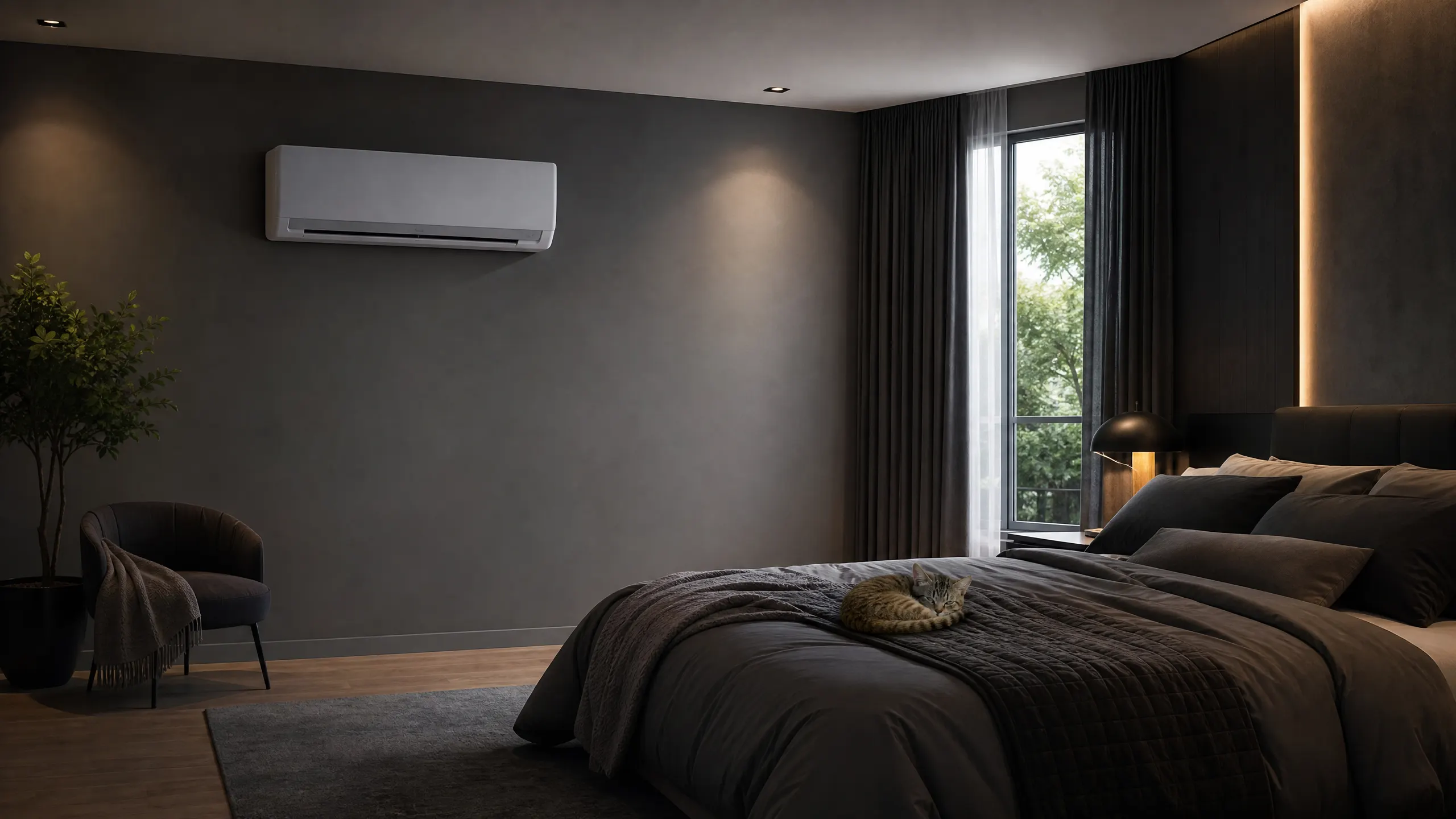
A tabby cat sleeps on a large bed in a dark, modern bedroom equipped with a wall-mounted air-conditioning unit.

Mini Split Installation in Corpus Christi, TX

Tell us about the job

Takes about a minute. No obligation.

Step 1 of 3: Equipment

Electricity in Texas ran 14.94 cents per kilowatt-hour in 2024. A mini split earns its keep against that number, because it moves heat instead of generating it, and that takes less power than a window unit or electric strip heat. In Corpus Christi the cooling runs long into the year, so that difference shows up on almost every bill you get. The SEER2 rating on the unit you choose is what determines how much of that cost you keep paying. A system sized and installed right for your home is what gets you the rating on the label, not just the one printed on the box.

3 months
December through February, your system heats
9 months
March through November, it cools
50°F
the average winter night it heats against
94°F
the average summer afternoon it cools against
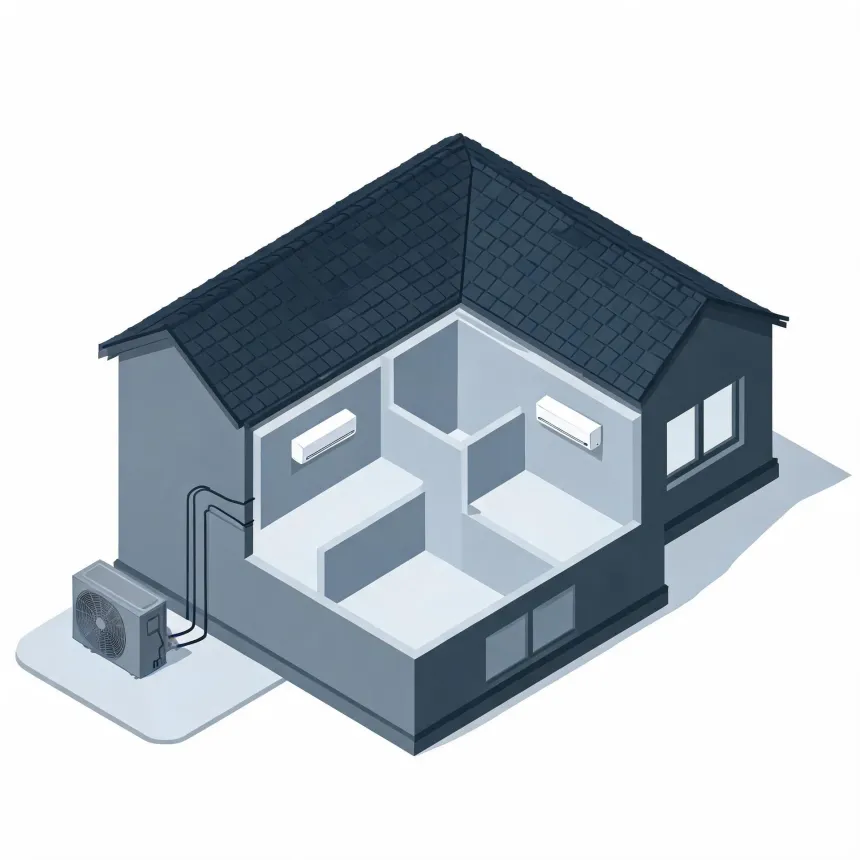
Isometric illustration of a cutaway single-story house with a dark shingled roof, showing two wall-mounted indoor air conditioning units connected by lines to an outdoor condenser unit on a pad beside the building.
Your system heats December through February and cools March through November.

NOAA nClimDiv, 1991–2020 normals

Nueces County logged 85 damaging wind events between 2015 and 2024.

An outdoor condenser needs a spot that keeps it clear of debris and away from a straight hit.

Nine months of cooling a year means this system barely gets a break

Cooling runs March through November
Summer afternoons average 94°F
Power costs 14.94 cents a kWh statewide

Corpus Christi falls in climate zone 2A, a hot and humid zone where cooling carries most of the year's load. Any mini split installed here, ducted or ductless, has to meet 14.3 SEER2 for cooling and 7.5 HSPF2 for heating under the current federal standard. That rule applies the same way to a ductless system as it does to any other split system, so there's no separate, looser standard for the unit mounted on your wall. A system that meets the minimum is built for a zone like this one. If you install a system that beats the minimum, a federal tax credit is available to offset part of the cost.

Electric heat is already the norm here

Electricity heats 79.2% of homes in Nueces County, and gas heats under 18.7%. A mini split runs on electricity already, so it slots into a home set up to run electric equipment. There's no gas line to work around and no venting to add.

Find a contractor
A man in a cap, dark shirt and tan work pants, seen from behind, carries a worn canvas tool bag up porch steps toward an orange front door, with a potted shrub beside the entry.
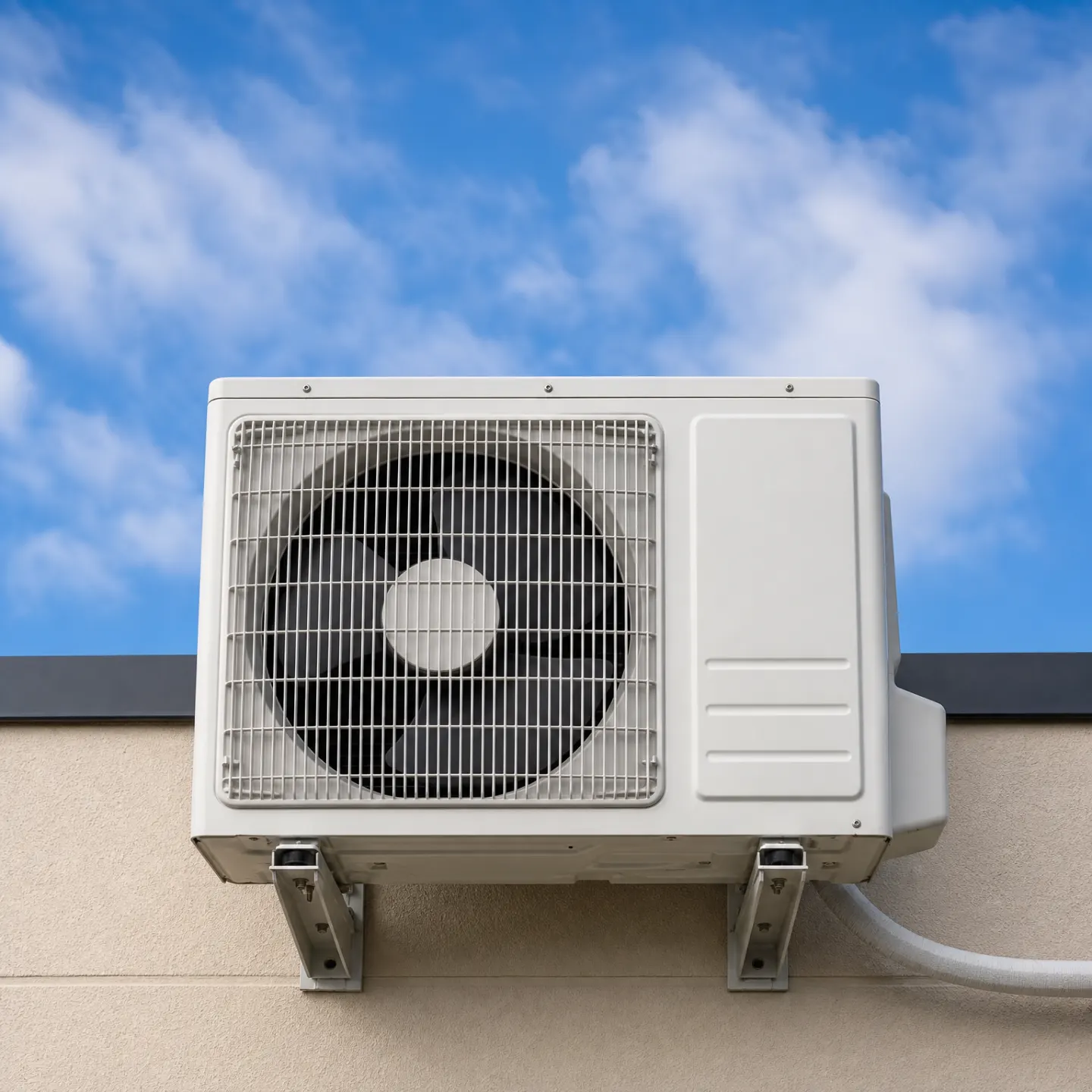
A white mini-split air conditioner outdoor condenser unit mounted on metal brackets against a beige stucco exterior wall, with a blue sky and scattered clouds in the background.

February is the last quiet month before this runs nine straight

Cooling runs March through November here, nine months straight once it starts. February is what's left before that begins. A mini split put in during February gets sized and set up at a normal pace, not squeezed in between other calls. Wait for the first hot week and you take whatever unit is on hand and whatever slot is open that day.

How many zones you're cooling

Each indoor head you add is its own line item, and the outdoor unit has to be sized to run all of them at once. A single zone covering one room costs less than a multi-zone setup feeding several rooms off one outdoor unit. Adding a zone later costs more than including it in the first install, since the line set and outdoor unit need to be sized for it from the start.
What the installer has to work with

Running the line set from outdoor unit to indoor head is easy when they can sit close together on the same wall. Route that line through an attic, around a corner, or up multiple floors, and the job takes longer and takes more material. Where the outdoor unit can sit matters too. A condenser needs clearance on every side to pull air through the coil, and a tight spot next to a fence or under a low eave can force a different location than the one that seemed obvious.

The SEER2 number on the label is a ratio, cooling output against the electricity it takes to produce it. A higher number means the compressor gets more cooling out of the same power, not that the unit cools a bigger space or cools faster. That's a separate question from capacity, which gets sized to the room or zone it's serving. Systems carrying the same rating can still behave differently in your home, because the rating gets measured under set lab conditions, not the conditions inside your walls. How the line set is run, where the outdoor unit sits, and whether the system was charged correctly all affect whether you actually get that rating or something short of it. The label tells you what the equipment is capable of. Getting there is a separate job.

Whoever handles the install still has to deal with what's already hanging on the wall or sitting outside on a pad. A window unit comes out and leaves a hole in the sill or the wall that needs closing up. A ducted system coming out is more work, since the old air handler, the coil, and sometimes the ductwork itself get disconnected and hauled off. The old refrigerant doesn't just get vented. It has to be recovered into a tank, because venting it is illegal and has been for years. If the old system ran on a line set or ductwork you're not reusing, that gets capped or removed so it's not left to rot or leak behind a wall. None of this is the interesting part of the job, but skipping it is how a new system ends up fighting the leftovers of an old one.