Texas Cooling Help
A nighttime view of a residential street lined with single-story brick houses and large trees lit by warm exterior lights.

Mini Split Installation in Canyon, TX

Tell us about the job

Takes about a minute. No obligation.

Step 1 of 3: Equipment

Bigger isn't better

A mini split sized too large for the room cools or heats it fast, then shuts off before it pulls the moisture out of the air. The room feels clammy even at the right temperature. The unit cycles on and off all day instead of running steady. An undersized unit does the opposite. It runs nonstop and still never quite catches up on the hardest days of the year.

The math behind the install

A contractor works out the size by walking the room and checking what affects its heat gain and loss. Square footage, ceiling height, window area, which way the windows face, how well the room holds temperature, and what else in there gives off heat all factor in. That load calculation points to a specific unit size. It also tells the installer where the indoor head should sit and how the line set should run to get there. Skip that step and the install is a guess dressed up as a plan.

7 months
October through April, your system heats
5 months
May through September, it cools
25°F
the average winter night it heats against
91°F
the average summer afternoon it cools against
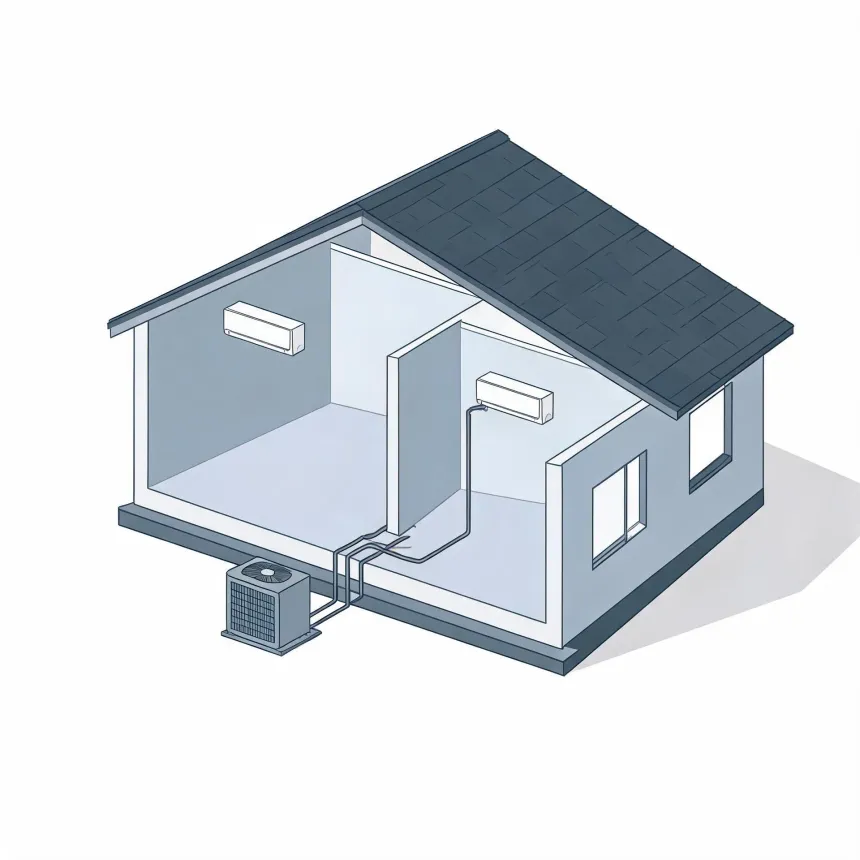
Isometric cutaway illustration of a small house with a dark shingled roof, showing two wall-mounted indoor units connected by lines running to an outdoor condenser unit beside the building.
Your system heats October through April and cools May through September.

NOAA nClimDiv, 1991–2020 normals

Cooling in Canyon runs May through September.

Get the mini split in before May and it's a planned install, not an emergency one once the heat sets in.

Five months of afternoons near 91°F, and that's the easy part

Cooling runs May through September
Summer afternoons average 91°F
172 damaging wind events from 2015 to 2024
The price per kilowatt-hour makes efficiency worth itTexas homes paid 14.94 cents per kilowatt-hour in 2024.

Most houses in Randall County heat with utility gas, 57.2% of them. Electricity comes in second at 40%, and that number matters for a mini split install. A mini split is an electric system. In a gas-heated house it usually goes in as a second system, cooling the room or handling a space the furnace doesn't reach well. In a house that already heats and cools with electricity, it can end up carrying more of the load, sometimes replacing a window unit or an older electric system room by room. Either way, the installer needs to know what's already in the house before sizing anything.

A mini split here has to meet zone 4B's standard

Canyon sits in climate zone 4B, which asks real work of both heating and cooling here. Any mini split installed new has to clear 14.3 SEER2 for cooling and 7.5 HSPF2 for heating, the federal minimum for split-system heat pumps since January 2023. That standard narrows the field before a contractor ever walks the room.

Find a contractor
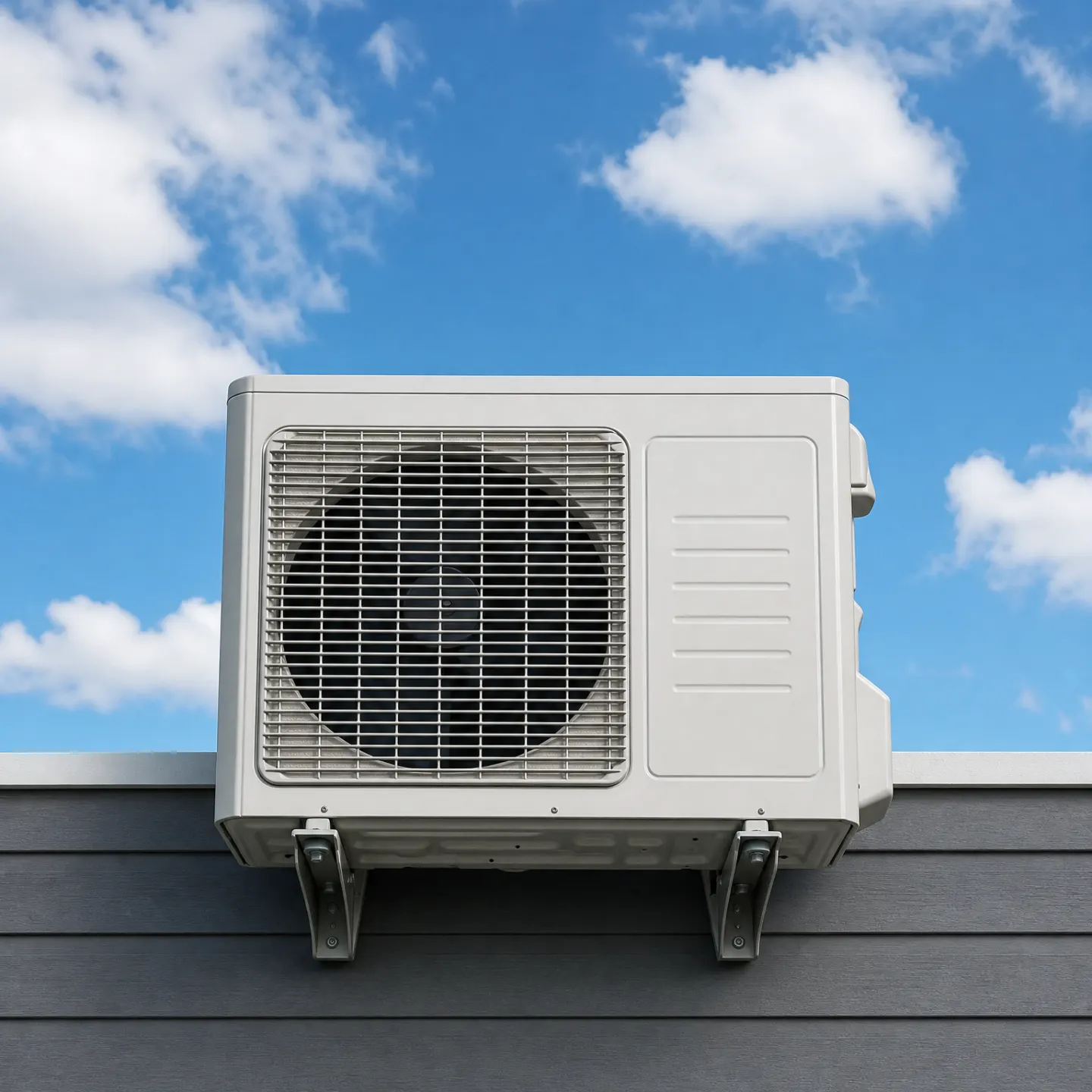
A white outdoor air conditioner condenser unit mounted on metal wall brackets against gray horizontal siding, with a blue sky and white clouds behind it.

What the install actually involves

What a mini split costs to put in comes down to how much work the installer has to do beyond hanging the indoor head and the outdoor unit. A straightforward single-zone job with a short line set run through one exterior wall is the simplest version. Add zones and the price moves with it, since each indoor head needs its own line set run back to the outdoor unit, and multi-zone outdoor units cost more than single-zone ones. Line set length matters too. A run through an attic or down through a wall cavity to reach the right spot on the outdoor unit takes more time and material than a short straight shot. Electrical work is its own factor. A mini split needs a dedicated circuit, and if the panel doesn't have room or the wire gauge isn't right for the unit's draw, that's added work before the system ever turns on. Where the indoor head can go matters as much as the unit size. A head placed where it can't get a clean line set run, or where condensate can't drain properly, costs more to install than one with an easy path. None of this shows up until a contractor is standing in the room looking at the walls, the panel and the path outside.

How many zones, and what's on each one

A single outdoor unit can run more than one indoor head, but every zone draws from that same outdoor unit's total capacity. Ask what happens when all the zones call for cooling or heat at the same time on the hardest day. Some systems are sized to handle that. Others are quoted assuming the zones will take turns, and that shows up later as rooms that never quite get comfortable.

What happens if a part fails down the road

Ask what's covered on the compressor versus the indoor head, and whether the warranty requires upkeep records to stay valid. Ask who can actually service it too. Some manufacturers require factory-trained techs for warranty repairs, and that matters if the installer closes up shop or doesn't carry that certification for the brand being quoted.

SEER2 measures cooling efficiency over a season, not how fast or how strong a unit runs. A higher number means the compressor moves the same heat using less electricity. HSPF2 does the same job for the heating side. These numbers don't tell you the unit's capacity, so a high SEER2 system in the wrong size for the room still cools poorly. They matter most as a comparison between units that have already been sized correctly for the space. A unit with a higher rating usually costs more up front, and the question worth asking a contractor is how many years of lower electric bills it takes to make up that difference.

Installation starts with the outdoor unit placement and the line set path, not with hanging the indoor head. The crew sets the outdoor unit on a pad or wall bracket somewhere it can drain and get clean airflow on all sides. Then comes the hole through the exterior wall for the line set, the refrigerant lines, the power wire and the condensate drain, all bundled and sealed where they pass through. The line set gets connected on both ends, and this is where care matters most. The joints have to be flared correctly and the system needs to be pulled down to a vacuum before the refrigerant valves open, which clears out moisture and air that would otherwise wreck the compressor over time. Once the vacuum holds, the refrigerant is released, the indoor head gets mounted and leveled, and the electrical connections get tied into that dedicated circuit. Last comes the test run, checking that the head is actually pulling the temperature down or up, that the condensate drains the way it should, and that the line set connections aren't leaking.