Electricity here runs 14.94 cents a kilowatt-hour
Texas households paid that rate in 2024. A mini split that moves heat instead of generating it costs less to run on every bill than a system that doesn't.
Takes about a minute. No obligation.
Texas households paid that rate in 2024. A mini split that moves heat instead of generating it costs less to run on every bill than a system that doesn't.
Ask what SEER2 rating each unit carries before you decide. The difference between models shows up every month the system runs, not just on the install bill.
NOAA nClimDiv, 1991–2020 normals
Electricity heats 56.8% of homes in Travis County, more than gas and propane combined.
A mini split runs on electricity already, so it drops into a home here without adding a new fuel line.




Travis County is in climate zone 2A, a hot and humid zone where cooling carries most of the load through the year. Any mini split installed here has to meet the federal minimum for a split-system heat pump. That means 14.3 SEER2 for cooling and 7.5 HSPF2 for heating. The rule applies whether the system is ducted or ductless, since the standard treats a mini split as a split system and sets no separate class for it. A unit under those numbers can't legally go into a new installation. Ask what SEER2 and HSPF2 rating a quoted system carries, not just its price, since both numbers tell you whether it clears the bar for this zone.
Cooling runs here from April through October, and afternoons in June, July and August average 95°F. That's most of the year asking a lot of a mini split. Size it wrong and the difference shows up every summer it runs.
Find a contractor
Get a load calculation done on this house before anyone quotes a number. A mini split sized by square footage alone runs wrong for seven months straight. Too big and it cools the room fast then shuts off before it pulls the moisture out of the air, so the house feels damp even at the temperature you want. Too small and it runs flat out through every one of those 95 degree afternoons and never catches up. Either way you feel it on the thermostat all summer, not just on the days it's extreme.
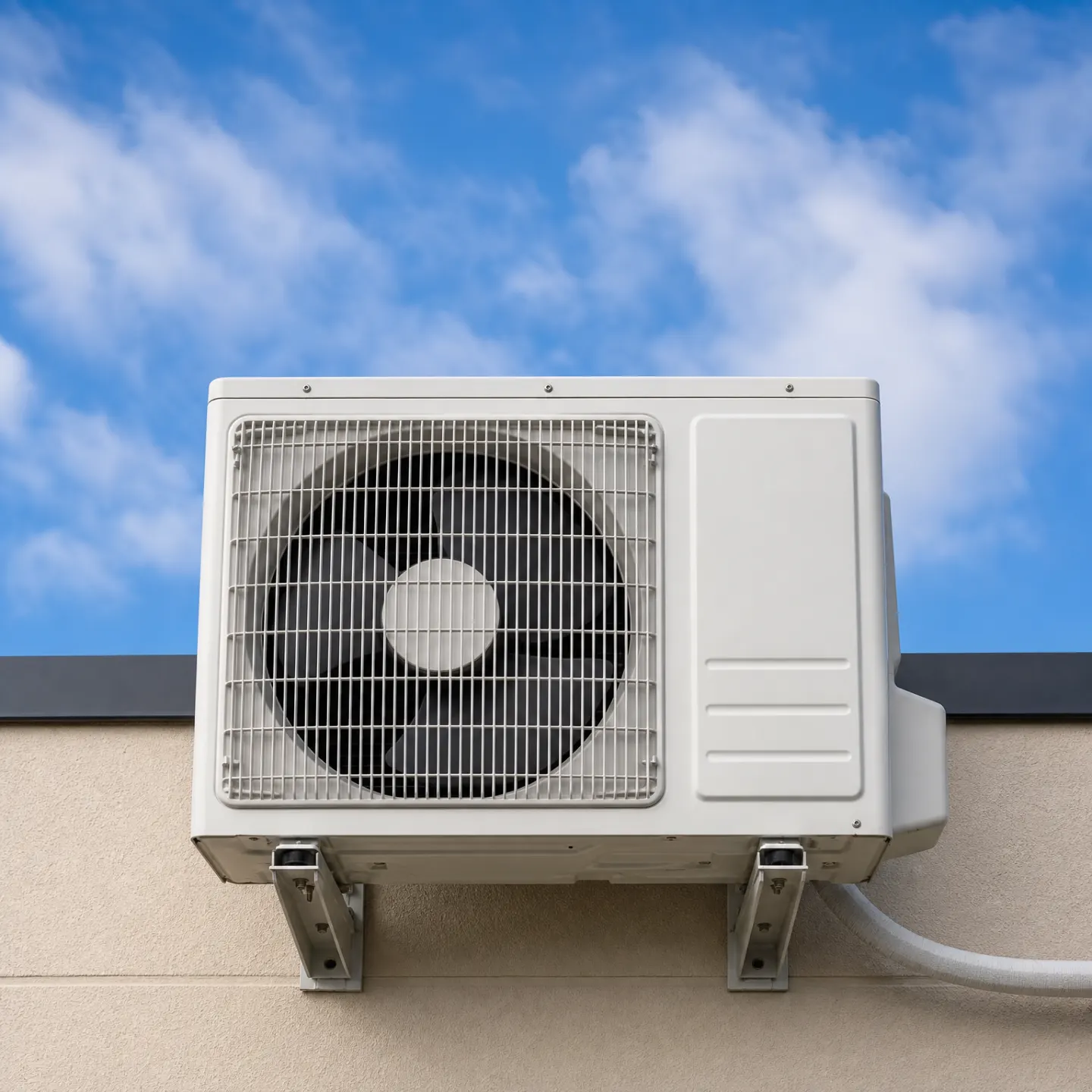
A contractor pulls the indoor unit, the outdoor unit and the line set as a set. Before any line gets cut, the refrigerant inside it has to be recovered into a tank. Venting it to the air is not legal and a tech who knows the trade won't do it.
Pulling an old mini split leaves a small hole where the line set passed through the wall, along with brackets that get reused or patched over. Pulling an old window unit or central system leaves more behind. The wall opening is a different shape, the condensate line ran somewhere else, and the electrical was sized for different equipment. Ask what the removal actually involves before assuming it's a straight swap.
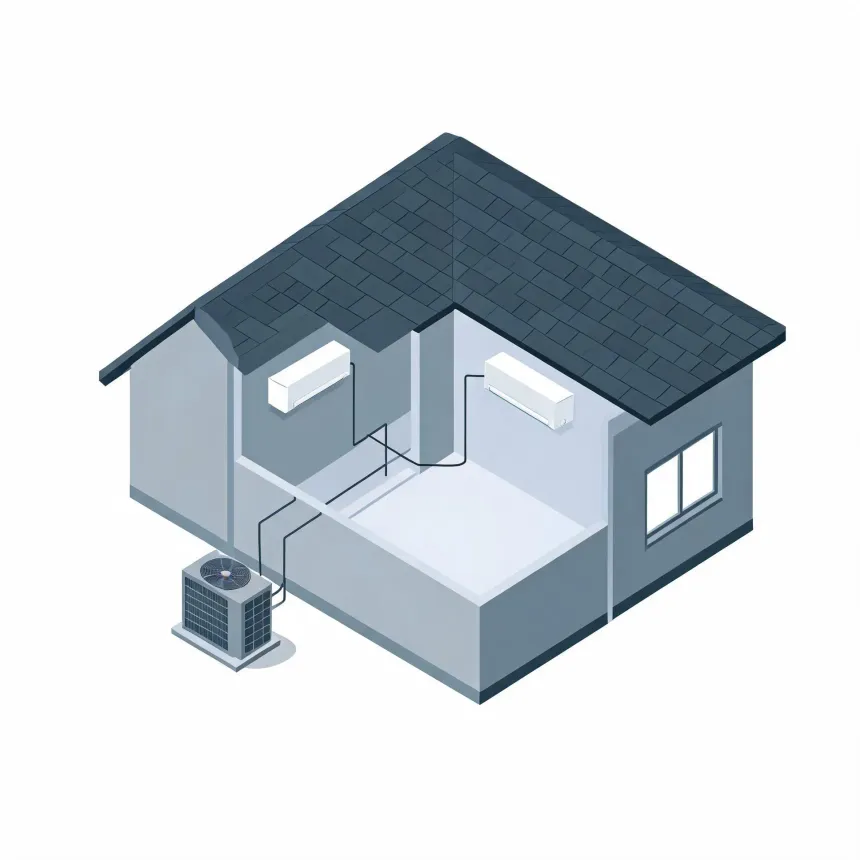
Sizing a mini split comes down to a heat gain and heat loss calculation, not a rule of thumb. The calculation looks at wall and window area, insulation, ceiling height, which way the room faces, and what else is generating heat inside it. Rooms with the same floor space can need different sized units if one has west facing glass and the other doesn't. An undersized unit runs constantly and still can't hold the temperature on the hottest afternoons. An oversized one cools the air fast and shuts off before it's run long enough to pull humidity out of the room, so the space feels clammy even once the thermostat is satisfied. Multi zone systems add another layer, since the outdoor unit has to be matched to the combined load of every indoor head running at once, not just added up from each room in isolation.
Installation starts outside, not in. The outdoor unit needs a spot with clear airflow around it and a hard, level pad to sit on, so a tech will walk the exterior before touching a tool to the wall. Indoors, the head goes up high on a wall that backs up to that outdoor spot, since the line set has to run between them through a single hole. That hole gets drilled, the line set and a drain line pass through it, and the gap gets sealed against weather once the lines are in. Both units get mounted, the lines get connected, and the system gets pressure tested before any refrigerant moves, since a leak found after charging means pulling the lines apart again to fix it. Once it holds pressure, the system gets charged, powered up, and run through each mode to check that it heats, cools, and drains the way it should.