



Texas Cooling Help
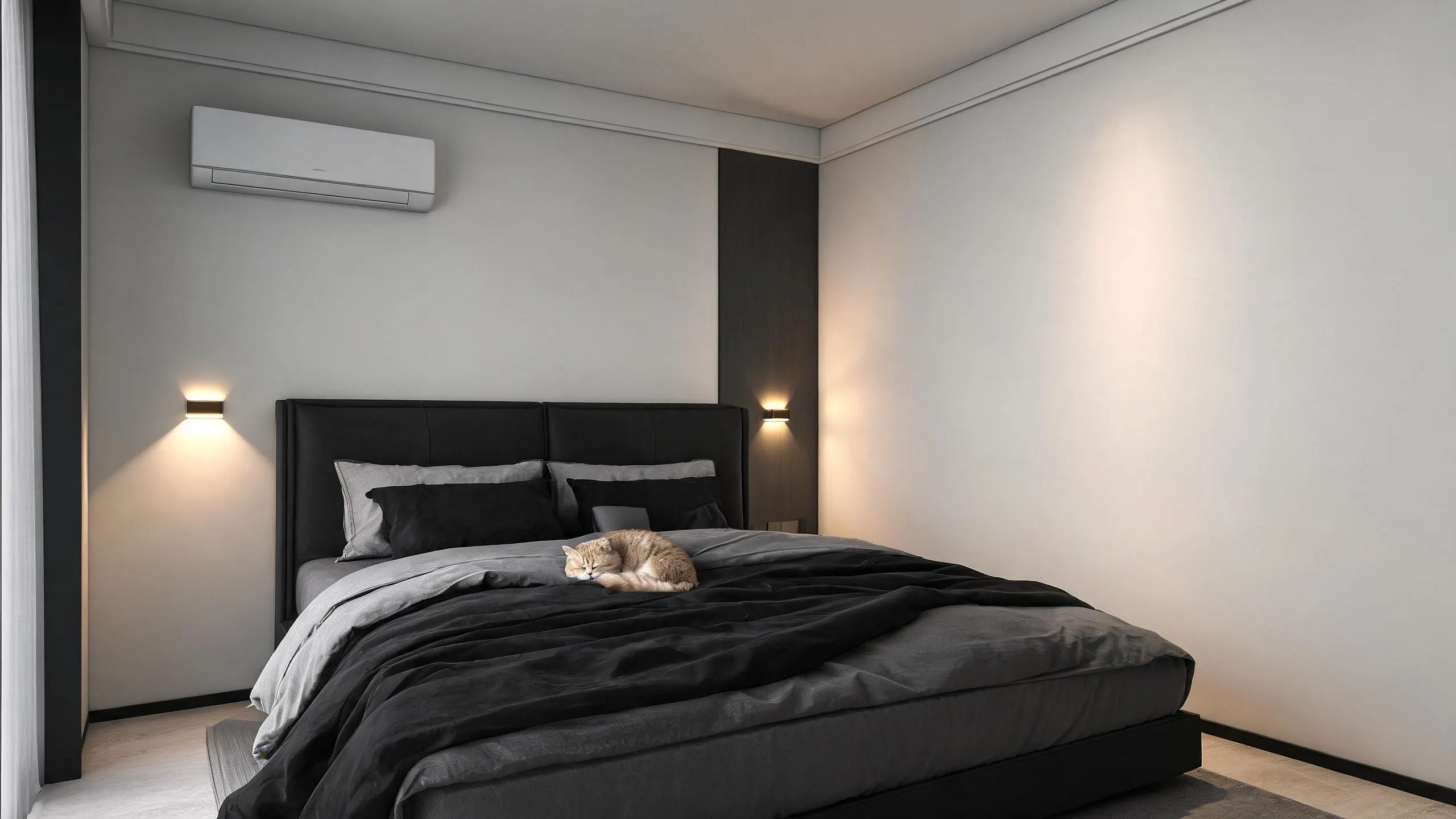
An orange cat sleeps on a neatly made bed with dark grey bedding in a minimalist bedroom with wall sconces and a mounted air conditioner.

Mini Split Installation in Abilene, TX

Tell us about the job

Takes about a minute. No obligation.

Step 1 of 3: Equipment

A mini split earns its keep in Abilene. Electricity here runs 14.94 cents per kilowatt-hour, and a system that holds its efficiency through a Texas summer will show it on your bill every single month. These units cool or heat only the room you're using, instead of pushing conditioned air through ducts that lose some of it along the way. That matters more in a place where the system runs hard for most of the year. The better the unit, the more that rate works in your favor instead of against you.

5 months
November through March, your system heats
6 months
May through October, it cools
34°F
the average winter night it heats against
93°F
the average summer afternoon it cools against
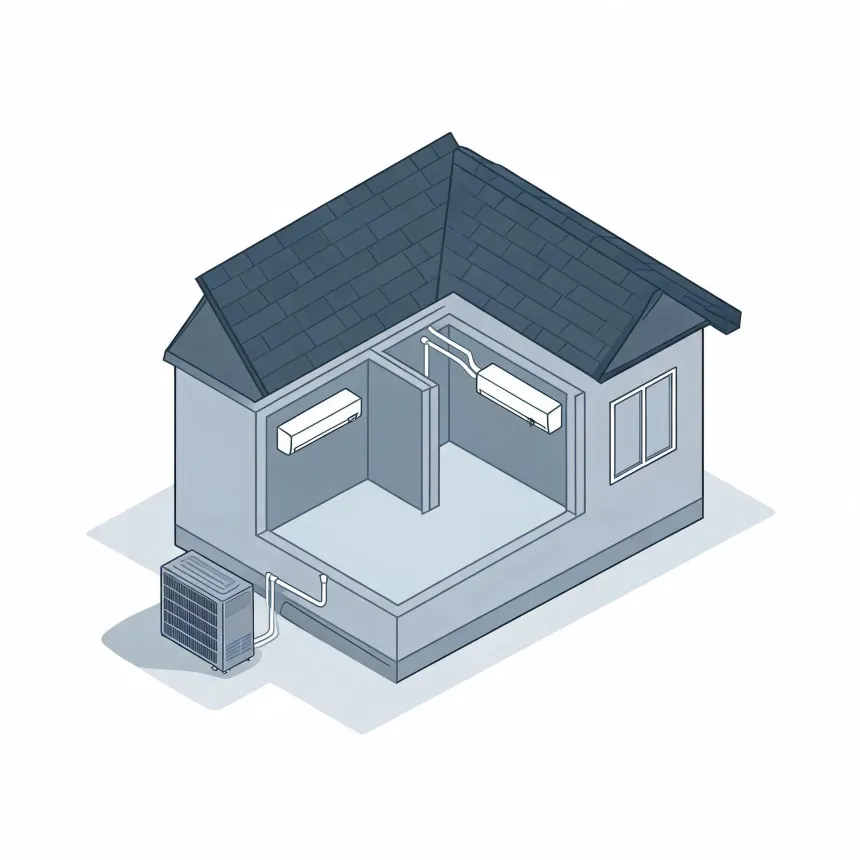
Isometric line illustration of a cutaway house with a shingled gable roof, showing two wall-mounted indoor air conditioning units connected by piping to an outdoor condenser unit on the ground outside.
Your system heats November through March and cools May through October.

NOAA nClimDiv, 1991–2020 normals

Electricity heats 55.5% of homes in Taylor County.

A mini split runs on electricity alone, so it fits right into a home that already heats that way.

A normal size, sized right, does the job here

Half the homes here were built by 1978
Cooling runs May through October
Summer afternoons average 93°F

Taylor County falls in zone 3B. Any mini split installed here has to meet the federal minimum for a split-system heat pump, which is 14.3 SEER2 for cooling and 7.5 HSPF2 for heating. That rule covers ductless systems too, even though it reads like it was written for ducted ones. Summers here run long and winters stay short and mild, so the cooling number carries more weight than the heating one. A unit that just clears 14.3 SEER2 will cost more to run through a Texas summer than one built past it. A federal tax credit may also apply to installing a mini split now, and it's worth checking before you settle on a unit.

Get it installed before May, not after

Cooling in Taylor County starts in May and runs through October, six months straight. April is the last clear stretch before that load hits. Get a mini split in before then and the installer isn't working around a system already struggling to keep up.

Find a contractor
A man in a dark long-sleeve shirt and tan work pants walks up concrete steps toward an orange front door, carrying a waxed canvas tool bag in his right hand, with a potted shrub beside the gray-sided house.
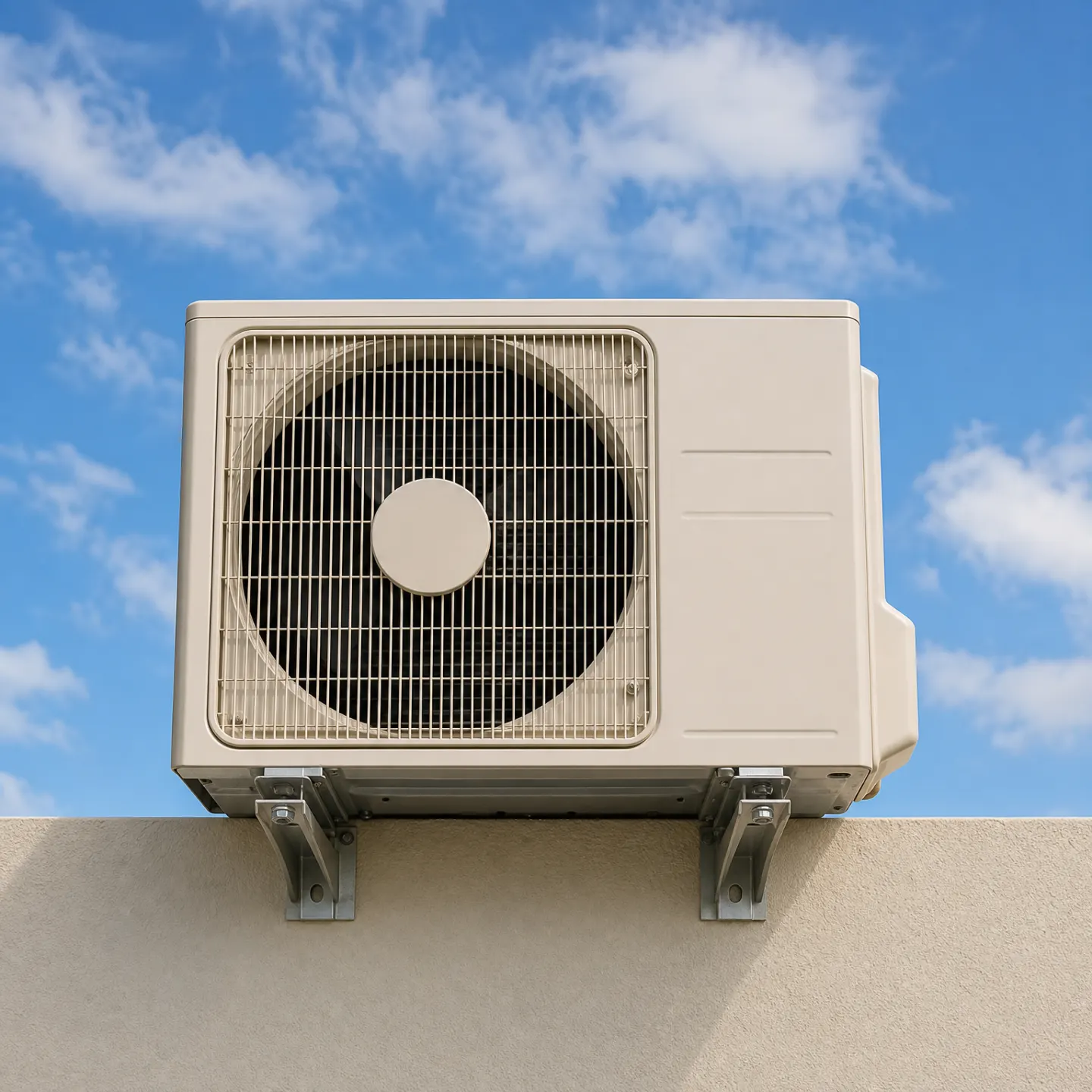
A beige split-system air conditioner outdoor condenser unit mounted on metal wall brackets atop a stucco wall.

Six months of Texas summer, every year it's installed

Cooling runs six months here, May through October, and the afternoon high averages 93°F through June, July and August. A mini split put in this year will run through that same stretch every year it's here. That's what wears on a compressor, not age on paper. Taylor County has also seen 121 hail events, and the outdoor unit sits outside through all of it. None of that is a reason to skip a mini split. It's a reason to size it for the load it will actually carry.

The number of zones sets the starting cost

A single indoor head tied to one outdoor unit is the simplest job there is. Add a second or third zone and the outdoor unit has to be sized up to carry all of them, and each indoor head needs its own line set and its own run of wiring back to the condenser. More zones means more labor, not just more equipment.
Where the lines have to travel changes the labor

The refrigerant line runs through a wall, down a chase, or across an attic to connect the indoor head to the outdoor unit. A short, straight run is quick work. A run that has to clear framing, drop through more than one floor, or snake around existing ductwork takes longer and takes more material, and that shows up in the price before the unit itself is ever considered.

Sizing a mini split is not about matching the room's square footage to a number on a chart. A unit that's too big cools the room fast and shuts off before it pulls the moisture out of the air. The room ends up cold and still clammy. Run that cycle all summer and the compressor is starting and stopping far more than it should, and that wears it down faster than steady running ever would. A unit that's too small just runs constantly and never quite catches up on the hottest afternoons. Getting it right means working out the actual heat gain of that room. The windows matter, which way they face, how much wall and ceiling are exposed, what's on the other side of them. Rooms that look the same size on paper can carry very different loads.

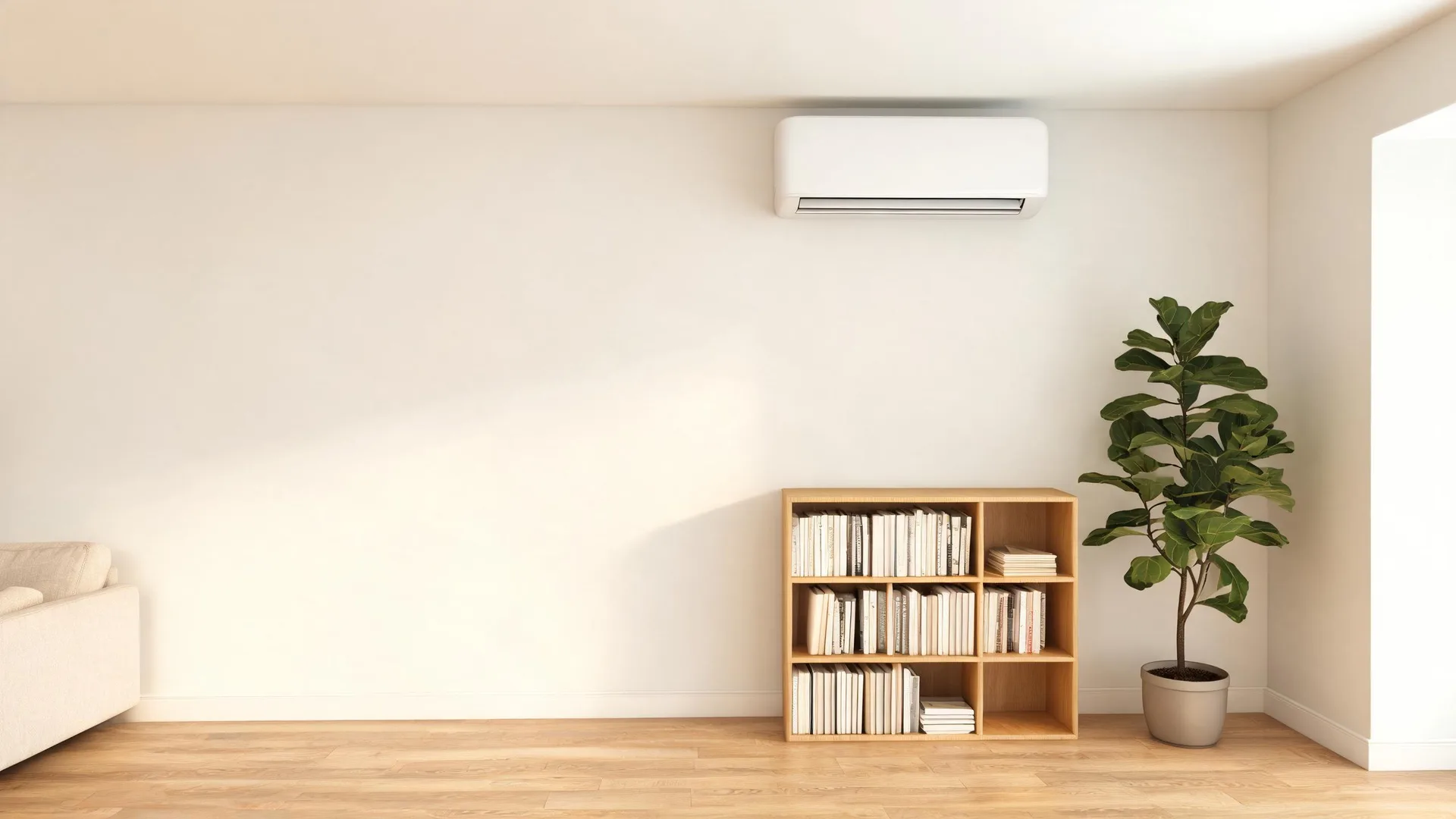
Installation starts outside, not in. The installer walks the spot picked for the outdoor unit and checks what it drains toward, what it sits on, and how far it has to reach the indoor head. Mounting the indoor unit means finding a stud line that clears what's behind the wall, then drilling a single hole for the line set, the drain, and the wiring to pass through together. That line gets charged with refrigerant and pressure tested before anything is powered on, because a leak is far easier to find before the drywall goes back than after. Once the indoor and outdoor units are set, the line gets insulated and the whole run gets sealed where it passes through the wall, so neither weather nor pests get in behind it. Only after all of that holds pressure does the system get powered up and run through its first cycle.